
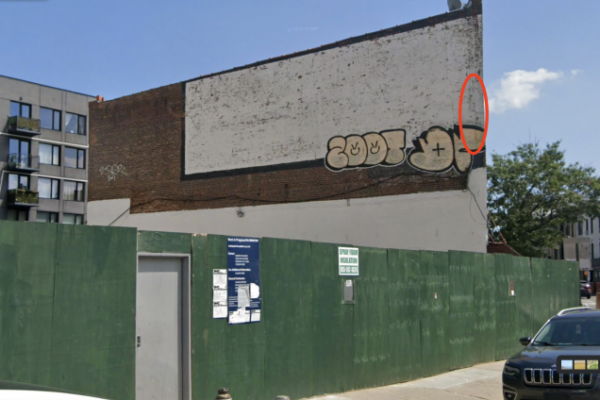
A recent tragic incident in Flatbush, Brooklyn, has led to the collapse of an apartment building, resulting in the deaths of eight individuals and injuries to many others. This disaster has raised significant concerns regarding the effectiveness of municipal building safety regulations and inspections.
The apartment building in question had visible cracks in its exterior walls that had been apparent for over a decade, worsening over time. Despite this, the city’s Building Department failed to take any decisive enforcement action. Alarmingly, inspections conducted by the department had focused primarily on violations related to signage rather than addressing the clear structural issues present. This has prompted strong public criticism regarding the city’s negligence in enforcing building safety measures, with calls for an independent investigative committee to thoroughly examine the factors contributing to the collapse and to hold those responsible accountable.
Historical imagery from Google Street View reveals that the brick wall on the north side of the apartment, located at 1321 Flatbush Avenue, had developed significant cracks as early as 2011. By 2026, the extent of the damage was even more pronounced. Records show that as early as June 2011, clear cracks were visible, and by August 2021, they had become even more prominent. Despite these alarming signs, there were no documented warnings or penalties issued by the Building Department regarding the structural integrity of the exterior wall.
In a somewhat ironic twist, inspections conducted by the Building Department in May 2019 led to the issuance of 13 summonses to the building’s owner, Olufemi Falade, for violations related to improperly posted advertising signs on the north side of the building. Out of these summonses, nine remain unpaid, amounting to about $170,000 in fines. Remarkably, the inspector had visited the same location that later collapsed but chose to overlook the significant cracks in the walls.
The issues extend beyond past inspections by the Building Department. A geological report prepared in November 2025 for a new construction project at 2625 Bedford Avenue had advised contractors to install monitoring equipment if cracks were detected in nearby buildings before construction began. Furthermore, a construction pre-inspection report completed in March 2026 by Quiver League highlighted that the exterior wall at 1321 had “poor condition” with “obvious cracks,” emphasizing the necessity for monitoring during construction. Both reports were submitted to the Building Department.
However, it was not until approximately two weeks after the Quiver report was submitted that the Building Department issued a stop-work order for the adjacent construction site, accompanied by a $2,500 fine for failing to adequately protect neighboring properties. In April, inspectors discovered that the contractor, N Tech Design, was continuing demolition work in violation of the stop-work order, leading to a $10,000 fine. Despite this penalty, work was allowed to continue after the fine was paid, yet the structural safety concerns of the neighboring building were never adequately addressed.
Industry professionals in real estate and constructional engineering have noted that the Building Department’s insufficient staffing and heavy workloads could contribute to superficial inspections. Nevertheless, property owners are equally responsible for addressing obvious structural damage, and it is imperative that monitoring of cracks and building movements be conducted during construction.
Ahmed Tigani, the head of the Building Department, stated that an investigation into the incident is ongoing, and the city is working diligently to determine the cause of the collapse and hold the responsible parties accountable. However, the department has not yet provided a clear explanation as to why inspectors had neglected to address the exterior wall cracks over the years, nor have they clarified whether monitoring equipment was installed during the construction period.
An editorial from the New York Post has further called upon the Adams administration to establish an independent expert committee, one that is not affiliated with the Building Department or the city government, to conduct a comprehensive investigation into the reasons for the structural failure, the collapse itself, and to discern where the regulatory body had been derelict in its duties. The author, Glenn Corbett, who previously led building safety regulatory reform studies in Philadelphia, noted that similar fatal building collapses in the past prompted the city to create an independent committee to review issues such as inspector staffing, compensation, training, management systems, third-party inspections, and permitting processes. This review process spanned 14 months and yielded 37 reform recommendations.
Corbett argues that New York City similarly requires an investigation mechanism that is free from internal governmental conflicts of interest, which should comprise experts from structural and civil engineering, building codes, construction techniques, and public safety disciplines.
He emphasizes that building safety oversight is as critical to public safety as the functions of fire and police departments. The Building Department cannot investigate its own failures. An independent committee should be allocated sufficient resources and time to thoroughly examine institutional deficiencies and propose concrete reforms. For the eight deceased individuals and their families, it is not only crucial for the government to determine how the building collapsed, but it must also answer the pressing question: having already issued warnings about the existing cracks, why did regulatory bodies fail to prevent this tragedy from occurring?