
As the Chinese stock market continues to weaken, the official newspaper of the Central Committee of the Communist Party of China, the People’s Daily, published an article on November 21 stating that those who predict a downturn in the Chinese economy will ultimately be proven wrong. The article criticized international media and institutions for exaggerating concerns about an economic crisis in China, including fears of deflation and overcapacity.
However, on the same day the article appeared, the internet in China was flooded with sarcastic remarks. Many netizens questioned the official narrative, replying, “It’s not about pessimism; it’s about the fact that there’s nothing left to sing about.” Others pointed out that investors are currently experiencing “the biggest loss of wealth in their lives,” highlighting the disparity between official statements and the realities faced by stockholders.
The article titled “Those Who Sing Pessimistically About China’s Economy Will Ultimately Be Proven Wrong” argued that since the beginning of the year, some international media and organizations have frequently expressed negative views on China’s economic outlook, promoting concepts such as “deflationary trap,” “China Shock 2.0,” and “spillover effects from China’s economic crisis.” The article criticized accusations of overcapacity in China’s manufacturing sector, suggesting that these narratives were attempts to undermine external confidence by predicting a “collapse of China.”
The piece contended that these discussions were plagued by biases and faulty reasoning: when economic growth slows, it’s described as an unsustainable model; when the economy maintains growth, it is attributed to policy stimulation; when exports face pressure, questions arise about China’s manufacturing competitiveness; and when exports perform well, they are blamed on overcapacity and insufficient domestic demand. The article asserted that such narratives could lead to negative conclusions regardless of how the Chinese economy evolves.
Nevertheless, the article did admit that the Chinese real estate market remains under pressure and is still in a phase of adjustment. It noted that the issue of “supply exceeding demand” has dampened consumer confidence, and the pace of the transition between old and new economic drivers is misaligned. Additionally, it acknowledged that there are still considerable challenges in upgrading and transforming industries.
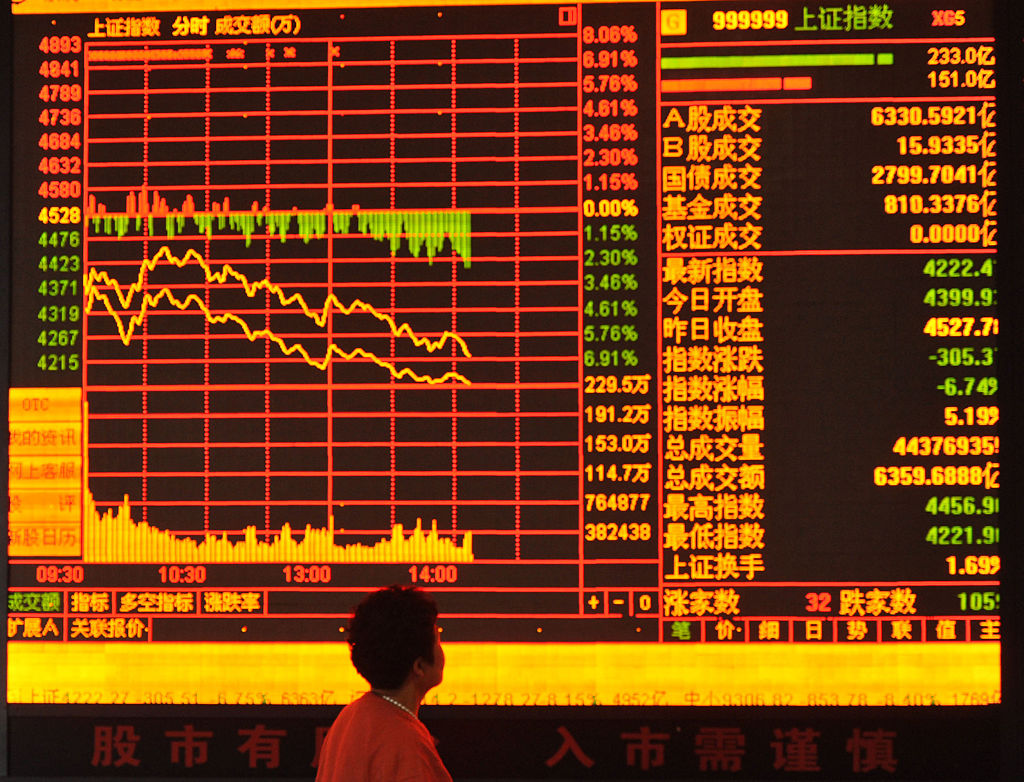
As the article was published, the A-share market was undergoing a series of adjustments. On November 20, all three major stock indices in China experienced declines. The Shanghai Composite Index closed at 3,533.79 points, down by 1.22%, having dipped to as low as 3,500.83 points during trading. The Shenzhen Component Index fell by 3.09%, while the ChiNext Index saw a drop of 3.54%, with over 5,200 stocks in total reporting losses.
The phrase “Those Who Sing Pessimistically About China’s Economy Will Ultimately Be Proven Wrong” quickly became a trending topic on Chinese social media. Many netizens and financial commentators mocked the article.
One user remarked, “The stock market is inherently empty; no one is singing negatively about it.” Another added, “It’s not about pessimism; it’s about the fact that there’s nothing left to sing about.” There were even comments suggesting, “If that’s the case, let the market rise and make those who short sell Chinese stocks go bankrupt.”
Many users pointed out that some investors are facing “the biggest reduction in wealth of their lives… How can you expect me to believe the People’s Daily?”
Another user expressed, “If one day China’s economy really faces a total collapse, do you think we wouldn’t rush out to ‘grab’ whatever we can?”
Meanwhile, a user humorously criticized the stock market’s continued poor performance, saying, “Even if foreign media say the market is going down, the A-shares in China are not helping. I lost 40% of my investment last week; it really hurts.”
Multiple users, including one with the handle “Staying Strong for the Wind to Rise,” derided the article, saying, “People’s Daily, stop just talking; let’s see the short sellers in the market lose their shirts next week! The stock market reflects public sentiment!”
The National Bureau of Statistics of China released economic data for October on November 16, showing that the year-on-year growth of industrial output above a designated size increased by only 4.8%, falling short of the expected 5.3%. Retail sales of consumer goods saw a minimal year-on-year increase of just 0.4%, below the previous month’s 1.1% and even under the market expectation of 0.8%.
Investment data also reflected weakness. From January to October this year, national fixed asset investment (excluding rural households) saw a year-on-year drop of 8.1%, with real estate development investment decreasing by 21.6%. In the same period, the area of sold new commercial housing fell by 13.7%, with sales revenue down by 14.3%.
The official media emphasized that external negative narratives are not credible. However, the ongoing stock market decline, sluggish consumer growth, and continuous adjustments in the real estate sector remain palpable sources of economic pressure for the public. This context also highlights the stark contrast between online responses and the official narrative following the People’s Daily’s article trending on social media.