
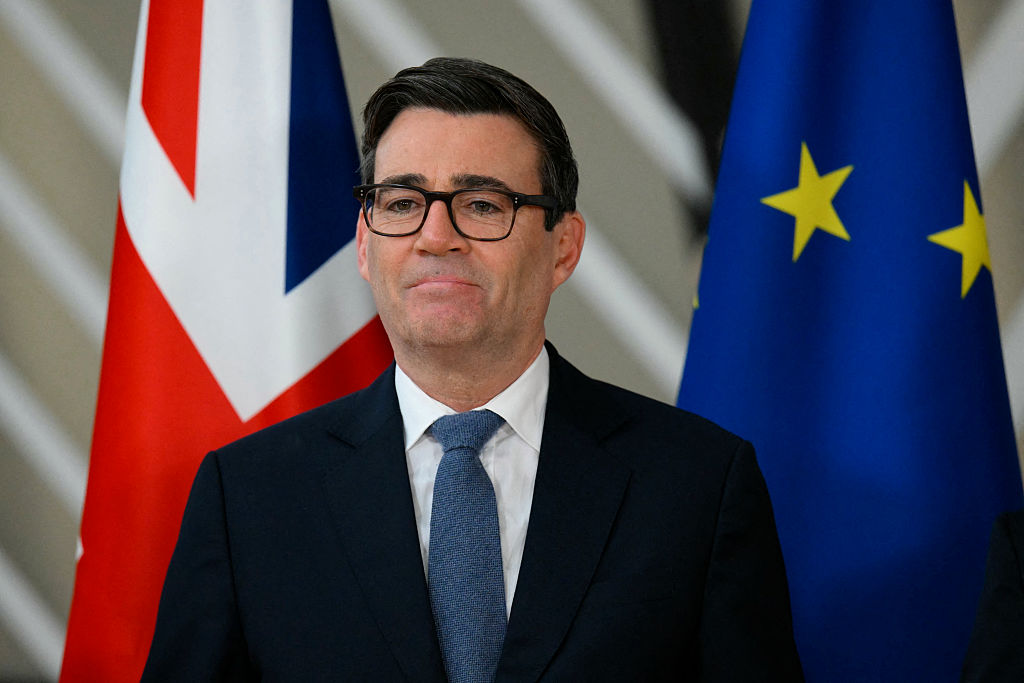
On November 20, a significant summit was held in Brussels, Belgium, between the United Kingdom and the European Union, culminating in agreements on several critical areas including food and agricultural trade, the linking of carbon emissions trading systems, and a youth mobility program. The Prime Minister’s office in the UK announced that negotiations had been successfully completed, resulting in a reset of relations; however, discussions concerning tuition fees for EU students studying in the UK will continue.
During this important meeting, UK Prime Minister Andy Burnham conferred with Ursula von der Leyen, President of the European Commission, and António Costa, President of the European Council. This gathering marks a pivotal moment in the effort to rebuild ties exactly ten years after the UK voted to leave the EU in 2016.
As part of the agreement reached, the UK will align its food safety and animal and plant health standards with those of the EU. This alignment aims to reduce the bureaucratic requirements and inspection procedures currently necessary for the cross-border transport of meat, dairy products, plants, and other agricultural goods.
The UK government emphasized that this initiative will enable faster and more cost-effective movement of food and beverages between the UK and Europe, alleviating the administrative burden on producers and ultimately stabilizing retail prices. These arrangements are expected to come into effect on March 1, 2028.
In addition to the food trade agreements, the UK and the EU also agreed to reconnect their bilateral carbon emissions trading systems. They reached a consensus on exempting certain goods, such as steel, from carbon border adjustment mechanisms. According to reports, this linkage of carbon trading systems is projected to be implemented starting in 2028.
Furthermore, both parties will establish a youth mobility program that allows young people from the UK and the EU to live, work, study, and travel in each other’s regions. Under the plans announced, each side will accept up to 100,000 young people annually, with stays lasting up to three years.
UK media reports indicate that the age cap for participants will be raised from 30 to 31 years. However, discussions about whether EU students studying in the UK should be required to pay the same tuition fees as domestic students remain unresolved. As it currently stands, since Brexit, EU students are typically classified as international students, which means they incur higher tuition fees compared to British students.
The EU has expressed a desire for the UK to return to a system where EU students can benefit from local tuition rates equivalent to those of UK students. Conversely, the UK government is advocating for the preservation of certain policies regarding tuition fees. Both parties aim to arrive at an agreement on this matter within the next six months.
In addition to these discussions, the UK government announced plans to enhance cooperation on border security and the fight against human trafficking networks. However, specific mechanisms regarding illegal immigration, asylum applications, and deportation arrangements are still pending further details to be revealed by both parties.
Before the agreements can be finalized, they must undergo respective legal and approval processes within both the UK and the EU.
The referendum in 2016 that resulted in the UK’s departure from the EU saw a narrow victory for leave, with 52% of the vote against 48%. The UK formally exited the EU in 2020. Since then, British businesses have faced new customs procedures, trade restrictions, and regulatory costs, with commercial investment adversely affected by political uncertainty.
Economic analysis cited by The Guardian from economist Nick Bloom suggests that the UK’s GDP per capita may currently be 6% to 8% lower than it would have been without Brexit. Additionally, the Office for Budget Responsibility (OBR) estimates that Brexit could reduce UK productivity by about 4% over the next 15 years.
Public sentiment in the UK regarding Brexit appears to be shifting, with some polls indicating a growing sense of regret among citizens. Continuous tracking by polling organization YouGov since 2022 has shown that a majority of respondents now believe that Brexit was a mistake.
Prime Minister Burnham has also indicated that Brexit has not yielded the expected outcomes for the UK, advocating for tighter relations between the UK and the EU moving forward.