
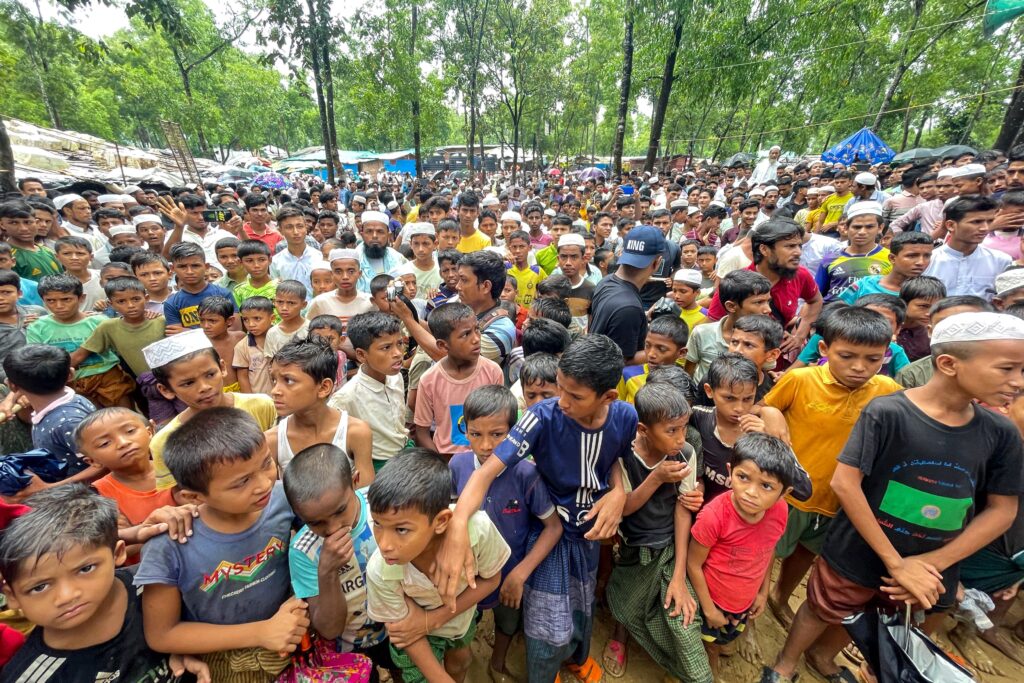
On November 19, the International Court of Justice (ICJ), the United Nations’ highest judicial body, rendered a historic ruling in the case of The Gambia versus Myanmar. The Court determined that Myanmar was guilty of committing genocide against the Rohingya people during the military crackdown in northern Rakhine State in 2017. This landmark decision marks the first time in the ICJ’s 80-year history that a nation has been held accountable for committing acts of genocide.
The International Court of Justice established that the security forces of Myanmar, along with other governmental institutions, perpetrated acts of violence against the Rohingya community. These acts included extrajudicial killings, infliction of severe physical and mental harm, and deliberate measures aimed at preventing the Rohingya population from reproducing, all of which violate the Genocide Convention. The intent behind these actions was to destroy a significant portion of the Rohingya population.
Survivor testimonies reviewed by the Court, alongside findings from international investigative bodies, painted a harrowing picture of the military operations in 2017. Reports indicated that entire Rohingya villages were burned, homes were demolished by bulldozers, and men and boys were murdered. Women and girls experienced brutal sexual violence, and infants were also killed. The evidence cited by the Court suggested that approximately 10,000 Rohingya had been killed, with nearly 400 villages either partially or completely destroyed. The military operations forced around 700,000 Rohingya individuals to flee across the border into Bangladesh.
Furthermore, the Court found that Myanmar had failed to fulfill its obligations to prevent and punish genocide. The nation was accused of systematically destroying evidence and obstructing investigations and prosecutions, including denying UN agencies access to Rakhine State to conduct inquiries.
In its ruling, the ICJ demanded that Myanmar cease any ongoing violations and take legislative action to implement the Genocide Convention. The Court called for investigations into those suspected of perpetrating these crimes and indicated that relevant individuals should be prosecuted and punished accordingly. Additionally, it demanded that displaced Rohingya individuals be allowed to return to their homes and reunite with family members, as well as receive compensation for the harm they have endured.
The ruling was delivered by a panel of judges from various countries, with a majority vote of nine in favor and six against the decision. The International Court of Justice emphasized that this ruling is final and legally binding, with no option for appeal.
Located in The Hague, the ICJ is one of the six principal organs of the United Nations, charged with resolving legal disputes between nations according to international law. However, it is important to note that the ICJ itself lacks enforcement mechanisms.
The case was initiated by The Gambia in November 2019. The Gambia is a small West African nation, home to approximately 2.5 million people and situated far from Myanmar in Southeast Asia. Historically and geographically, there are no ties between The Gambia and the Rohingya people of Myanmar.
The reason The Gambia pursued this lawsuit stems from its predominantly Muslim population and its membership in the Organization of Islamic Cooperation (OIC), which has extended its support to the Rohingya people, who are similarly Muslim. The OIC was established in 1969 as an intergovernmental organization comprised primarily of Muslim-majority states.
As of the time of this report, the military government of Myanmar had not issued an official response to the ruling. Meanwhile, the Myanmar National Unity Government, a government-in-exile that was ousted during a coup, released a statement expressing respect for the authority of the International Court of Justice and its ruling. They committed to carefully studying the Court’s findings and orders while expressing their resolve to hold accountable those responsible and to prevent future atrocities of a similar nature.