
As winter approaches, residents in high-latitude regions may soon find themselves relying on heating systems to fend off the cold. However, this increased usage often leads to a rise in energy costs. To tackle this issue, various experts have shared valuable tips to enhance heating efficiency while saving money.
Max Wilson, co-founder of Pocket Storage, suggests that people should clear large pieces of furniture and heavy curtains away from in front of their radiators. This is essential to ensure that the radiators can operate at maximum efficiency.
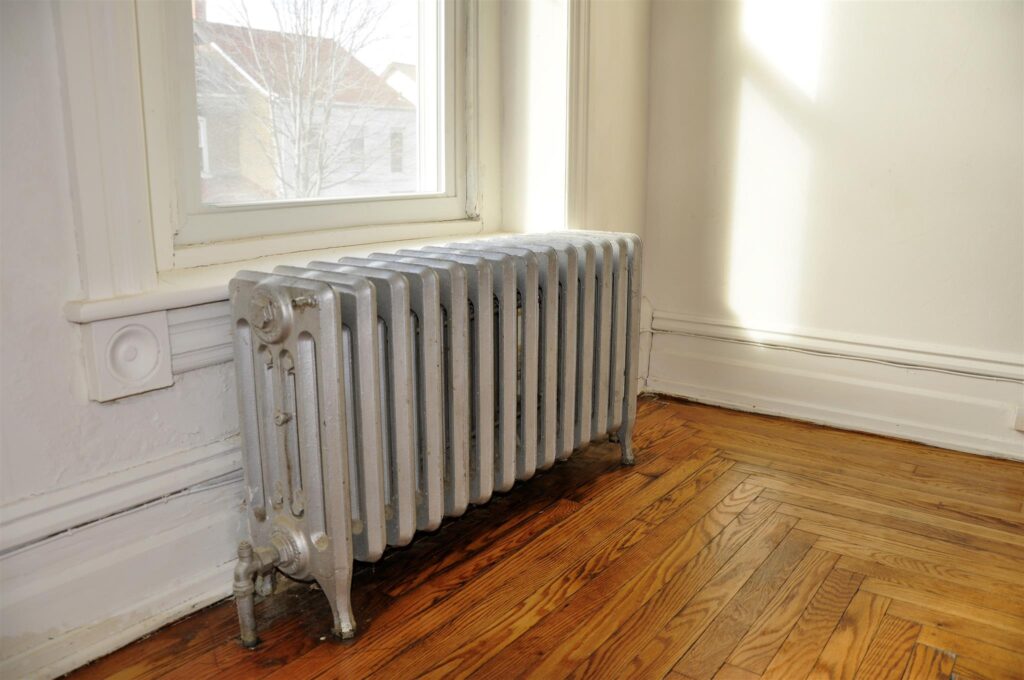
Wilson explains, “Radiators work by heating the air around them to raise indoor temperatures. The warm air then rises and circulates, with cooler air flowing in to replace it. However, when furniture or long curtains obstruct the radiators, this air circulation is hindered, meaning that heat cannot effectively distribute throughout the room.”
The simplest solution is to move furniture as far away from the radiators as possible, ideally allowing for at least six inches (15 cm) of space between them. It’s also important to ensure that curtains do not drape over the radiators, as this would trap the warm air behind them, preventing effective heating.
This tip becomes especially useful in the colder months when reliance on heating systems increases. It requires no cost and can be completed in just a few minutes.
Another effective method to enhance heating is to use radiator fans, which can either be placed on top of the radiator or installed below it. The purpose of these fans is to accelerate the circulation of warm air, preventing heat from accumulating near the ceiling.
James Roberts, a director and professional plumber at Sanctuary Bathrooms, remarks that these specialized fans are quite compact and help to promote airflow over the heated radiator, allowing warmth to be distributed more quickly throughout the room. This can be particularly beneficial on cold winter mornings.
Previously, experts have shared a simple way to save on heating bills using ceiling fans. By switching the direction of the blades to rotate clockwise, you can gently lift warm air, allowing it to descend along the walls after hitting the ceiling, thus circulating throughout the room.
Roberts also advises checking digital thermostatic valves on radiators to ensure there is adequate space around them. Curtains, furniture, or any other objects that block these valves can lead them to misinterpret the room’s temperature by sensing trapped heat, causing them to reduce the heat output when other areas of the room may still be cold.
He states, “Remove any obstructions around the valves to allow for proper airflow. This simple check is both easy and cost-free, especially during winter nights when heavy curtains might inadvertently cover the valves.”
John Collett, head of Quantum Renewables, highlights that installing reflective panels behind radiators is one of the simplest and most cost-effective solutions.
These reflective panels are more effective than standard aluminum foil because they are thicker and often come with built-in insulation that prevents heat loss while boasting a longer lifespan. They can be purchased at home improvement stores or online at low prices. Installation is simple—just adhere the panel to the wall behind the radiator.
Collett explains that, without reflective panels, the heat emitted from the back of the radiator directly warms the wall, ultimately escaping outdoors. The reflective panel sends this heat back into the room, allowing homeowners to benefit from additional warmth without raising the thermostat. They operate throughout winter without consuming additional energy.
Much like other home furniture and appliances, radiators also accumulate dust and dirt over time. Unfortunately, many people overlook the importance of keeping radiators clean.
Simon Bones, founder and CEO of Genous, emphasizes the effects of dust accumulation on radiator performance. “Dust and lint can easily pile up inside radiators, and keeping them clean ensures they operate at their best heating efficiency,” he says.
To clear the dust from radiators, you can use a hairdryer on the cool setting to blow air toward the top of the radiator. This will dislodge and push dust from the top, allowing it to escape from the bottom. Additionally, you can use a specialized radiator cleaning brush to clear out the dust between the fins.
Alongside these suggestions, Nancy Emery, a heating expert from Only Radiators, has shared another tip for saving on heating costs.
She advises that during the milder temperatures of December, people can turn down the temperature control on their heating systems by one degree. This small adjustment will not significantly affect comfort but could save hundreds of pounds throughout the year.
By implementing these practical tips, homeowners can enhance the effects of their heating systems while minimizing their energy bills during the frigid winter months.