
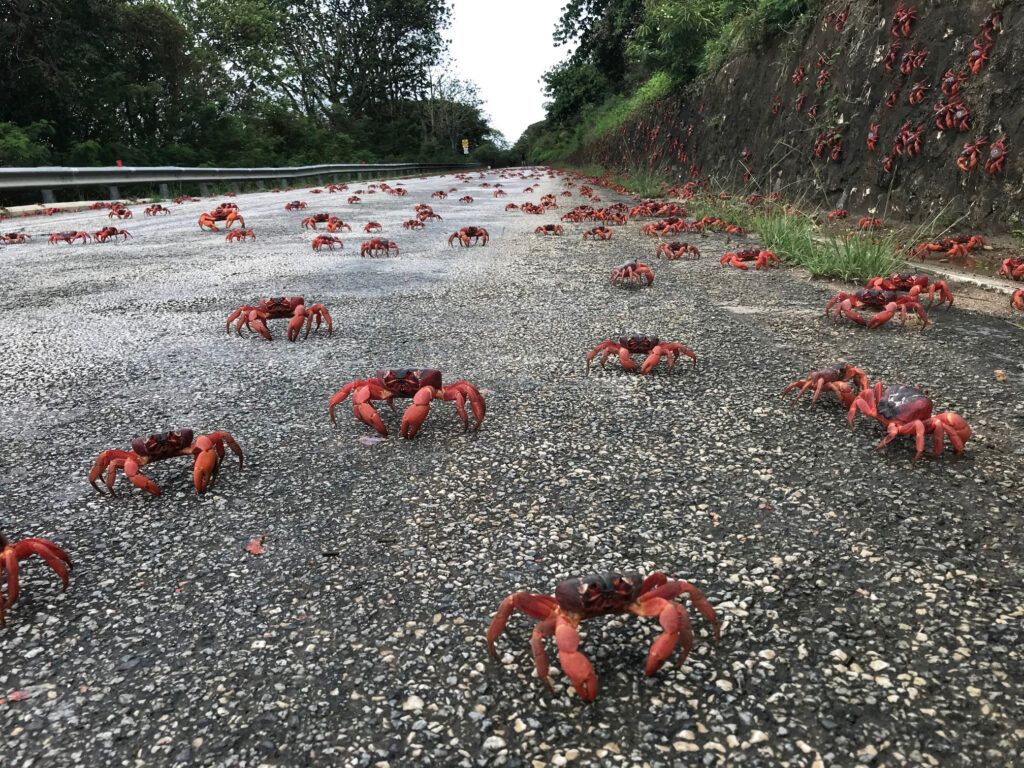
Christmas Island, an Australian territory located in the northeastern Indian Ocean, is currently witnessing an extraordinary natural phenomenon. The island is host to millions of red crabs embarking on their annual migration to the sea, driven by the instinctual quest to mate and reproduce.
The migration is initiated by the first rainfall of the wet season, which typically occurs between October and November, although it can occasionally be delayed until December or January. The exact timing and pace of the migration is significantly influenced by the lunar phases.
As the migration commences, red crabs across the island simultaneously leave their burrows and march towards the ocean to mate and lay eggs. The larger male crabs usually reach the shoreline first, but the number of females quickly surpasses that of the males. After this long and arduous journey, the crabs dip into the sea to hydrate before returning to their burrows.
Following this initial dip, the male crabs retreat to the low-lying plateaus of the island to excavate new burrows. Given the sheer number of crabs involved, these burrows are situated very close to one another, leading to territorial disputes as males compete fiercely for favorable nesting spots.
Subsequently, female crabs arrive at the plateaus to mate with the males either within or near the burrows. Once mating is concluded, the males dive back into the ocean before commencing their journey home.
The females wait for the right moment to lay their eggs, which occurs during the waning phase of the moon at high tide, just before dawn. Remarkably, they exhibit an innate ability to time their exit from the burrows perfectly to ensure egg-laying coincides with this specific lunar cycle, after which they will return to the rainforest.
However, since the crabs wait for the first significant rainfall to trigger their migration, there are times when they must adjust their pace. If the rain coincides closely with the optimal mating period, they will hasten their journey; conversely, if the rain arrives too early, they may wander leisurely, stopping to feed along the way.
In cases where the rainfall comes too late, resulting in the missed egg-laying window, some crabs may remain in their burrows and postpone their migration until the following month.
To facilitate the migration and protect the red crabs, the Christmas Island National Park is conducting daily live streams showcasing the crabs as they traverse a specially constructed bridge. This bridge, standing at 16 feet (approximately 4.9 meters), enables the crabs to safely cross busy roads during their trek to the coast.
During peak migration periods, authorities implement road closures for all or part of the day, often providing immediate notifications to the public. However, visitors can park their vehicles and carefully walk among the moving hordes of red crabs, allowing for an intimate observation of their remarkable journey to and from the beach.
Covering an area of about 135 square kilometers, Christmas Island’s red crab migration stands as its largest tourism highlight, drawing nature enthusiasts from around the globe to witness this spectacle of natural wonder.