
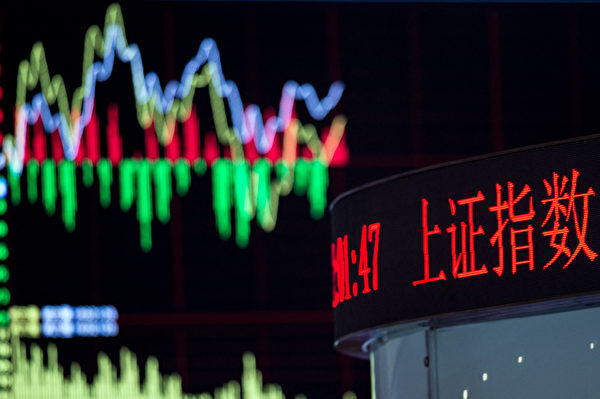
On November 16, the A-share market experienced significant declines, with over 4,300 stocks trading in the red. Major indices collectively fell, indicating a widespread downturn.
The tech sector faced particularly severe losses, with the ChiNext Index plummeting over 4%. During trading, the Shanghai Composite Index briefly dipped below the 3,600-point mark but managed to close just above this critical level. Both the blue-chip Shanghai and Shenzhen 300 Index and the Shanghai Composite Index approached their lowest points since July 2025.
By the end of the trading session, the Shanghai Composite Index was recorded at 3,602.57 points, down by 31.78 points or 0.87%, with an intraday low falling to 3,586.57 points. The Shenzhen Component Index finished at 10,690.78 points, losing 2.53%, while the ChiNext Index closed at 2,320.02 points, marking a sharp decline of 4.37%. The Shanghai and Shenzhen 300 Index closed at 3,979.80 points, down by 0.91%.
According to reports, both the Shanghai Composite Index and the Shanghai and Shenzhen 300 Index are nearing their lowest levels since July 2025. Since the beginning of this year, the Shanghai and Shenzhen 300 Index has seen a cumulative drop of roughly 14%.
In terms of trading volume, the total turnover for the Shanghai and Shenzhen stock exchanges was about 1.48 trillion yuan (approximately $215 billion), reflecting a decrease of about 171.2 billion yuan compared to the previous trading day, further indicating a contraction in market activity.
The stock market demonstrated a widespread decline, with 4,344 stocks falling while only 1,136 managed to rise, and an additional 99 stocks remained unchanged. A total of 68 stocks hit their daily price limit downs, while only 33 stocks reached the daily price limit ups, resulting in a prevailing lack of profitability across the market.
Sector-wise, stocks related to artificial intelligence hardware faced heavy selling pressure. Notable declines were observed in telecommunications equipment, components, semiconductors, electronics, and consumer electronics sectors.
Among the major declines, the 5G Communications Index fell by approximately 7.5%, reaching a one-year low; the sci-tech innovation 50 Index dropped by 5.16%. Shares of Zhongji Xuchuang, a key supplier of high-speed optical modules for AI data centers, plummeted by 12.28%, closing at 408.97 yuan, after hitting an intraday low of 406 yuan, which marked a new low for the year. Stocks of related companies like Xinyi Sheng and Tianfu Communication also suffered significant drops, with Cambridge Technology reaching its daily limit down.
It is noteworthy that Zhongji Xuchuang, which had peaked at 1,416.88 yuan on June 22, faced a dramatic decline to 406 yuan on November 16, representing a staggering fall of around 71.3% from its high.
In contrast to the general downturn, the banking sector showed some resilience in trading, and the AI animated drama concept experienced a slight rebound, while the home appliance sector saw unexpected lifting.
On the same day, various topics related to the performance of the A-shares trended on social media platform Weibo. Economist and financial blogger Ye Aimao expressed concerns regarding Zhongji Xuchuang, stating that the stock’s price plummeted from its earlier highs, highlighting market volatility and suggesting that large investors may reduce their exposure to the ChiNext Index.
Another financial commentator, Koreyoshi, pointed out that trading volume had fallen below 1.5 trillion yuan, suggesting that liquidity had been significantly locked up, contributing to a loss of approximately one trillion yuan in A-share market capitalization that day.
Additionally, financial analyst Jin Jie Dingpan highlighted the stark contrast between the Shanghai Composite Index, which barely held above 3,600 points, and the significant decline exceeding 4% in the ChiNext Index, illustrating disparities in market sentiment. This commentator noted a broad sell-off in growth sectors, including computing power, optical modules, and semiconductors. The analysis indicated that funds were flowing out of overvalued tech stocks and into undervalued defensive sectors, such as banking and home appliances, which were protected by larger capital weights that prevented an outright crash in indices.
Many market participants believe that the recent adjustment in tech stocks stems from a combination of domestic and international pressures. Concerns regarding the uncertainty of major overseas tech players, combined with earlier crowded investment positions in growth sectors, have led to a continued sell-off with no quick rebound in sight.
Recent data released by China’s National Bureau of Statistics further deepened the market’s pessimism. In October 2026, the industrial output for large-scale enterprises grew by only 4.8% year-on-year, falling short of the 5.3% anticipated by analysts and showing a notable slowdown from 5.5% in September. Retail sales also saw a mere 0.4% increase, which was underwhelming compared to projections of 0.8% and down significantly from 1.1% in September.
Moreover, fixed asset investment for the first ten months dropped by 8.1%, a decline greater than the previously recorded 7.2% for the first nine months of the year, highlighting ongoing domestic demand issues. CNBC reported that such a steep decline in investment levels hasn’t been seen outside of the COVID-19 pandemic period.
The long-term malaise within China’s real estate market continues to erode family wealth and further suppress consumer spending.
Conversely, exports have surged, providing crucial support for economic growth. However, analysts warn of a heightened reliance on foreign markets that could expose the Chinese economy to fluctuations in AI demand and potential trade restrictions.
Overall, the current market conditions portray a complex and challenging landscape for investors, with cautious sentiments prevailing as market confidence remains to be revived.