
The 49th ASEAN (Association of Southeast Asian Nations) Summit commenced on November 15 in Manila, Philippines, but unfortunately, ASEAN and China were unable to finalize negotiations on the Code of Conduct (COC) in the South China Sea. One major point of contention between the two parties involves whether the agreement will have legal binding authority.
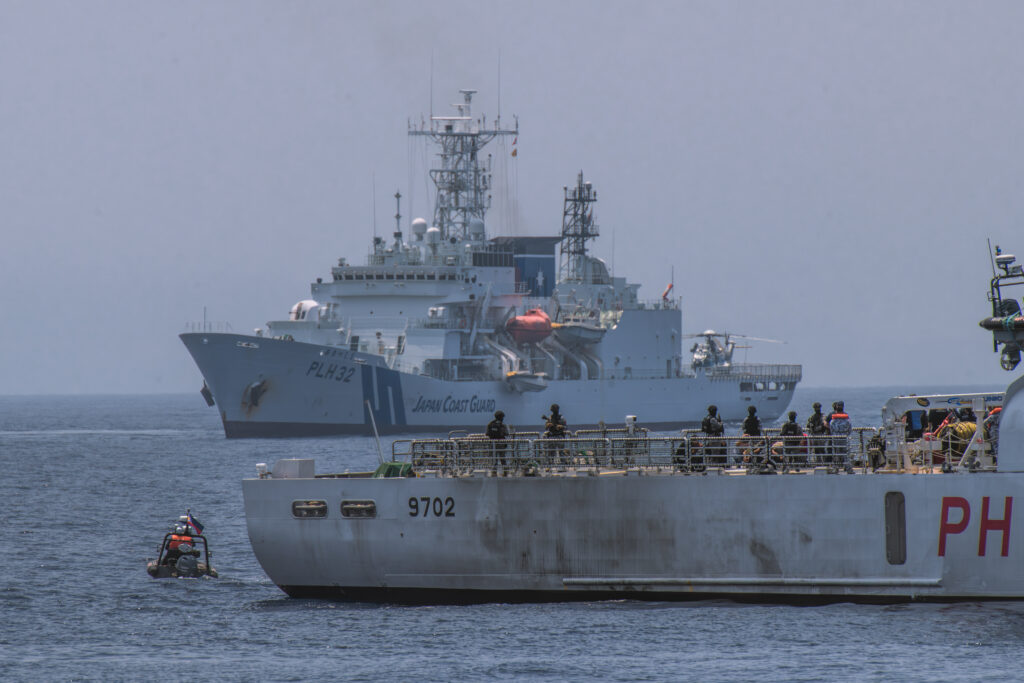
As tensions rise over China’s maritime expansion in the South China Sea, Japan and the Philippines are accelerating their security cooperation. This cooperation spans various areas, including patrol monitoring, equipment assistance, and military agreements, ultimately aimed at establishing a more substantial maritime deterrent capability.
According to reports from a news agency, Philippine Foreign Secretary Ma. Theresa Lazaro stated during the ASEAN Summit that ASEAN and China have yet to reach a final agreement on the COC. The Philippines currently holds the rotating chair of ASEAN and had hoped to complete the negotiations by the end of the year. However, several critical issues remain unresolved, including the legal status of the guidelines and the differing perceptions of the South China Sea situation among the parties involved.
A report highlighted that both sides have reached a preliminary consensus concerning the relationship between the 2002 Declaration on the Conduct of Parties in the South China Sea (DOC) and the future COC. Nevertheless, many unresolved disputes regarding the legal effects of the agreement and other pending differences still need to be addressed.
ASEAN and China signed the DOC in 2002, and in 2017, they adopted a framework for the COC negotiations, which officially commenced in 2018. By 2023, there was a mutual agreement to accelerate the process with the aim of completing it within three years. Certain ASEAN member nations, including the Philippines, advocate for the COC to have legal binding authority based upon international law to establish effective maritime conduct regulations. In contrast, China has repeatedly expressed its refusal to accept or recognize the 2016 South China Sea arbitration ruling.
The South China Sea serves as a vital conduit for global maritime transport, with approximately $3 trillion worth of international trade passing through each year. China’s sweeping maritime claims overlap those of the Philippines, Vietnam, Malaysia, Brunei, and Indonesia, which has also encountered related frictions in the Natuna Sea region.
Southeast Asian research institute ISEAS noted that Beijing prefers a non-binding COC, while several ASEAN countries wish to establish an agreement founded on legal principles along with effective oversight mechanisms. This raises concerns that even if negotiations are completed in the future, the effectiveness of the COC in restricting unilateral changes to the maritime status quo may be doubtful without clear binding authority and enforcement mechanisms.
Reports indicate that the plight of Filipino fishermen has revealed China’s ongoing efforts to expand its control over the South China Sea. Through coast guard patrols, law enforcement actions, and administrative regulations, Beijing appears intent on transforming its maritime claims into a sustained form of actual control, which has been characterized by analysts as a trend towards making the South China Sea an “inland sea.”
According to news sources, fishermen from Masinloc, on the west coast of Luzon in the Philippines, used to frequently fish in the Scarborough Shoal area. However, as China has intensified its actual control over these waters, the monitoring and aggressive actions by Chinese coast guard vessels have led to increasingly perilous conditions for local fishermen. Traditional fishing grounds have increasingly become areas of significant danger for them.
In July 2016, the Permanent Court of Arbitration in The Hague announced its ruling regarding the South China Sea. The tribunal concluded that Scarborough Shoal is an area where fishermen from China, the Philippines, and other nations have long engaged in traditional fishing activities. Filipino fishermen have traditional fishing rights in the area, and the actions of the Chinese coast guard to prevent them from fishing infringed upon these rights.
China not only rejected the arbitration ruling but in September 2025, it announced the designation of Scarborough Shoal as a national-level natural reserve.
This development has occurred amid escalating maritime tensions between China and the Philippines, with the Philippine side expressing concerns that China might further reinforce its actual control over the disputed waters.
Reports from various media outlets have documented numerous accusations from the Philippines against Chinese coast guard and maritime militia vessels, alleging that they engaged in dangerous actions within the Philippines’ exclusive economic zone, including dangerous proximity, the use of water cannons, and obstructing resupply missions.
As of late September, Chinese coast guard and Southern Theatre Command forces engaged in joint exercises near Scarborough Shoal, reflecting a continuing pattern of military posturing in the area.
Tracking data has indicated that Chinese coast guard and military vessels consistently intercept and shadow Philippine vessels in relevant waters. This pattern suggests that Beijing is not only attempting to maintain a maritime presence but also striving to establish a maritime control order led by China through continuous patrols, law enforcement actions, and administrative measures.
The ongoing expansion of China’s maritime control has placed greater security pressure on the Philippines. In light of the challenges in resolving disputes through diplomatic means, the Philippines has started to actively seek external security collaboration, with Japan shifting from diplomatic support to tangible equipment assistance and military cooperation.
In the face of China’s expansion in the South China Sea, Japan and the Philippines are enhancing cooperation from diplomatic engagements to building maritime security capabilities.
Recent reports reveal that Japan plans to provide the Philippines with coastal surveillance radar and drones through its Official Security Assistance (OSA) program, aimed at strengthening the Philippine Navy’s maritime monitoring capabilities and the Air Force’s reconnaissance abilities.
The Japanese Foreign Ministry announced on November 9 that Japan has signed an OSA plan amounting to 4.3 billion yen for 2026. According to the announcement, Japan will supply the Philippine Navy with coastal surveillance radar and the Air Force with monitoring drones to bolster the Philippines’ ability to monitor surrounding waters and crucial shipping lanes.
This marks the first instance of Japan transferring defense equipment under the OSA program, illustrating a shift in Japan’s security assistance to the Philippines from general equipment and infrastructure support to direct enhancements of military monitoring capabilities.
Additionally, military cooperation between Japan and the Philippines is becoming increasingly institutionalized. A Reciprocal Access Agreement (RAA) was formally implemented on September 11, 2025, establishing a legal framework for mutual visits, joint exercises, and disaster assistance collaboration between the Self-Defense Forces of both countries.
The Agreement on Cooperation on Mutual Provision of Supplies and Services (ACSA) took effect on August 22, 2026, creating an institutionalized way for armed forces of both nations to provide mutual logistical support, including fuel, food, and transportation during joint exercises and related operations.
Statements from Japan’s Ministry of Defense released on October 28 noted that both countries have started translating military agreements into practical cooperation. During a joint exercise in October, the Japan Air Self-Defense Force received logistical support from the Philippine Air Force for the first time based on the ACSA.
Furthermore, the Japan Self-Defense Forces have participated in live-fire anti-ship missile training during the Philippines’ “Shoulder-to-Shoulder” joint exercises, highlighting that bilateral cooperation has expanded from personnel exchanges to actual military training, logistics, and operational coordination.
Moreover, cooperation is no longer confined to equipment assistance. Analysis from Singapore’s S. Rajaratnam School of International Studies noted that the Philippines is becoming an important security partner for Japan, with Japan-Philippines collaboration evolving from equipment assistance to institutionalized and practical cooperation.
In addition to bilateral cooperation, trilateral security collaboration involving the United States, Japan, and the Philippines continues to deepen. A research report from the Center for a New American Security clearly identified China’s military expansion and coercive activities in the Indo-Pacific region as driving factors for enhanced trilateral cooperation.
It suggested that the United States, Japan, and the Philippines should deepen military collaboration to bolster deterrence against the military threats posed by China in Taiwan, the South China Sea, and the East China Sea, making trilateral cooperation a crucial pillar of the United States’ Indo-Pacific deterrence strategy.