
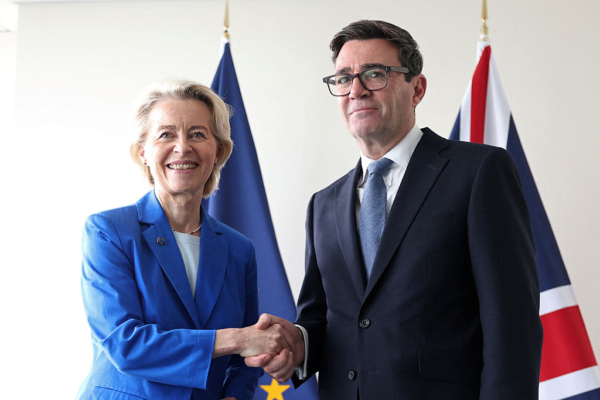
On November 16, the Prime Minister of the United Kingdom, Andy Burnham, is set to deliver a significant speech addressing the ongoing implications of Brexit. In his remarks, he is expected to candidly state that Brexit “has not worked,” and express the sentiment that “we have lost more than we have gained.” He aims to reshape the relationship between the UK and the European Union (EU) during the upcoming summit scheduled for November 20 in Brussels.
In excerpts from his speech released in advance by the Prime Minister’s office, Burnham is poised to speak at the Lord Mayor’s Banquet in the City of London. He will emphasize that it is crucial to acknowledge a glaring truth: Brexit has resembled the proverbial “Emperor’s New Clothes,” as it has failed to deliver the promised outcomes desired by the British public. According to Burnham, the result has ultimately been a loss rather than a gain.
At the summit, Burnham plans to negotiate agreements with the EU on several key issues, including food and agriculture, carbon emission trading, and youth mobility programs. These agreements are designed to alleviate living costs for the British populace in the short term, benefit UK exporters, and facilitate easier living and working opportunities for young people looking to travel to Europe. Furthermore, these negotiations aim to address some of the trade frictions that emerged after the UK’s exit from the EU in 2020.
Earlier this month, Burnham indicated that these agreements could boost the UK’s Gross Domestic Product (GDP) by 0.4%, equivalent to approximately £17 billion. The proposed agricultural agreement seeks to eliminate routine border checks on most food and plant products, while the youth mobility program would allow individuals under 30 from the UK and the EU to live, work, and travel in each other’s territories.
Initially planned for July, the summit was postponed following the resignation of former Prime Minister Keir Starmer.
In his upcoming address, Burnham will introduce a “three tests” approach for the new agreements:
The first test stipulates that they must not exceed the “red lines” established in the Labour Party’s 2024 electoral manifesto, which explicitly rules out rejoining the EU customs union and single market, as well as the restoration of free movement of people.
The second test requires the agreements to reflect the vision that voters anticipated during the 2016 referendum on Brexit.
Finally, the third test—referred to as the “Makerfield Test,” named after Burnham’s parliamentary constituency—will ensure that there are tangible improvements in the daily lives of the public.
These red lines were originally articulated by Starmer in the Labour Party’s election manifesto and will remain in effect until the next election, which is scheduled for 2029. Burnham has previously stressed that the future direction of Brexit should ultimately be determined by the voters themselves.
He stated, “We want to work with the EU, but we also need to respect the red lines outlined in our manifesto and the results of the referendum back then.”
Recently, the UK government has continued to engage in discussions with the EU on cooperation topics such as education and energy, seeking to establish new frameworks for collaboration in the post-Brexit landscape.