
Hindalco Industries, an Indian aluminum manufacturing company, announced on Sunday that its wholly-owned US subsidiary, Novelis, has agreed to sell two of its Chinese subsidiaries for approximately $265 million. This information was disclosed in a document submitted to the stock exchange.
According to the final agreement, the two subsidiaries—Novelis (China) Aluminum Products Co., Ltd. and Novelis (Shanghai) Aluminum Trading Co., Ltd.—will be sold to Shenzhen Hongzhi Industrial Investment Co., Ltd. or its affiliated entities.
The regulatory documents indicate that the transaction price is estimated at $265 million, and if certain agreed-upon conditions are met, the buyer will additionally pay $10 million.
The sale agreement was signed on November 14, and the deal is expected to be completed within 12 months, pending approval from regulatory authorities.
Just days before this transaction was announced, Dev Ahuja, the Chief Financial Officer of Novelis, revealed his departure from the company. This change in leadership comes at a pivotal moment for Hindalco.
In trading last Friday, Hindalco’s stock closed at 944.40 rupees, marking a decline of 19.80 rupees, or 2.05%, from the previous day’s closing price. The stock opened at 955 rupees, reaching a 52-week high of 1,179.35 rupees and a low of 772.25 rupees over the same period.
Hindalco commented that these two Chinese subsidiaries generated net sales of $376 million for the fiscal year ending March 2026, contributing approximately 1% to the company’s overall net sales. This divestment comes at a time when several foreign manufacturers are reassessing their operations in China amid increasingly fierce domestic competition and shifts in the global supply chain.
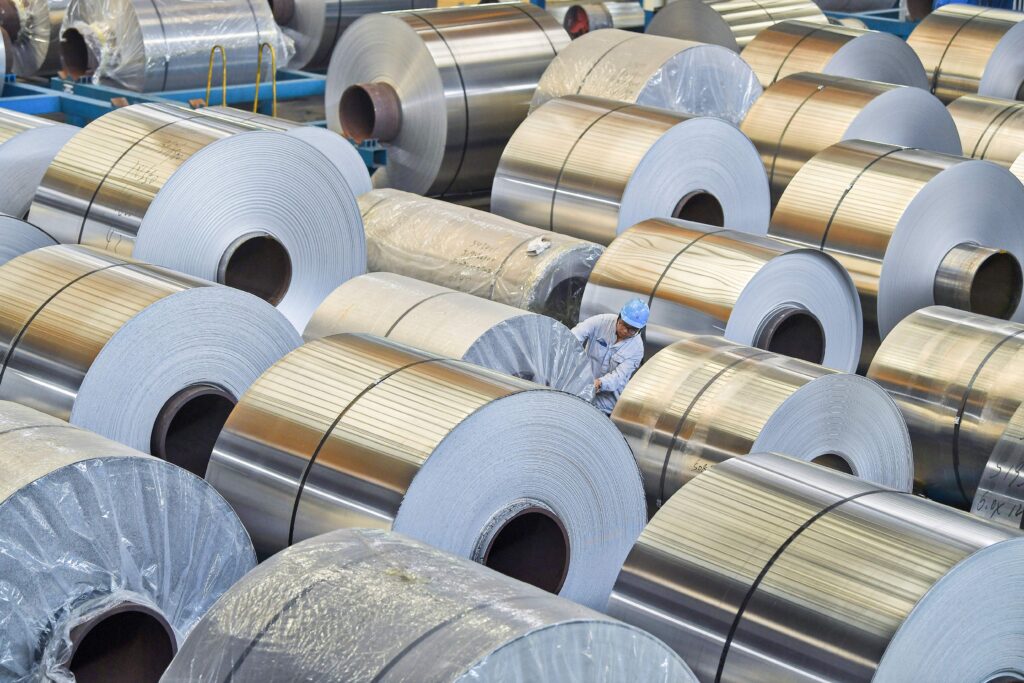
Novelis stands as one of the world’s largest producers of aluminum flat-rolled products and is a key supplier to the automotive, beverage can, and aerospace industries.
In recent years, the United States has imposed significant tariffs on key steel and aluminum products imported from China and most other economies, under Section 232 of the Trade Expansion Act of 1962. Furthermore, U.S. officials have urged Mexico to follow suit in taxing Chinese steel and aluminum products.
A report by Bloomberg in July cited four sources who revealed that U.S. trade officials had presented this request to Mexico. This initiative aims to establish common trade barriers among the U.S., Mexico, and Canada against China.
For an extended period, the U.S. government has been encouraging the Mexican government to prevent Chinese manufactured goods from using Mexico as a gateway to enter the United States market.
Overall, this strategic move by Hindalco indicates a significant shift in the international aluminum market, reflecting broader trends as companies navigate the complexities of global trade relationships and the evolving landscape of domestic and foreign competition.