
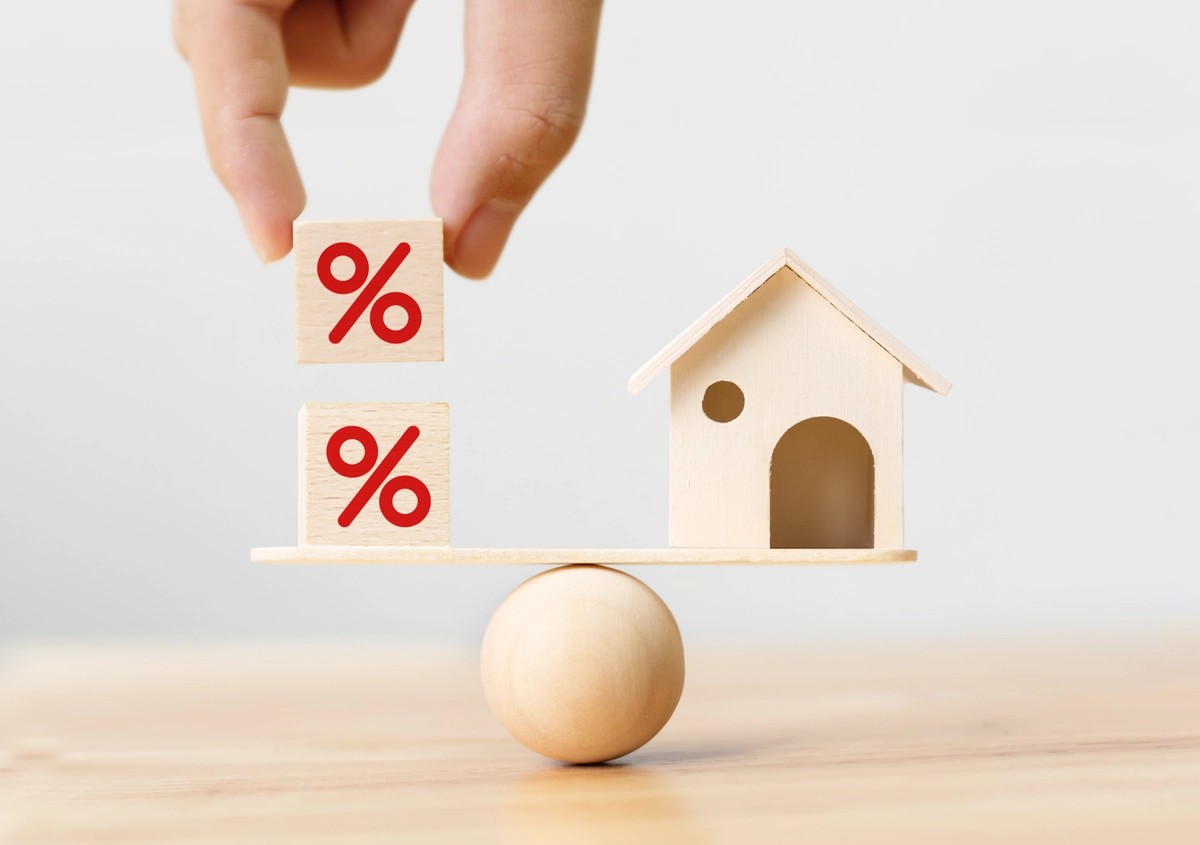
In recent times, American homebuyers are facing a new reality: the interest rate for 30-year fixed-rate mortgages has exceeded 7%.
In October, Lawrence Yun, Chief Economist of the National Association of Realtors (NAR), reminded borrowers to consider 7% as the new normal.
The breakthrough in interest rates has prompted many potential homebuyers to reassess their home-buying budgets. At such interest rate levels, what criteria do homebuyers need to meet to qualify for a loan?
However, qualifying for a mortgage is just the beginning. The more important question is: can you comfortably afford the monthly expenses of the house and all related additional costs without jeopardizing your financial situation? Regardless of the interest rate, this is part of the overall cost of homeownership.
According to a Major Mortgage Market Survey released by Freddie Mac on October 1st, the average interest rate for a 30-year fixed-rate mortgage is 7.28%, up from 7.03% the previous week. Last year, the average interest rate for a 30-year fixed-rate mortgage was 6.34%, and for a 15-year fixed-rate mortgage, it was 6.60%.
With borrowing costs staying high, personal financial management ultimately depends on a simple reality: how much money do you have left in your bank account at the end of the month?
Buying a house in a 7% interest rate environment requires carefully crafting a financial strategy.
Understanding the true cost of a 7% mortgage rate involves looking at how it affects your home-buying ability and the monthly repayment amount. Even slight differences in mortgage rates can accumulate into thousands of dollars of cost differences over the loan term.
For example, assuming a borrower with an annual income of $100,000, no monthly debt, a 20% down payment, and a debt-to-income ratio not exceeding 50% of pre-tax monthly income to calculate the maximum loan amount.
In this scenario, just a 2% increase in the interest rate reduces the purchasing power of this homebuyer by approximately $41,000.
The monthly budget is also directly impacted by this difference.
This variance results in an increase of nearly $227 in monthly mortgage payments, equivalent to an additional fixed repayment of $2,724 per year. For many, this is a significant amount. Furthermore, higher mortgage rates also lead to paying more interest over the loan term.
One common mistake made by many first-time homebuyers is considering the bank-calculated principal and interest repayment amount as the total cost of owning a home.
In reality, mortgage payments are not the entirety of housing expenses. Homebuyers need to budget for additional expenses, as failing to do so can easily lead to financial stress. Property taxes, home insurance, and Homeowners Association (HOA) fees are compulsory expenses that increase your monthly housing burden.
Additionally, homes require ongoing maintenance. Roofs may leak, water heaters may fail, and appliances may need replacement. These costs add up and are not insignificant.
Buyers who stretch their budget to meet the income requirements for a 7% mortgage rate often find themselves with minimal leftover funds to handle these hidden costs. Pushing the debt-to-income ratio to the limit can easily trigger a debt crisis when faced with high maintenance costs.
In recent years, a tempting adage has gained popularity in the real estate industry: “Hold onto the house for the long term; rates can be refinanced later.”
This idea may pose significant financial risks. Relying entirely on future refinancing at lower rates is akin to painting oneself into a corner.
Mortgage rates may not significantly decrease for many years, and those who have stretched their budget to the limit may find themselves overwhelmed, struggling with repayments. Bankruptcy or losing the home is a real possibility.
A more prudent approach is to ensure that at the current interest rate level, you can comfortably afford the mortgage and leave enough financial leeway. If rates decrease in the future, refinancing will be an additional benefit rather than a lifeline.
If you cannot comfortably afford the mortgage repayments at a 7.28% interest rate, you should seriously consider if buying a home is the right choice.
When interest rates remain high, every dollar is critical. Seeking advice from multiple lenders and comparing loan options is one of the most effective ways to reduce the overall borrowing costs. The Consumer Financial Protection Bureau (CFPB) highly recommends comparing at least three loan offers.
The interest rates or conditions prominently advertised by lenders often differ from the specific loan terms borrowers may receive. Even slight differences in fees between lenders can severely erode your ability to pay monthly expenses.
Understanding the difference between Interest Rate and Annual Percentage Rate (APR) of mortgages is crucial.
Furthermore, the decision to pay a fee upfront to secure a lower mortgage rate should be considered. This practice, known as buying discount points, usually involves paying upfront costs at the closing of the loan. Whether it’s worthwhile depends on how long you plan to hold the loan and if the upfront costs can be recouped through subsequent interest savings.
Buyers should calculate the total cost of the loan based on several different holding periods.
Through these calculations, you can figure out whether paying additional fees upfront to secure a lower rate in the early stages of the loan will save you money in the long run.
If you’re unsure about how to choose, consulting a housing counselor certified by the Department of Housing and Urban Development (HUD) is recommended.
Utilizing a high-interest rate environment to negotiate better homebuying terms
While a 7% mortgage rate presents challenges to homebuyers, it can also create unique opportunities.
Higher rates often dampen housing demand, and depending on the real estate market you’re in, this could provide significant bargaining power.
Danielle Hale, Chief Economist at Realtor.com, echoes a similar sentiment, highlighting that “housing affordability remains a core constraint,” yet well-prepared buyers can gain “more choices, less competition, and more negotiation room.”
When market competition weakens, buyers can try to negotiate lower home purchase prices.
An increasing number of savvy buyers also utilize sellers’ incentives by opting for Temporary Buydown plans.
Temporary Buydown plans reduce the interest rate and monthly repayment amount in the initial years of the mortgage, providing buyers with more breathing room to gradually adapt to the various expenses of homeownership. While this advantage may be smaller in a limited housing market, in a softer market, buyers can offset some borrowing costs through this strategy.
One of the best ways to assess housing affordability is by conducting a “end-of-month financial check.”
After completing all budget calculations, ask yourself, “Do I have enough cash left after paying the mortgage and related expenses to cover unforeseen expenses like emergency medical bills, car repairs, or sudden unemployment?”
A sound financial plan must include adequate cash reserves to handle unexpected situations.
Qualifying for a 30-year mortgage at 7.28% interest is only permission to buy a house. True financial success lies in crafting a balanced and strategic budget, ensuring financial stability long after signing the home purchase documents.