
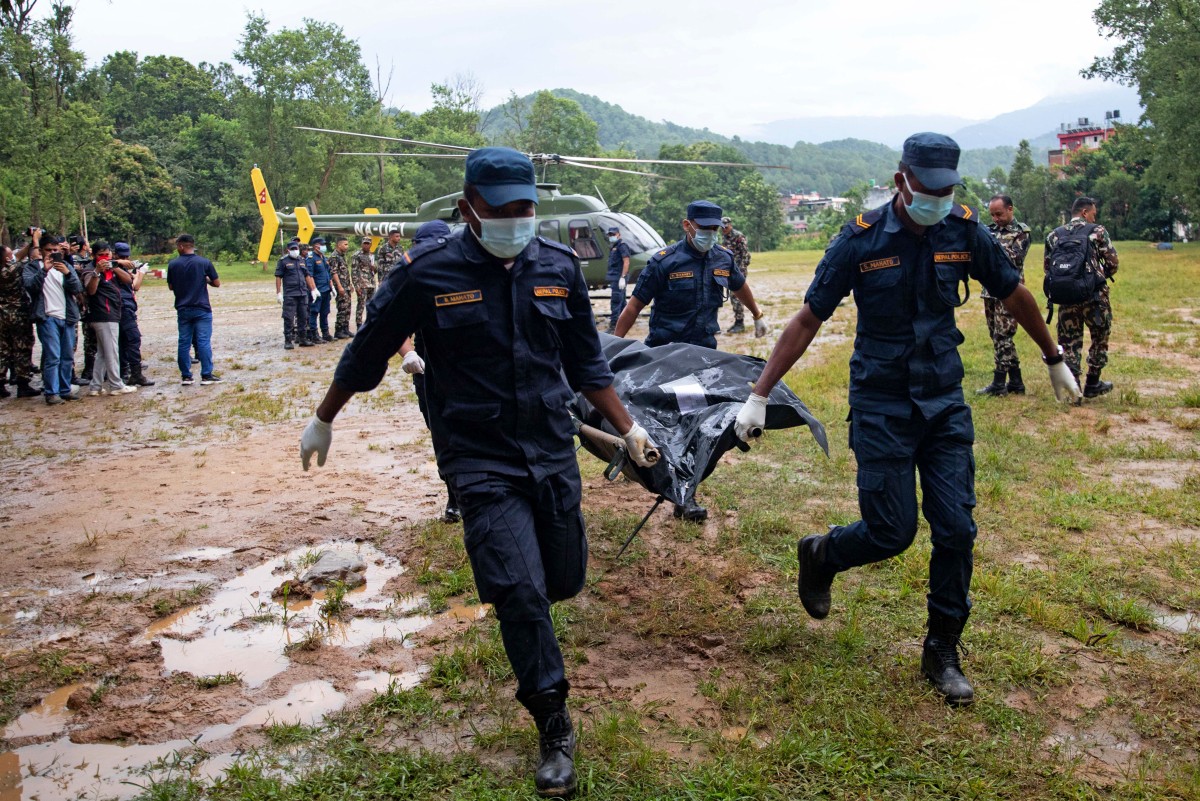
On Friday, August 28, the flooding incident along the Nepal-Tibet border has entered its third day. The death toll in Nepal has risen to nearly 600, with the number of missing persons almost doubling to nearly 2,000. Rescue teams are tirelessly pulling survivors covered in mud out of the debris. Due to strict media control by the Chinese Communist Party, information about the disaster in Tibet is scarce.
The Nepalese army has been deployed to assist in rescuing people trapped in the most severely affected areas, including a hydropower station tunnel. Just like in other parts of the disaster area, thick mud covers the site, making rescue operations extremely challenging.
According to the Nepalese disaster management department, the floods in the country have claimed the lives of 579 people. The Nepalese police subsequently reported a death toll of 553. Information about survivors on the Chinese side is limited.
Up to now, over 3,700 people have been rescued in Nepal. Meanwhile, as more local residents are accounted for, the number of missing persons has almost doubled to 1,924 individuals. Among the missing are hundreds of foreigners who were working locally, trekking, or on pilgrimage to sacred mountain peaks. The Nepali newspaper “Kathmandu Post” reported on Friday that Nepal has reversed its previous decision and will allow foreign rescue teams and experts to assist in the rescue efforts. This move appears to be due to pressure from other countries, especially those with citizens missing.
Upon receiving news of a dam breach on the Tibetan side, the Nepalese police issued a new alert on Friday. Security forces and rescue teams were instructed to remain vigilant and evacuate to safe areas when necessary.
It is currently unclear whether the dam breach is related to the potential risks of flooding from the formation of lakes after the sudden floods.
In the Rasuwa region of Nepal, hundreds of people are trapped in thick mud inside the tunnel of the Upper Trishuli-1 hydro project. Nepalese army rescue personnel are working tirelessly to rescue the trapped individuals. The military stated that they have rescued 350 individuals from the tunnel so far.
Footage from the scene shows rescue workers assisting a man covered in mud to exit the tunnel through pushing and pulling.
Brigadier General Raja Ram Basnet, spokesperson for the military, stated, “Due to everything being covered in mud, determining the entrance and exit of the tunnel has become extremely difficult.”
The Nepalese disaster management department reported that 3,253 people have been evacuated from the disaster-hit area by helicopter.
Scientists studying satellite images have indicated that a rock collapse beneath a glacier in the Himalayan region triggered the massive landslide, leading to the sliding of a portion of the glacier. The rockfall was of a large scale, causing tremors equivalent to a 5.2 magnitude earthquake. The fallen rocks and melted water raised the water levels in downstream valleys, resulting in a torrential flow that washed away buildings, bridges, and sediments in Tibet and Nepal.
Nepalese customs official Karbir Gaire is one of the survivors from Timure village; it is the nearest Nepalese village to the Chinese border with approximately 1,500 residents.
Around 8 am on Wednesday, Gaire was in his office working on the computer when he felt the ground shaking for the first time.
“As soon as the tremors passed, I noticed a ‘black storm’ approaching us,” he recalled while reuniting with his family in Kathmandu, “All of us immediately ran outside and within seconds climbed a high slope across from the office building. I think those brief ten seconds saved some of us.”
Fifteen of Gaire’s colleagues are missing. “The scene was like a Hollywood movie. I wouldn’t call it a flood; it was more like a tsunami,” he said.
The Nepalese Tourism Board stated that among the missing persons are over 500 foreigners, with around 90 Americans unaccounted for.
Although the Nepalese government has released a list of rescued individuals, information about the situation on the Chinese border side is scarce.
Officials from the Chinese Communist government maintain strict control over the media. Information about major disasters is usually delayed and does not include personal stories of the victims. State media reports primarily focus on the process of rescue teams rushing to the disaster area or directives from top leadership.
Some of the missing persons may have been en route to Mount Kailash in Tibet for pilgrimage. Indian guru Jaggi Vasudev, also known as Sadhguru, posted on social media platform X that his organization, the Isha Foundation, had organized this pilgrimage. When the flood struck, 77 members of the returning group were at the Gyirong border post in Tibet.
Vishnuram Ramaswamy, who works for a private company in the southern Indian city of Puducherry, recounted speaking with his mother and two sisters participating in this pilgrimage on Wednesday morning. He shared that this was a long-awaited trip and a dream of his mother.
“That was our last conversation with them,” he said, “We haven’t been able to reach them since.”