
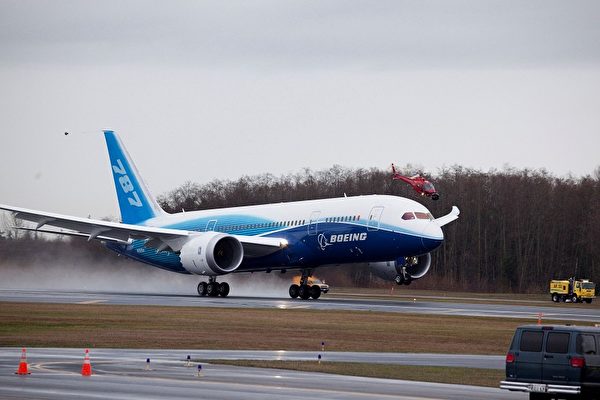
The Federal Aviation Administration (FAA) has ordered inspections of certain Boeing 787 Dreamliner aircraft due to potential manufacturing errors. The company discovered that the gaps between some components exceeded the allowable range specified in engineering standards during an investigation into aircraft manufacturing.
In the final airworthiness directive issued by the FAA on Wednesday, August 26th, it stated that Boeing’s investigation “concluded that shim gaps may exceed engineering tolerance values, and high tension loads on components may lead to fatigue cracking at fastener holes.”
The aviation regulatory agency further stated that if left untreated, these cracks “could gradually propagate, compromising the primary structural strength of the wings until they can no longer sustain ultimate loads, resulting in the inability of the aircraft to continue safe flight and landing.”
Shim gaps refer to small spaces at the junctions of aircraft components, such as those found in the fuselage or wing sections. These gaps are typically filled with tiny metal shims or other solid or liquid materials to meet strict engineering specifications.
According to the FAA’s estimates, the newly issued airworthiness directive covers 17 aircraft registered in the United States. The agency also requires ultrasonic inspections and detailed examinations to be conducted for the relevant issues.
After years of safety crises, Boeing has been working to regain the trust of aviation regulators over the past year. In September last year, the FAA announced that Boeing could self-approve airworthiness certificates for certain 737 MAX and 787 Dreamliner aircraft before delivering them to customers. This marked a significant change for the aerospace manufacturing giant after the FAA stopped allowing Boeing to self-certify 737 MAX aircraft in 2019 and also made a similar decision regarding the Boeing 787 model in 2022, which has significantly boosted the damaged reputation of the aircraft manufacturer. Previously, the 737 MAX aircraft had two fatal accidents, and the 787 model was also identified by the FAA as having manufacturing defects.
Boeing stated that the shim gap issue with the 787 aircraft dates back to 2019 and indicated that the company had issued a service bulletin on the problem in August 2025. Boeing also mentioned that since then, it has been working with operators to address this issue, and these aircraft can continue to operate normally.
(Adapted from Bloomberg report)