
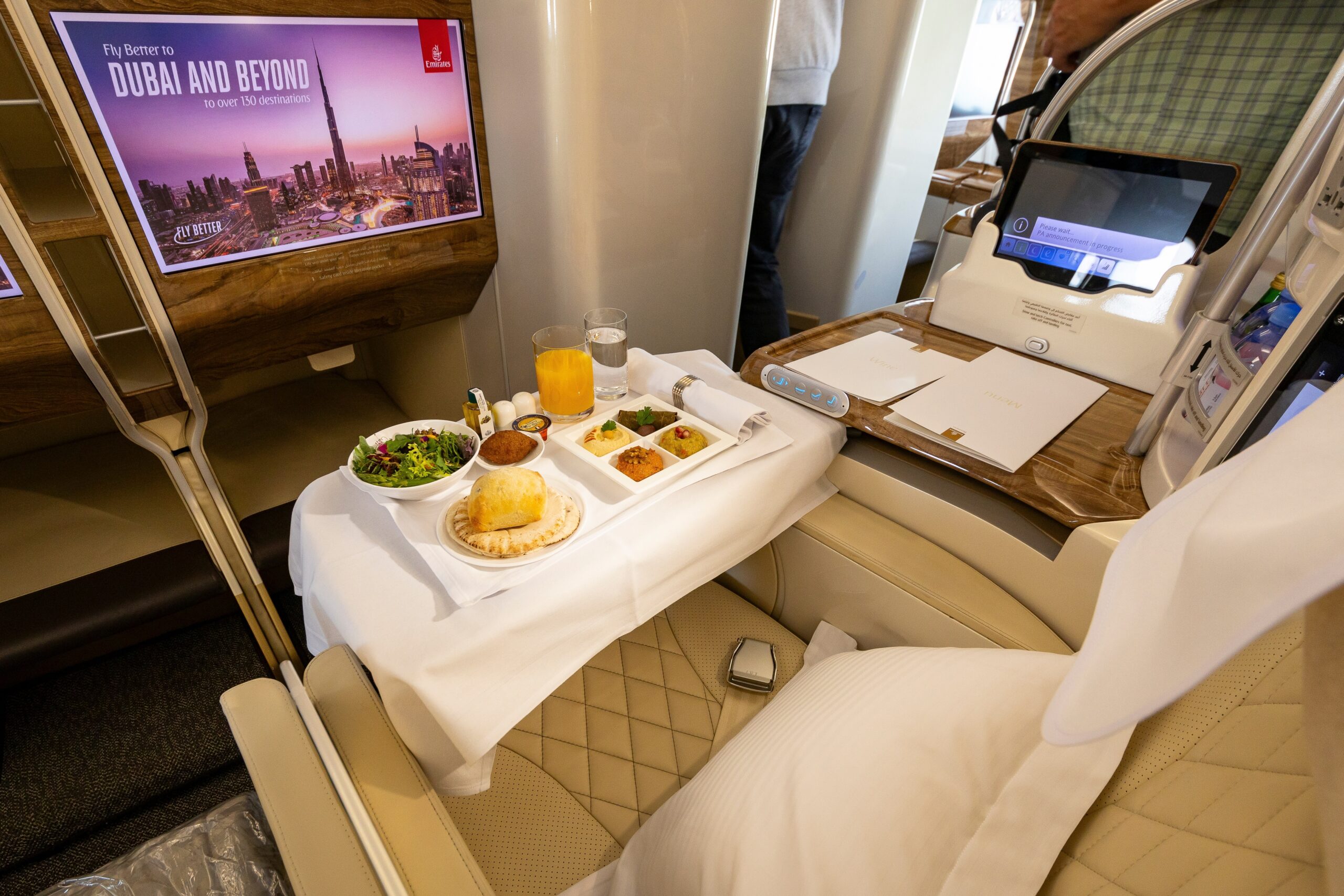
Airlines typically have two classes of seats on their wide-body aircraft: economy class and business class (some aircraft also have first class), with the latter being much more luxurious and comfortable, albeit at a significantly higher price. Business class passengers enjoy better services and the opportunity to do things that economy class passengers may not experience.
According to the aviation news website “Simple Flying,” business class on long-haul flights is usually equipped with lie-flat seats, sliding privacy doors, larger display screens, and enhanced services such as multi-course dining and full sets of toiletries.
Furthermore, business class passengers have access to airport lounges, a high-end perk that sets their in-flight activities and experiences apart from those of economy class passengers. Here are five things that economy class passengers may not know they can do in business class:
Many airlines offer complimentary pajamas to business class passengers on long-haul flights, which passengers can often keep after the flight, although this service is more common in first class.
Changing into pajamas can make sleeping more comfortable and help keep clothing fresh, allowing passengers to avoid wearing the same outfit for over 10 hours straight.
Airlines typically offer a limited selection of sizes for pajamas. Some airlines proactively provide them, while others require passengers to request them. Some airlines collaborate with clothing brands to offer onboard pajamas with unique designs to showcase their identity.
Major airlines that provide pajamas in business class include Emirates, Virgin Atlantic Airways, Qantas, American Airlines, United Airlines, Air India, EVA Air, and more, excluding Singapore Airlines.
In economy class, flight attendants often start meal service shortly after reaching cruising altitude, and passengers typically sleep after dining. During the flight, passengers may wake up to enjoy snacks and pre-landing meals, sleeping intermittently due to limited seat recline angles, making it challenging to rest deeply.
In contrast, business class offers lie-flat seats that allow passengers to recline horizontally for rest without meal service interruptions.
The primary goal of flying business class is quality rest, so many passengers opt to skip some meal services. Not everyone may want to eat airline meals, but the chance to rest is valuable, especially for business travelers. They may prefer a good night’s sleep on the plane to prepare for a new workday upon arrival.
Economy class passengers typically have access to a single blanket for sleeping. In business class, airlines usually provide mattress pads, blankets or duvets, pillows, eye masks, earplugs, and, as mentioned earlier, some airlines even offer pajamas.
Flight attendants may also provide a turndown service, similar to high-end hotels, where they prepare passengers’ beds for a comfortable sleep. Upon awakening, flight attendants assist in tidying up bedding.
Considering the high cost of business class tickets and the focus on facilitating passenger sleep, airlines’ provision of this bedding selection and services is justifiable given the resources involved.
In economy class, meals are served at set times, and uneaten trays are cleared by flight attendants, leaving no option to save food for later. However, some airlines in business class offer “dine-on-demand” service, allowing passengers to eat meals at their convenience based on their schedules.
Given that passengers on long-haul flights may come from different time zones and have diverse preferences on how to spend their flight time, this model is well-suited to cater to varying needs and provide more personalized service than economy class.
Compared to economy class seats, business class seats are more advanced, equipped with various functions, with the core feature being the ability to fully recline and adjust settings via buttons or screens. Some seat models even offer massage functions and pre-set recline angle options.
Many modern business class seats have sliding privacy doors, reading lights, and some even have temperature control functions, along with elaborate amenity kits. For first-time business class passengers, these details can be overwhelming and require some time to understand.
In such scenarios, flight attendants play a crucial role in assisting passengers with seat familiarization and understanding in-flight arrangements. The relatively smaller space of business class often facilitates a more personal service experience. In contrast, economy class passengers typically remain seated and have limited interaction with flight attendants beyond receiving services.