
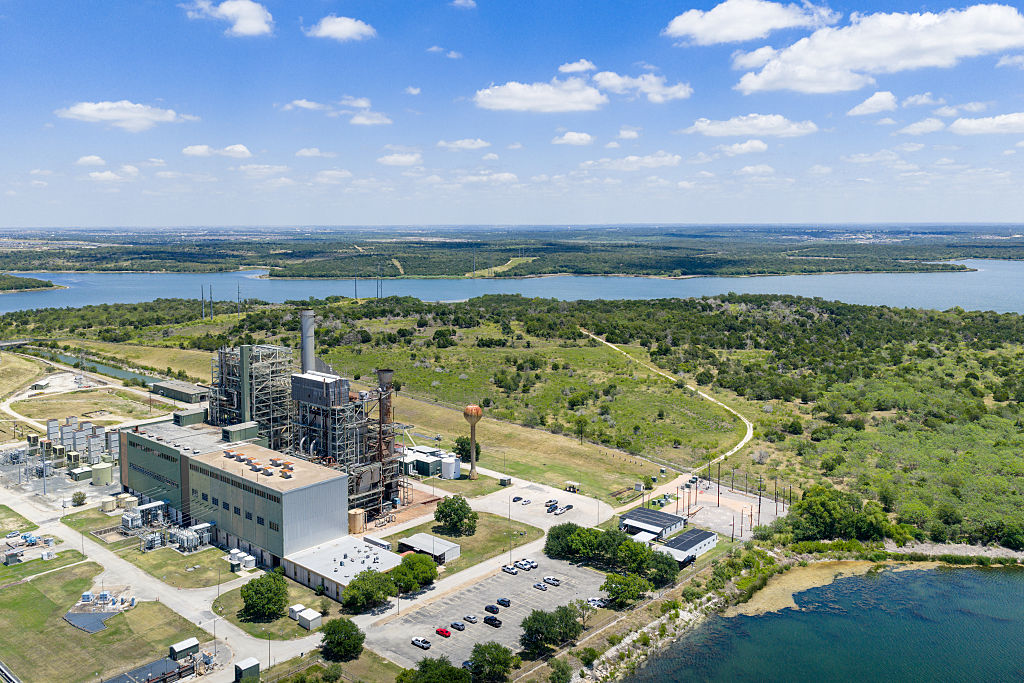
As artificial intelligence (AI) computing demands explode, large data centers are accelerating their expansion from tech hubs to rural and suburban areas in the United States. How will this impact the lives of surrounding communities – will it increase tax revenue, boost employment, or simply bring troubles such as water resources, power supply, and noise disturbance to local residents?
To begin with, let’s understand the conditions required to build a data center: constructing a data center involves obtaining sufficient and reliable electricity, network connectivity, land, cooling capacity, and government permits simultaneously. The biggest bottleneck for AI data centers is often not the construction itself, but whether the electricity can be connected as planned.
Electricity: Therefore, having stable and substantial electricity supply is a top priority; since AI servers utilize a large number of GPUs, the power density of server racks is much higher than traditional cloud data centers, potentially requiring liquid cooling and larger power equipment, necessitating a high-pressure electric grid and substations that can supply power around the clock.
Network: It must be directly connected to national or international fiber backbone networks and must have multiple carrier-neutral telecom operators for redundancy. The closer it is to major users, financial centers, or data exchange points, the better to ensure faster transmission speeds.
Water resources: Traditional high-power servers require a significant amount of cooling water for evaporation heat dissipation, necessitating proximity to stable water sources or industrial water supply. Moreover, the cooling wastewater emitted by the system must have compliant discharge pipelines or facilities for recycling and reuse.
Land: Large data centers typically require several hectares of land and must allocate space for future expansion. The land should be flat, well-drained, avoiding high-risk areas prone to floods, wildfires, earthquakes, etc. Close to roads but preferably at a distance from residential areas to reduce noise and visual impact.
Regulations and policies: Since acquiring vast amounts of land is necessary, local governments need to provide clear and expedited land use change procedures (e.g., agriculture to industrial conversion) and construction review processes. Many regions offer tax breaks or import duties exemptions to attract investment. Lastly, passing environmental impact assessments on noise, heat dissipation, diesel generator exhaust, and water resource impacts is crucial.
Manpower: During construction, civil, electrical, mechanical, fire, and network engineers are needed. In operation, facility technicians, network engineers, cybersecurity personnel, and security staff are required. However, permanent positions are generally not as abundant as in factories, but the technical requirements and salaries are typically higher.
From the aforementioned requirements, it is evident that the construction of data centers is integral to the local communities, often resulting in the following “long-term risks”.
Electricity bills and living costs rise significantly:
AI data centers are high-energy facilities operating 24/7, placing severe stress on regional power grids due to massive interconnection. Local utilities often shift the costs of upgrading power facilities and substations, amounting to billions of dollars, to general residential users, leading to considerable hikes in electricity bills in data center-heavy towns like Virginia and Pennsylvania.
Water resource competition and impacts on agriculture:
Many data centers are located in regions with high water stress, with their cooling systems daily consuming substantial water resources. In agricultural areas, groundwater extraction displaces irrigation needs for crops, raising concerns about drinking water safety among residents, potentially triggering crises in food production and ecological conservation.
Land market upheavals and rural industrialization:
Tech giants and developers acquiring large tracts of land have caused land prices in certain areas to surge by 5 to 10 times. While some landowners profit from this, the inflated prices make it challenging for traditional farmers to expand operations. Additionally, formerly tranquil farmlands are gradually surrounded by massive grey data centers, high-voltage towers, and solar panels, altering the rural landscape.
Substantial tax revenue, but fewer permanent positions:
A data center spanning around 250,000 square feet may employ roughly 1,500 workers during peak construction, but post-operation typically only sustains about 50 full-time positions, with half of these possibly being contract personnel.
In reality, AI data centers do not merely bring “development” or “destruction” to communities; it primarily depends on factors such as site selection, cooling methods, energy sources, and whether local governments can ensure that companies bear the complete infrastructure costs before approval.