
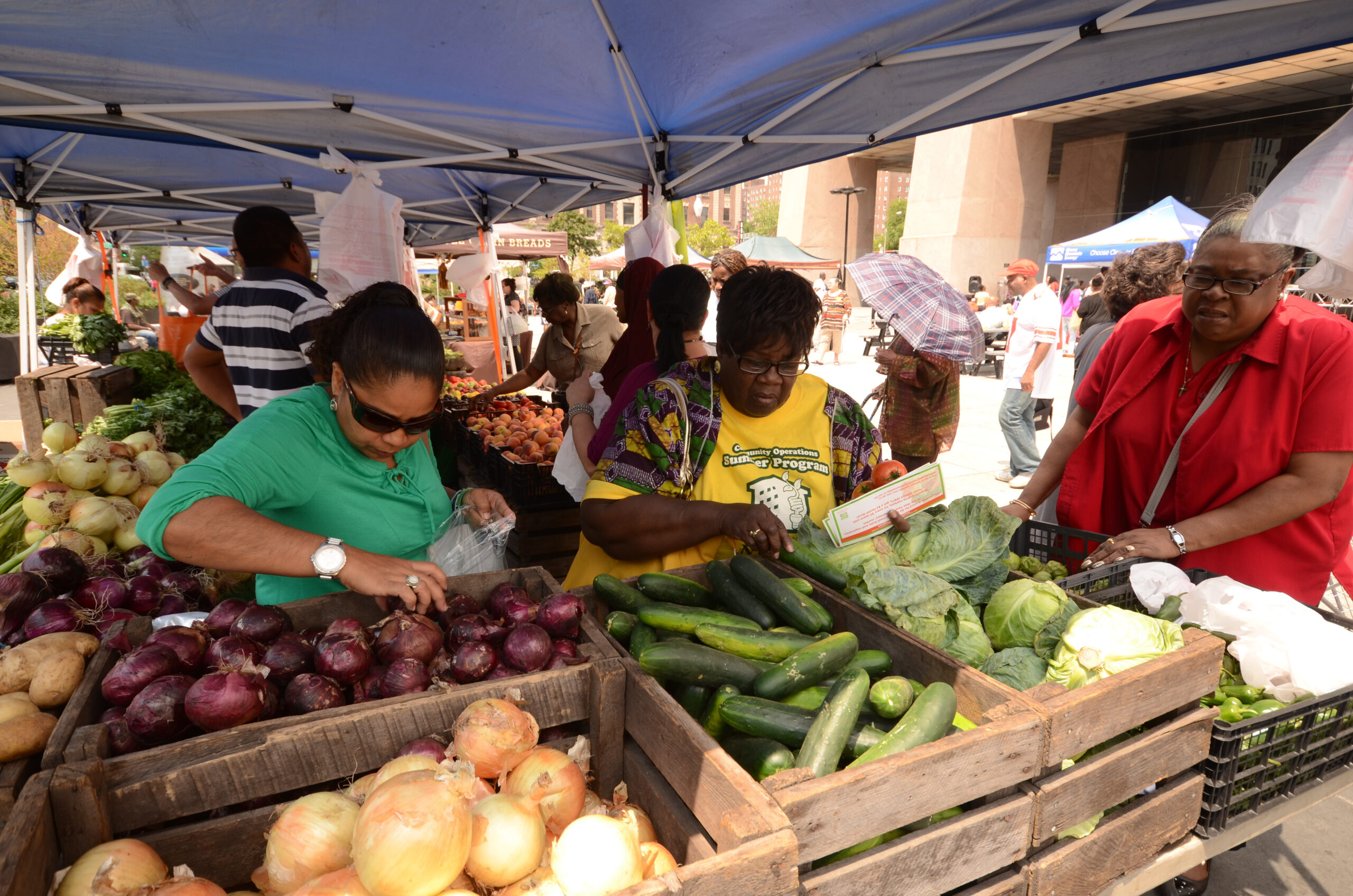
With the increasing number of Cyclospora cases across the United States, consumers from Kentucky to Michigan are flocking to local farmers’ markets in search of safer agricultural products. However, is the risk of Cyclospora infection and other foodborne diseases really lower at farmers’ markets compared to supermarkets?
According to an article in Time magazine, some food safety experts believe that farmers’ markets may be a safer choice, depending on the actual origin of the agricultural products and the cultivation and management practices of specific farmers. Kalmia Kniel, a professor of microbial food safety at the University of Delaware, stated, “If you buy agricultural products directly from the growers, I think the risk would be relatively lower.”
Other experts point out that agricultural products sold in supermarkets are not necessarily more dangerous; whether at grocery stores or farmers’ markets, consumers can take measures to protect themselves from foodborne pathogens.
Darin Detwiler, an associate professor of food policy at Northeastern University and author of “Food Safety: Past, Present, and Predictions,” indicated a personal preference for farmers’ markets due to the shorter transportation distance of locally grown agricultural products, fewer processing and distribution stages, and generally higher product quality.
However, he cautioned consumers not to assume that all agricultural products sold at farmers’ markets are locally sourced. Detwiler advised asking vendors about the specific origin, distance of cultivation, and harvesting time of agricultural products, favoring those grown within a 30-mile radius and sold within two days of harvesting.
Rodney E. Rohde, program director of Medical Laboratory Sciences at Texas State University, stated that while the perception that agricultural products at farmers’ markets are safer may have some merit, there is currently insufficient scientific evidence to support this view.
Barbara Kowalcyk, director of the Institute of Food Safety and Nutrition Security at George Washington University, emphasized that contamination risk depends on how agricultural products are grown, harvested, transported, and stored, rather than the sales location. She explained that in the case of Cyclospora, contamination issues may arise if human waste contaminates the water sources used for irrigating fresh agricultural products. This is why locally grown agricultural products are not necessarily safer; the farm’s water source and cultivation practices are key determinants of safety.
Don Schaffner, a food science expert at Rutgers University, noted that smaller-scale farms are not necessarily more successful. He remarked that small-scale farmers often lack resources compared to large agricultural enterprises.
Food safety experts stress the importance of continuing to purchase and consume agricultural products despite concerns about Cyclospora. Rodney stated, “Do not stop eating fruits and vegetables.” However, individuals can take preventive measures to reduce the risk of infection by Cyclospora and other foodborne pathogens.
Bill Marler, a food safety lawyer, suggested purchasing whole lettuce, fruits, and vegetables rather than pre-packaged or pre-cut products. He pointed out that centralized cutting, washing, mixing, and packaging processes may spread contamination that was originally present on a small quantity of agricultural products to a larger batch.
Experts also recommend thoroughly washing agricultural products under running water, scrubbing hard-skinned fruits like melons and cucumbers, and following other food safety guidelines such as handling raw meat and vegetables separately during cooking.
Cooking food to a minimum internal temperature of 158°F (about 70°C) can kill Cyclospora. Rodney mentioned that he has been cooking more vegetables lately and has been washing agricultural products “more vigorously and thoroughly” than usual.