
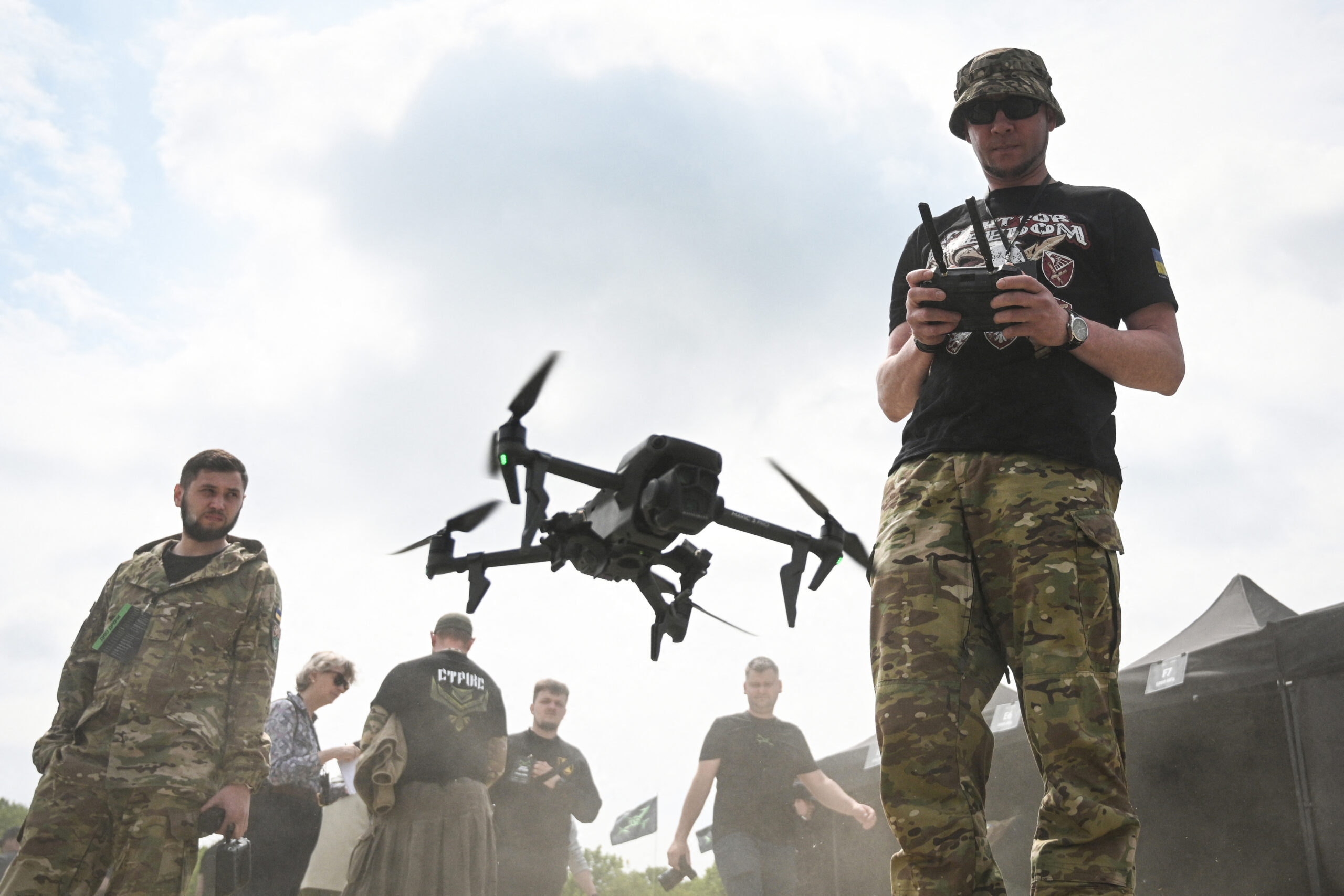
The Director of the Central Intelligence Agency (CIA) in the United States, John Ratcliffe, has pointed out that drones are fundamentally changing the way warfare is conducted on the frontlines. Faced with a large number of AI technology-based drones deployed in Ukraine, Russian recruits have an average survival time of only 20 to 30 minutes on the frontline. This marks the first confirmation by senior US intelligence officials that the Russia-Ukraine conflict has inflicted significant casualties and military losses on Moscow.
According to Ratcliffe, speaking at a Defense and Innovation Summit in Pennsylvania on July 15, the intelligence they possess aligns with recent public reports on the situation in Ukraine. Currently, it is estimated that Russian recruits arriving at the Ukrainian frontline have an average survival time of only 20 to 30 minutes.
He emphasized that Ukraine’s use of AI-equipped drones has evolved into highly professional and cost-effective lethal combat tools.
The Center for Strategic and International Studies (CSIS) has noted that in the first half of 2026, the casualty ratio between Russian and Ukrainian forces is close to 8:1, significantly higher than the 2:1 and 3:1 ratios seen in the majority of stages of the conflict. CSIS believes that the significant use of AI drones by Ukrainian forces in the offensive is a key factor contributing to the widened casualty ratio.
Researchers at CSIS have found that since the Russian invasion began in February 2022, the total number of casualties among soldiers from both sides has exceeded 2 million, with approximately 1.4 million Russian military personnel injured and up to 450,000 killed. The number of deaths among Russian troops in the battlefield has set a record for the highest combat fatalities among major countries since World War II.
Ratcliffe highlighted at the summit that emerging technologies have become critical in determining the outcome of warfare, emphasizing that the US cannot afford to lag behind in military technology competition. He stated, “The lesson from this war is that the importance of mastering emerging technologies is as crucial as military might. This is why a relatively weaker military force managed to withstand the powerful adversary of Russia even after four and a half years.”
He stressed the importance for the US to pay close attention to the experiences and lessons learned from the Ukrainian battlefield. “The pace of Russian advance has stagnated because of Ukraine’s capability in utilizing emerging technologies, especially drone and asymmetric warfare, which is changing the power dynamics on the battlefield. This also underscores the need for the US to maintain leadership in all aspects to retain our competitive advantage in the global arena.”
Katie Livingstone, a special correspondent for Defense News stationed in Ukraine, mentioned that Ukraine has not only successfully halted the Russian advancement on the frontline but has also showcased its military industrial potential to international allies. The US government and European allies are actively investing and supporting Ukraine’s drone development programs, as well as striving to obtain key technologies behind the initiatives.
The day before the CIA confirmed Ukraine’s drone tactics gaining superiority, the European Union and the Ukrainian government signed a deal in Kyiv worth over $60 billion for drone production. Ukrainian President Volodymyr Zelenskyy announced last week that progress has been made in the multi-billion dollar cooperation plan negotiated with the US.
European and Ukrainian officials have continuously highlighted in recent months that the casualty rate among Russian troops has reached record levels. Ukraine’s top military officials even informed NATO allies in May that Russian forces are losing at least 1,000 soldiers daily.
This article was referenced from Defense News.