
Taiwan is facing difficult situations in the international community, often struggling to even have the opportunity to sit at the negotiation table. However, it is precisely this resilience forged in adversity – constantly being told “no” – that showcases the spirit of Taiwan.
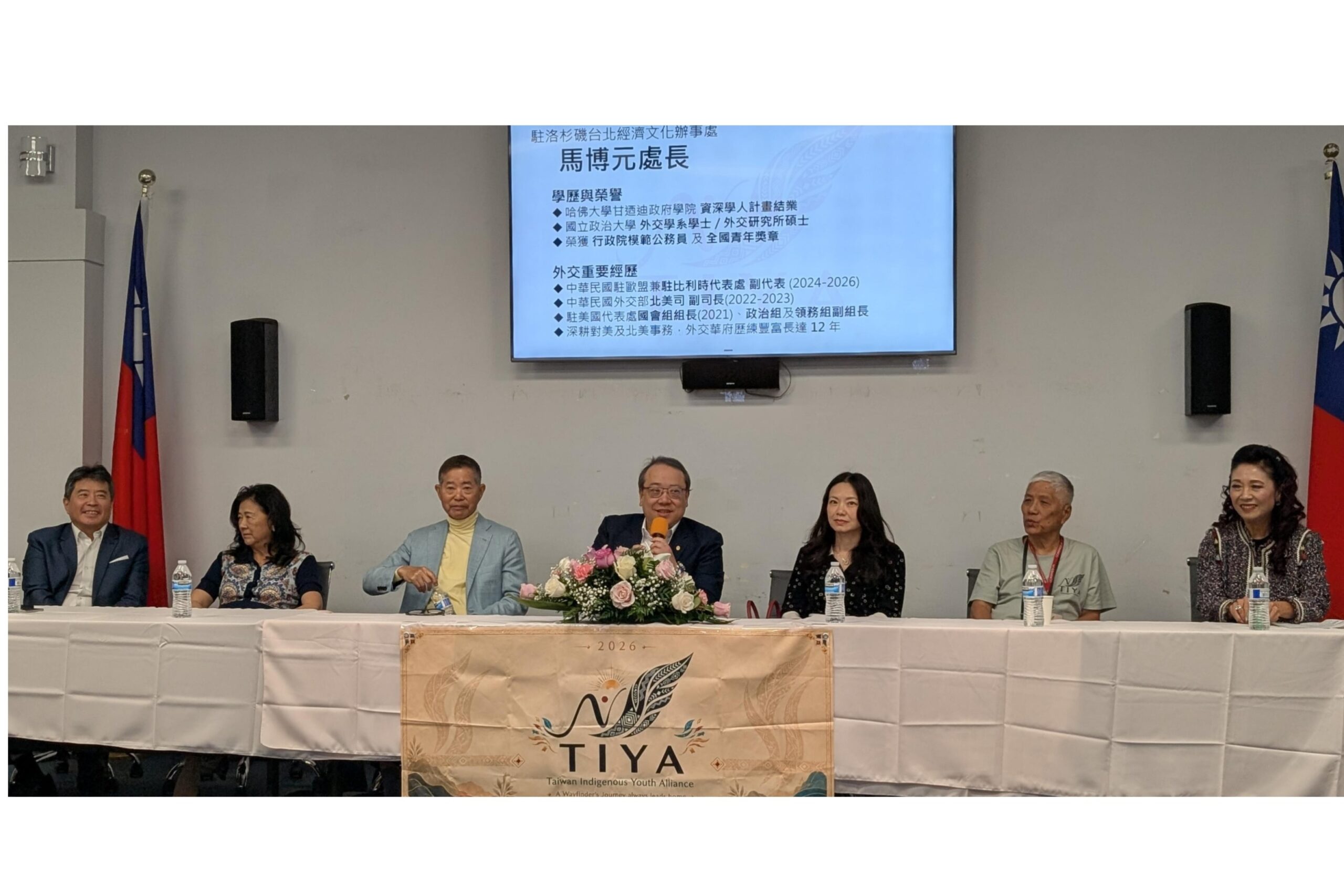
On July 18th, Ma Boyuan, Director of the Taipei Economic and Cultural Office in Los Angeles, shared his life story of battling cancer and diplomatic challenges, emphasizing the lively “dongtao” (endurance and resilience) of Taiwanese dialect during a meeting with the “2026 TIYA (Taiwan Indigenous Youth Alliance) Original Leadership Program” delegation in the United States. He encouraged indigenous Taiwanese youth to bravely step out of their villages and onto the international stage.
Ma Boyuan shared with the young participants that Taiwan’s diplomatic efforts differ greatly from other countries. While other diplomats can easily engage on the international stage, Taiwanese officials often have to work doubly hard to seize every opportunity to be seen and heard: “We never take any opportunity for granted, because each opportunity is hard-earned.”
Music is a natural talent for many indigenous people, and for Ma Boyuan, music serves as the gentlest support in life. Joining a choir for ten years since his student days not only enriched his life but also led him to meet his wife of over 30 years.
However, fate does not always favor the same person forever. At the age of 35, Ma Boyuan faced a major turning point in life when he was diagnosed with cancer. Recalling the first day in the hospital, seeing only elderly patients resembling his father, the young Ma Boyuan felt fear and confusion in his heart.
After enduring long chemotherapy and painful treatments, Ma Boyuan recovered and returned to his post, feeling frustrated at times due to falling behind and colleagues lightening his burden. But it was at that moment that he saw his true self – diplomacy was not just a profession but a genuine love, a career where he could sweat and contribute to his country. The endurance and resilience developed through overcoming life and death challenges became the cornerstone for his future frontline diplomatic endeavors.
Facing young scholars, Ma Boyuan also shared the differences in Taiwan’s diplomatic strategies with the United States and the European Union, showcasing Taiwan’s diplomatic flexibility and resilience.
He noted that the Taiwan-U.S. relationship is based on the “three major common interests” of security, economy, and values. The U.S. system of administration and legislation is highly flexible, allowing for swift transformation of the “support Taiwan” force into tangible cooperation when American citizens and lawmakers understand that Taiwan is a democratic front line against authoritarian challenges based on shared values.
In contrast, dealing with the EU’s diplomatic model requires more patience in seeking consensus due to the decision-making mechanisms of the 27 member states. Taiwan adopts a “gradual” strategy, starting from existing consensus in past EU policy documents such as “peace and stability in the Taiwan Strait are in the EU’s interest” and incrementally building cooperation spaces without altering its original position. Once consensus is reached, policies become less shaky.
Ma Boyuan stressed that regardless of the system faced, Taiwan cannot achieve its goals internationally by acting alone. “Diplomacy is simply understood as ‘making friends,'” he said. The extent of trust built and number of partners determine the breadth of diplomacy. He encouraged youth to cultivate strong communication and coordination skills.
“When life encounters obstacles, setbacks, or a door closes in front of you, do not dwell in the disappointment of failure, but think: ‘What else can I do? What can I contribute?'” Ma Boyuan cited Taiwan’s efforts to participate in the World Health Assembly (WHA) as an example. Despite political pressure, Taiwan continues to share epidemic prevention experiences and medical resources with the world through medical teams and NGOs.
Finally, he emphasized that modern diplomacy has broken traditional political frameworks and encompasses diverse fields such as finance, technology, culture, and public health.
Ma Boyuan encouraged indigenous youth present to think about how their field of study, even those seemingly unrelated to diplomacy like tax law, is crucial when promoting international tax agreements in Taiwan. Youth should consider how their knowledge can be connected internationally, carrying Taiwan’s unique “dongtao” spirit and dedication to the world, because “doors may close, but the resilience and compassion of Taiwanese people will not be hindered, and continuous dedication is the power to create change!”