
Amid intense internal power struggles within the Chinese Communist Party (CCP) in the lead-up to the 21st National Congress, a significant political upheaval has emerged with the recent downfall of Chen Jining, who was previously considered a contender for a position on the new Politburo Standing Committee.
On November 24, 2026, the sudden announcement of Chen Jining’s removal from his post as a member of the Central Political Bureau and Secretary of the Shanghai Municipal Committee left many in shock. Chen, born in February 1964, was often included in various speculative lists of likely candidates for the upcoming composition of the Politburo Standing Committee.
Analysts had previously highlighted potential risks associated with his rising profile, indicating that he was being scrutinized due to rumors linking him as a possible successor to Xi Jinping. These insights were echoed by independent commentator Du Zheng in a May article published in a Taiwanese outlet, who pointed out the precariousness of Chen’s position within the party hierarchy.
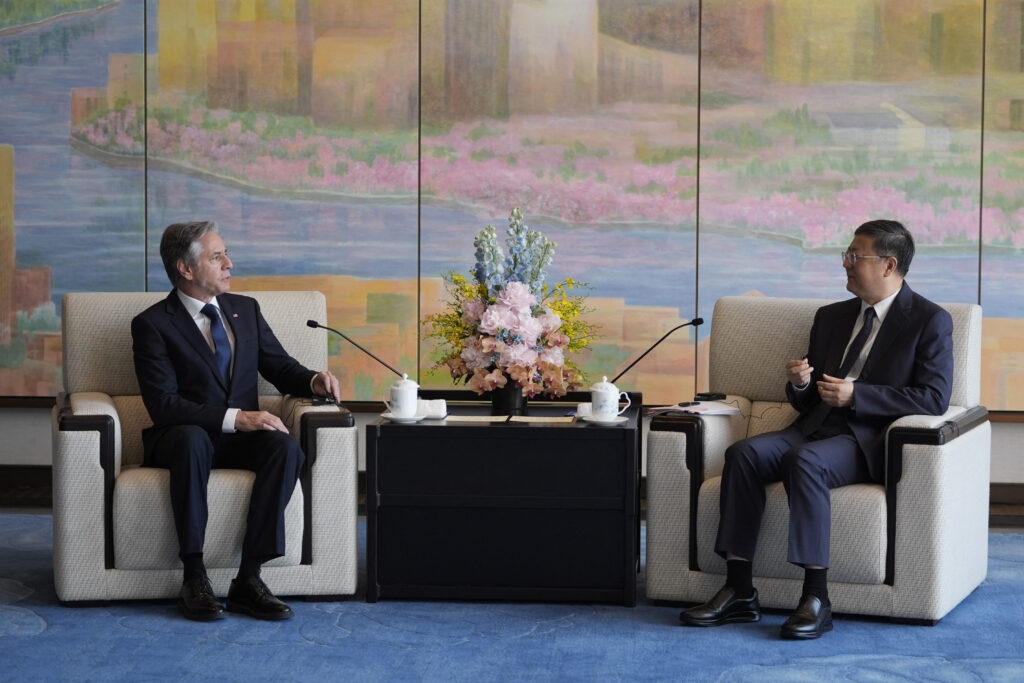
In 2024, Chen Jining met with Singapore’s Senior Minister LKY Lee Hsien Loong on November 28. Footage from the Singaporean media showed Lee in Shanghai discussing efforts to establish new connections with the next generation of Chinese leaders. The media coverage coincidentally featured Chen Jining, prompting speculation that he might have been viewed as a potential successor to Xi.
However, Du Zheng noted that speculating about a successor title could lead to detrimental outcomes, as seen in the downfalls or marginalization of other prominent figures such as Sun Zhengcai and Hu Chunhua, who faced similar situations linked to succession rumors.
The recent history within Xi Jinping’s circle shows a pattern where individuals elevated too quickly can face dramatic consequences, often exacerbated by unexpected endorsements from foreign dignitaries.
For instance, in the case of Chen Min’er, born in 1960, who is seen as a key representative of Xi’s inner circle, his fate was notably influenced by remarks made in 2019 by Singapore’s then Deputy Prime Minister Heng Swee Keat, who publicly named him as a potential “next-generation leader” of the CCP during a visit to Chongqing. This statement raised eyebrows since Heng was viewed as a likely successor to Lee Hsien Loong.
Official reports indicated that during this meeting, Heng expressed hopes for future cooperation between the two countries’ emerging leaders, to which Chen Min’er responded, emphasizing the intentions and cooperation goals of the political elite from both nations. One Taiwanese media outlet even headlined their piece on the event as “Next-Generation Leaders of China and Singapore Meet for the First Time in Chongqing.”
Du Zheng pointed out that such a bold declaration of being a “next-generation leader” is viewed as perilous within the CCP. Consequently, Chen Min’er experienced a notable demotion during the 20th National Congress, moving from his prominent position in Chongqing to a less significant role in Tianjin, failing to secure a seat on the Politburo Standing Committee. His effectiveness in Tianjin has been lackluster, and with recent troubles involving his former associates from Guizhou, his aspirations for succession have become increasingly bleak.
Du Zheng suggests that Xi Jinping is intent on maintaining lifelong power and prefers to have no successors eyeing the top position. As Xi ages, he has grown more suspicious, even regarding those within his established circle, let alone newcomers who may harbor ambitions for succession. Learning from the example of Chen Min’er, Chen Jining’s mention as a potential successor is not a promising sign. It certainly raises alarm bells not only for Xi Jinping but also for other members of the Xi faction who will closely monitor Chen Jining’s actions.
Therefore, the intricate dynamics within the CCP remain complex, with the stakes high as factions vie for influence and power leading up to the National Congress. The fall of figures like Chen Jining serves as a stark reminder of the underlying tensions and precariousness inherent in the Chinese political landscape.