
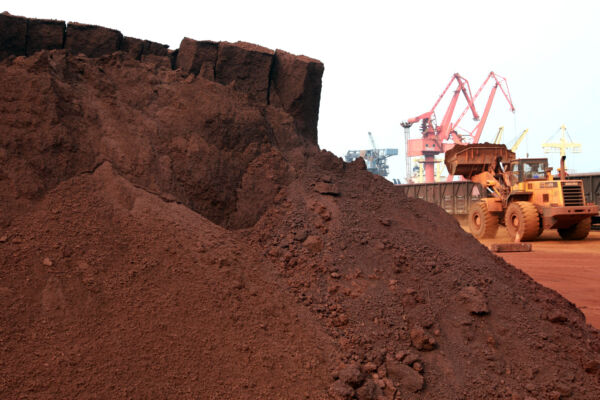
The Copi Mineral Sands Project in Australia has been approved for operation by the government, marking a significant step towards breaking China’s monopoly on rare earth industries. With Japanese companies as strategic partners in the investment, the project not only showcases Australia’s resources combined with Japanese technology but also signifies a practical effort by partner countries to challenge China’s dominance.
The New South Wales Department of Planning and Public Spaces, along with the Department of Natural Resources, announced in a joint press release on the 27th that the NSW government has approved the Copi Mineral Sands Project for operation with a total investment of 6.93 billion Australian dollars (approximately 5 billion US dollars).
According to the press release, the Copi project is expected to process 28 million tons of minerals over 18 years and produce up to 400,000 tons of key minerals, including titanium-bearing minerals, titanium-iron ore, rutile, zircon, and monazite, which are essential materials for clean energy, defense, telecommunications, and medical equipment industries.
The evaluation document released by the NSW government indicates that the project, led by Australian mining giant RZ Resources, is scheduled to be developed in the mining area of Wentworth County in Broken Hill. The Australian Financial Review also mentioned on the 27th that the project has received investments from Japanese companies Marubeni and JX Advanced Metals.
Vlado Vivoda, an honorary researcher at the Sustainable Minerals Institute at the University of Queensland, highlighted the significance of the Copi project in not only tapping into rich upstream rare earth resources but also in demonstrating the commitment of Australia and partner countries to jointly build the midstream industry of the rare earth supply chain.
Vivoda explained that while China has a mature rare earth midstream industry, no country can independently establish a supply chain that entirely replaces China’s. However, Australia and its partner countries can collaborate to create a relatively independent transnational supply chain that is not entirely dependent on China, making the Copi project a crucial step in this direction.
By having Marubeni and JX Advanced Metals as strategic partners alongside RZ, Australia and its partners are setting a powerful example in building a transnational rare earth supply chain. Vivoda emphasized that solely mining a large amount of minerals is insufficient to create a complete supply chain due to the complex processes and technologies involved, which is where Marubeni and JX Advanced Metals can complement RZ’s capabilities.
Vivoda highlighted the intricate processes involved in rare earth processing, from breaking down the concentrated leach solution to separating it into various oxides and further processing them into metals, alloys, magnets, and titanium, for instance. He noted that the midstream rare earth processing industry is predominantly centered in China, making the involvement of Marubeni and JX Advanced Metals in the Copi project crucial for Australia.
With China’s strong processing capabilities, mature logistics systems, and substantial customer base, Vivoda cautioned that without early planning, key mineral supplies inevitably flow to the most convenient and liquid processing market, i.e., China. He believes that Japanese companies can help plan alternative pathways for the Copi project to redirect Australia’s mineral resources towards industries outside of China.
In Vivoda’s view, Japanese investment in the Copi project holds strategic significance for Australia and partner countries aiming to break free from China’s rare earth supply chain monopoly.
(Source: Central News Agency)