
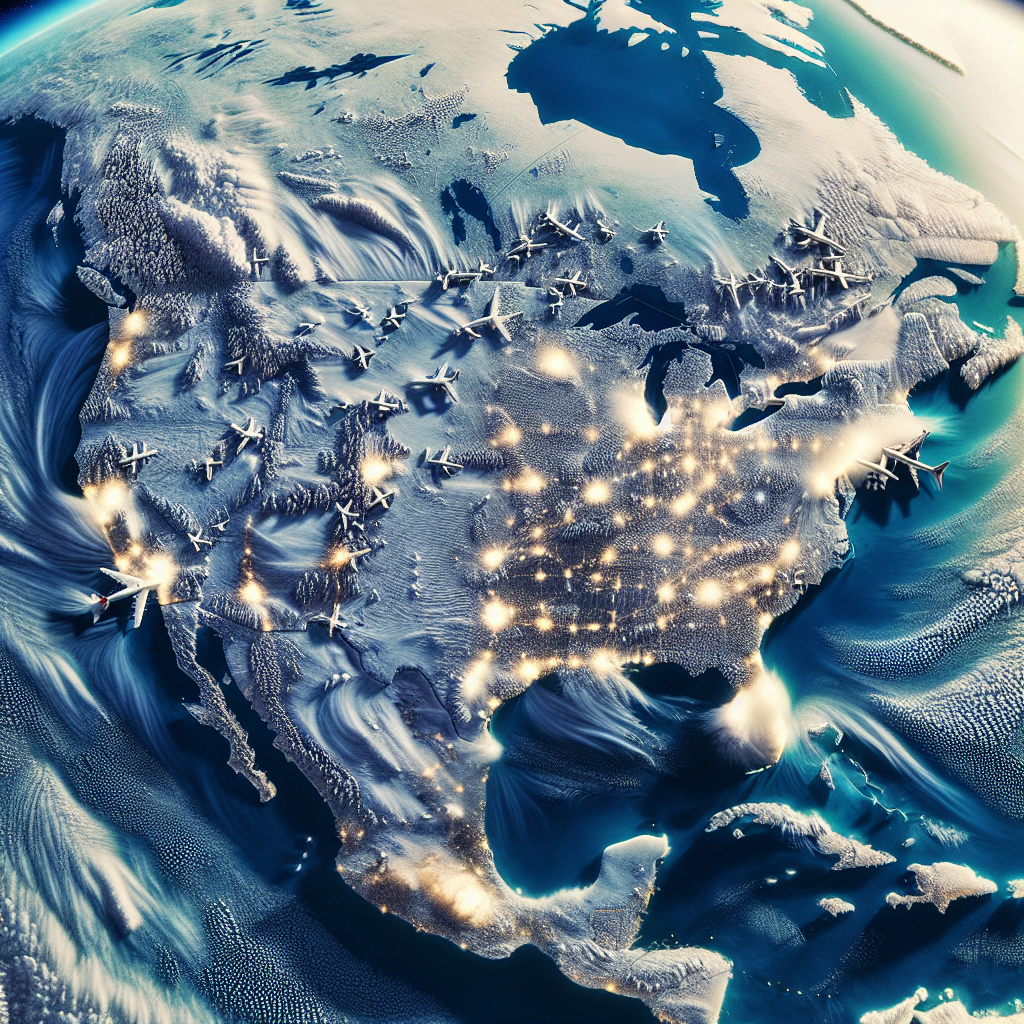
On Sunday (November 30), a powerful winter storm continued to sweep across much of the United States, severely disrupting the travel plans of millions of people during the holiday season. The Midwest and Great Lakes regions saw snowfall reaching up to a foot (about 30 centimeters), with flights being mass canceled and multiple car accidents occurring on highways.
According to warnings from the National Weather Services, by Sunday night, parts of the Midwest and Great Lakes regions could see snowfall amounts reaching up to a foot (about 30 centimeters).
Meanwhile, a second storm is threatening the East Coast. The National Weather Services forecasted on Sunday morning, “As one winter storm ends in the Midwest and Great Lakes regions, another potential storm is rapidly approaching New England and the Mid-Atlantic region.”
The agency warned that the second storm could bring a mix of rain and snow, causing further disruptions as people return to school and work next week.
As of Saturday night (November 29), many areas in Iowa recorded a foot or more of snow, and parts of Illinois including the suburbs of Chicago already had 5 inches (about 13 centimeters) of snowfall and it was still increasing.
Residents in Chicago woke up on Sunday morning to find over 8.5 inches (about 22 centimeters) of snow. Wind gusts of up to 35 miles per hour (about 56 kilometers) continued throughout the day.
Heavy snowfall persisted throughout the night in the entire Midwest region, with total storm snowfall expected to range between 6 to 14 inches (about 15 to 36 centimeters).
The National Weather Services had previously warned that the rapid snowfall in the Chicago area on Sunday morning would significantly reduce road visibility, making travel dangerous.
Air travel was also severely impacted. According to FlightAware data, over 1600 domestic and international flights in and out of the U.S. were delayed on Sunday, with 488 flights being canceled.
Chicago O’Hare International Airport was severely affected, accounting for a significant portion of these disruptions. By Sunday morning, over 200 flights were canceled with 144 flights experiencing delays. These numbers were lower than the 800 canceled flights on Saturday, showing signs of recovery.
Throughout the Midwest, car accidents related to the winter storm were frequent. The Indiana State Police revealed that last Saturday, a 45-car pile-up occurred on Interstate 70 near Putnamville in southern Indianapolis, leading to the temporary closure of the highway.
Missouri State Highway Patrol posted on social media last Saturday that they had recorded 26 accidents statewide and warned travelers of more snow on Monday (December 1).
The new storm system expected to form on Monday is forecasted to spread to the East Coast by Tuesday (December 2), bringing heavy snow to the northern Mid-Atlantic and New England regions, including Pennsylvania and Maine, while also bringing heavy rain to the Southeast.
According to NPR, National Weather Services meteorologist Andrew Orrison stated that Monday would be the best day for holiday travelers returning home, as opposed to Tuesday when travel conditions would be worse due to widespread rainfall impact.