
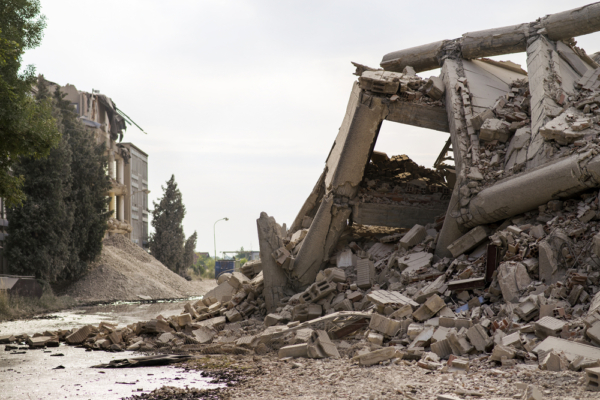
Earthquakes are a common natural disaster that can lead to serious injury and property damage. Just recently, a powerful 7.5 magnitude earthquake struck the northeastern region of Japan on December 8th, leaving dozens injured, primarily from falling objects. Some individuals may have been injured while attempting to escape as objects fell around them. Experts have cautioned against fleeing during an earthquake, as it is one of the worst evacuation methods.
According to Reader’s Digest, Alison Bird, a seismologist and earthquake warning outreach officer from Natural Resources Canada, has emphasized that the brain functions poorly under stress, often leading individuals to instinctively run, which is highly dangerous during an earthquake. The risk of falling or being struck by objects increases significantly.
Apart from not fleeing, it is also advised not to stand in doorways during an earthquake. While it was once believed that doorframes provided strong and stable refuge, recent studies have debunked this myth. Bird explains that doorframes are not structurally reinforced components of a building and can pose risks during seismic events.
Bird further highlights that falling objects present a greater danger than commonly perceived. The Centers for Disease Control and Prevention in the United States note that the majority of earthquake-related injuries and fatalities result from impacts by falling or flying objects or collapsing structures. Seeking refuge in a doorway may result in being struck or falling while attempting to evade danger.
Is standing by a fireplace a safer alternative during an earthquake? Contrary to popular belief, this suggestion, like seeking shelter in a doorway, is impractical and could even be more perilous. While fireplaces may appear robust, many chimneys are built with bricks or stones that can easily collapse during seismic activity.
In line with approved emergency protocols from the Federal Emergency Management Agency and the Red Cross, it is recommended to “Drop, Cover, and Hold On” during an earthquake. The steps are as follows:
1. Drop to the ground to prevent falling.
2. Seek cover under a table or sturdy furniture to shield yourself from flying debris.
3. Hold on to the shelter with one arm and protect your head and neck with the other arm until shaking stops completely.
According to Bird, these practices, endorsed by seismologists, earthquake engineers, and rescue experts, offer the safest response to earthquake events, increasing survival chances and reducing injuries.
Additionally, individuals should be prepared for various scenarios during an earthquake and familiarize themselves with appropriate responses:
– If there is no nearby shelter available, lie on the ground with your back against an internal corner or wall, away from windows and hazardous objects, and use your arms to protect your head and neck.
– If you are in bed, turn face down, cover your head and neck with a pillow, and hold on for stability.
– If driving, pull over to a safe location away from trees, bridges, or overpasses, engage the hand brake, stay inside the vehicle, and turn on hazard lights.
– If outdoors, avoid hazardous objects like trees or streetlights, immediately lie on the ground, and shield your head and neck with your arms.
– If in a wheelchair, move away from windows and other hazards, lock the wheels, and shield your head and neck with your arms.
Bird stresses that the safest location during an earthquake depends on the specific circumstances, but having an earthquake safety plan in place and conducting drills can help individuals be prepared for the worst-case scenarios.
Moreover, it is essential to have earthquake preparedness kits stocked with essential items like water, food, first aid supplies, and tools including flashlights and batteries. Non-perishable, easily accessible food such as crackers, instant noodles, and canned goods are recommended. Regularly check expiration dates and replace items as needed.
In times of unexpected earthquakes, being well-prepared and informed of essential earthquake safety measures can save lives.