
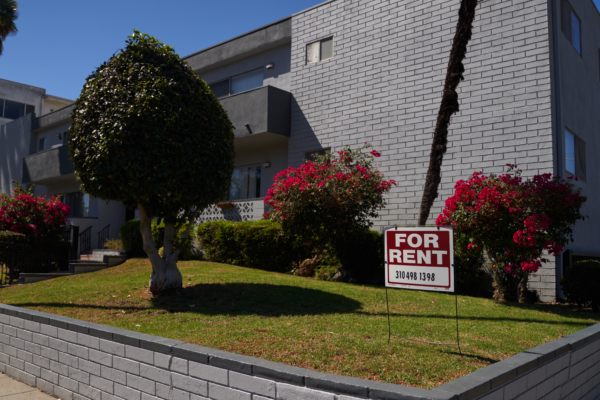
The United States multi-family housing market continues to face the dual pressures of oversupply and weakening demand. The latest data shows that a large number of new housing units are still pouring into the multi-family housing market, while soft core demand from young people has led to an increase in vacancy rates and a decline in rental prices.
According to the latest report released by the online apartment leasing platform Apartment List, the national median rent for apartments in November decreased by 1% compared to October, dropping to $1,367, marking the fourth consecutive month of month-over-month decline. Compared to the same period in 2024, rents have fallen by 1.1%, with a cumulative decline of 5.2% compared to the peak in 2022. Researchers point out that in the first half of this year, rental growth rates were expected to turn positive for the first time since mid-2023, but unexpectedly soft summer demand interrupted the recovery momentum, leading to a reversal.
In terms of vacancy rates, the index reached a new high since its establishment in 2017 in October, and remained at 7.2% in November. Although the explosive growth in multi-family housing construction in recent years has significantly declined, a large number of new units are still being listed this year and next year, exacerbating the supply-demand imbalance.
Data from the multinational commercial real estate information company CoStar also shows a very noticeable decline in rents this fall, marking the largest monthly decline in its 15-year tracking history. The core issue lies in the increasing difficulty for more and more young people to establish new households.
Grant Montgomery, Director of Multi-Family Housing Analysis at CoStar, pointed out that currently, around 32.5% of the 18-34 age group live with their families, “this is the highest proportion in recent years.” He stated, “I believe this reflects the continually rising cost of high rents in recent years, as well as the increasingly tough job market faced by recent graduates.”
“Traditionally, a lot of demand comes from this group, with core rental demand coming from this young demographic,” he said.
Weak demand has put pressure on the stock prices of listed apartment real estate investment trusts (REITs), including major real estate investment companies like AvalonBay, Equity Residential, and Camden Property Trust, which have all seen declines this year.
Due to local economic factors, the rate of rent decline in some markets is faster than in others. For example, the slowing tourism industry in Las Vegas has affected local employment; reductions in federal funding for biotechnology in Boston and a decline in international student numbers at universities have heavily impacted the local rental market; and in Austin, Texas, ongoing construction of more multi-family housing has had the greatest impact on rental prices in the city.
Although rents are softening nationwide and landlords are offering more incentives, renters are increasingly looking for housing in more affordable markets.
According to a report by property management software company Yardi, Cincinnati was the highest-searched market this summer, followed by Atlanta and Kansas City, Missouri. The report surveyed active locations of renters last summer, which is typically the busiest time for new leasing. St. Louis saw the largest quarterly increase in tenant demand, while Washington, D.C. fell from the top spot to fourth place.
The report noted, “The Midwest in particular has drawn attention, indicating that many ‘hidden gem’ markets in the region are no longer a secret.” The report also found that 11 of the top 30 cities in terms of rental demand are located in the Midwest.
Yardi has revised its expectations for supply in 2026. They stated that while new supply is expected to decline before 2027, due to more projects under construction than expected, their previous quarterly forecasts for 2025 and 2026 were revised upwards by 6.8% and 2.5%, respectively.
Apartment List’s report indicates that as construction activity slows down next year, the overall market will stabilize. However, the wave of supply has not yet ended, and rental demand has become even more fragile amidst the instability in the labor market.
(This article was referenced from CNBC’s report)