
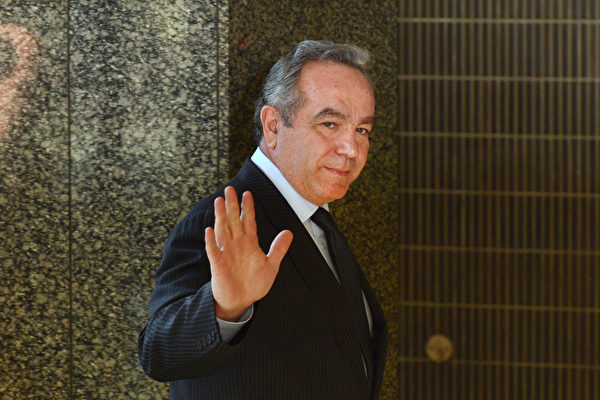
On Tuesday, U.S. Deputy Secretary of State Kurt Campbell stated that the United States must take more actions to address the global infiltration activities of the Chinese Communist Party (CCP), including countering the strategic establishment of military bases by the CCP in Africa and exerting control over rare earth minerals. He also emphasized the need for the U.S. Navy and Air Force to enhance their capabilities to deal with potential Indo-Pacific conflicts.
During a hearing held by the U.S. Senate Foreign Relations Committee on Tuesday with the theme of countering strategic competition with China and evaluating U.S. competitiveness outside the Indo-Pacific region, Campbell described the competition with China as a “decisive geopolitical challenge facing modern U.S. diplomacy.” He further stressed the necessity for the U.S. Navy and Air Force to strengthen their operations in the Indo-Pacific region.
Committee Chairman, Democratic Senator Ben Cardin of Maryland, stated in his opening remarks at the hearing that competition with China is one of the most significant challenges the United States faces on the global stage. He emphasized the importance of the United States providing alternative solutions to Southern countries worldwide apart from China, focusing on partnerships that prioritize freedom, human rights, and democracy.
Cardin highlighted Beijing’s expansionist behavior through projects like building a 290-mile railway in Kenya, selling armored vehicles, fighter jets, and anti-ship missiles to Venezuela, attempting to facilitate an agreement between Saudi Arabia and Iran, and engaging in disinformation campaigns to exert economic influence globally.
“To address these challenges, the United States should invest not only in military capabilities but also in diplomatic and economic development tools,” Cardin said. “I am willing to cooperate with any partner who is willing to work towards this goal.”
Campbell highlighted the importance of confronting China’s actions, including their strategic initiatives and their pursuit of controlling rare earth minerals in Africa, which are crucial for U.S. industrial and technological capabilities.
Rare earth minerals are essential raw materials for defense equipment and many high-tech industries, with China accounting for over 70% of global rare earth production in 2022. The U.S. government is advocating for reducing reliance on Chinese rare earth sources worldwide.
Senator Chris Coons mentioned that the U.S. does not have a resident ambassador in the small African country of Eswatini, one of the few nations that diplomatically recognize Taiwan instead of Beijing.
Campbell stressed the importance of U.S. competitiveness in Africa, expressing his disapproval of negotiating with country leaders in the absence of a U.S. ambassador. He pointed out the need for a change as the U.S. has been absent in the region for several years.
During the hearing, Campbell also expressed concerns about the disparities between China and the U.S. in shipbuilding, emphasizing the need for the U.S. to excel in this field to ensure a strong navy for the 21st century.
Campbell has long advocated for the deployment of U.S. forces in the Indo-Pacific region, stating that the U.S.’s 20-year engagement in the Middle East primarily involved ground forces. He emphasized the necessity for public focus on the navy and air force in the event of any conflict in the Indo-Pacific region.
“Now is the time for the navy and air force. They must step up their efforts. They must invest more. They must be more innovative,” he emphasized.
Campbell further added, “They (naval and air forces) must be bolder; they must understand that the Indo-Pacific battlefield requires the strongest navy and most advanced long-range aerial capabilities in U.S. history, and that is where our focus should be.”
(This article was referenced from Reuters’ report)