
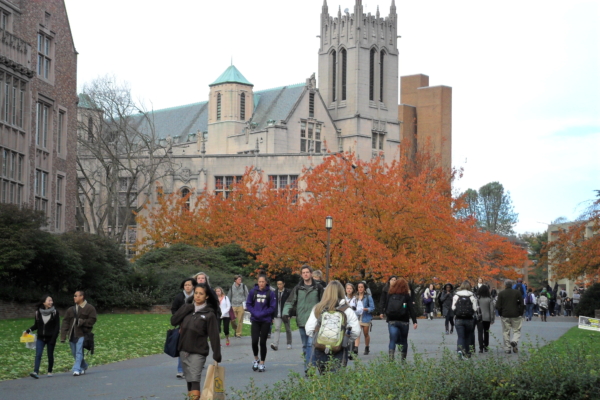
The University of Washington in the United States received a donation of over $50 million from an anonymous donor, to be used to cover tuition fees for students in the field of medical laboratory science for the next half century.
According to The Seattle Times, on Monday (December 1st), Tim Dellit, the dean of the medical school at this public research university located in Seattle, announced this surprising news to around 30 undergraduate students. He informed them that each of them would receive tuition coverage for two quarters of senior clinical internship.
One student, Jasmine Wertz, tearfully said, “I am truly shocked. Overwhelmed, very grateful.”
Students in this field receive training in conducting clinical laboratory testing on patient samples, with these test results used to aid in the diagnosis, treatment, and prevention of diseases and other health conditions. Their clinical rotations are time-consuming, leaving them hardly any time to work part-time jobs.
This funding is the latest in a series of donations across the United States aimed at helping to cover university expenses. Last year, the Albert Einstein College of Medicine in New York received a $1 billion donation from former professor Ruth Gottesman, widow of a Wall Street investor, to cover tuition fees for the school’s students.
Susan Gregg, a spokesperson for the University of Washington School of Medicine, stated that the donation announced on Monday is valued at around $8,000 to $10,000 per student.
Gregg mentioned that the donor from Washington State preferred to remain anonymous but had a connection to the project. The donor is also a fan of the local burger chain Dick’s, and burgers were stacked high on plates as students celebrated.
According to the University of Washington School of Medicine, the state of Washington is facing a dual pressure of increasing demand and an aging workforce in the field of medical laboratory services, thus there is an urgent need to expand channels for cultivating high-skilled clinical laboratory professionals.
(Reference: Associated Press)