
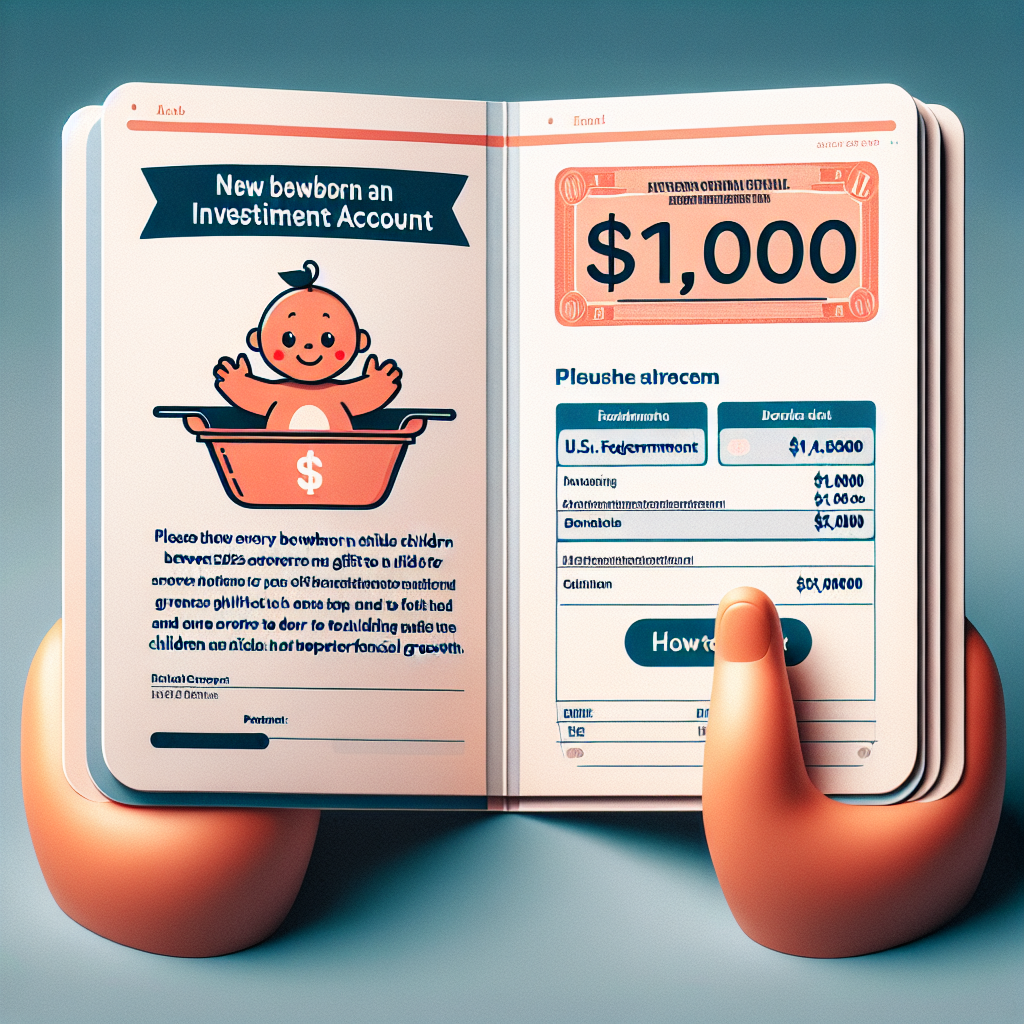
The “Trump Accounts” is a new type of investment account created by the United States federal government for children. All babies born in the United States between 2025 and 2028 will receive this generous gift from President Trump and Congress: the program will provide eligible children with $1,000 in seed money to kickstart their accounts.
This initiative stems from the “One Big Beautiful Bill Act” signed by President Trump earlier this summer. It not only aims to accumulate savings for American babies but also aims to instill in the younger generation and their families the value of investing, especially in times of increasing economic anxiety.
The program is set to launch on July 4 next year, allowing family members, employers, state governments, non-profit organizations, and philanthropists to contribute to the accounts, with an annual cap typically set at $5,000 (excluding special circumstances). The funds will be invested in index funds until the child reaches the age of 18, at which point they can withdraw the money for specific purposes such as buying a home, education, or starting a business.
While the detailed regulations have not been fully disclosed, here is what is currently known:
– Babies born in the United States between 2025 and 2028 will each receive a one-time $1,000 deposit from the federal government.
– This money will be invested in index funds or mutual funds that track stock market performance.
– Eligibility criteria: They must be U.S. citizens and hold a Social Security Number (SSN).
– Children born after 2028 will also be eligible for the “Trump Accounts.” However, they will not receive the $1,000 seed money provided by the government.
Originally designed for children to access funds in early adulthood, the program has been modified by the Senate to align more closely with the structure of traditional Individual Retirement Accounts (IRAs).
The Department of Treasury and Internal Revenue Service (IRS) will release more detailed operational rules in due course.
There is no income limit, and any parent can open an account. While the “Trump Accounts” cannot currently be opened, the Treasury Department released a form on Tuesday that parents can use as part of their tax filing process to establish these accounts.
More detailed information on how to manage the accounts will be announced next year.
Parents and other individuals (including employers) can contribute up to $5,000 annually to the account before the child turns 18.
Employers can contribute a maximum of $2,500 (within the $5,000 limit); state governments, local governments, and charitable organizations can also make donations.
Starting from 2027 onwards, this limit will be adjusted according to inflation. Other details are still being developed.
It is mandatory that the funds in the “Trump Accounts” be invested, with investment options limited to low-cost U.S. stock index exchange-traded funds (ETFs) or mutual funds, with a maximum annual fee of 0.1%. Investing in individual stocks, bonds, cryptocurrencies, or other high-risk assets is not allowed.
Charles Schwab estimates that starting with the $1,000 seed money provided by the government, plus parental contributions of up to $5,000 annually, the “Trump Accounts” could accumulate $191,035 by the time the child reaches 18 years old; if not withdrawn early, the potential retirement amount could reach $2.2 million by the age of 60.
Charles Schwab emphasizes: “Each individual’s situation is different, and the above figures are for reference only, not a guarantee.”
The Tax Foundation states that if the goal is for the child’s education, the 529 education savings accounts offer more flexibility and more tax advantages.
The Tax Foundation points out that the current U.S. tax law provides “at least 11 savings tools with tax advantages, each with different rules, restrictions, and regulations.”
Unlike 529 education savings plans, the deposits in the “Trump Accounts” are after-tax funds, and withdrawals are also taxable. Additionally, some investment returns are subject to taxation at ordinary income tax rates.
Some have raised concerns about whether low-income families would be willing or able to participate— they may not have extra money to invest or may not want funds locked until their child turns 18.
Neal Ringquist, Executive Vice President of Retirement Clearinghouse, a senior executive in the U.S. retirement financial services industry, said, “I would say this is the ’18-year head start’ for retirement planning.”
Commenting on the Charles Schwab website, they mentioned that the “Trump Accounts” could be a potential tool for young people to accumulate wealth through compounding.
This policy brings the concept of compounding, a wealth accelerator understood by the wealthy, directly into the hands of newborns in America. Supporters hope that this program will teach an entire generation of children financial literacy from a young age, so they naturally possess a mindset of wealth as they grow older.