
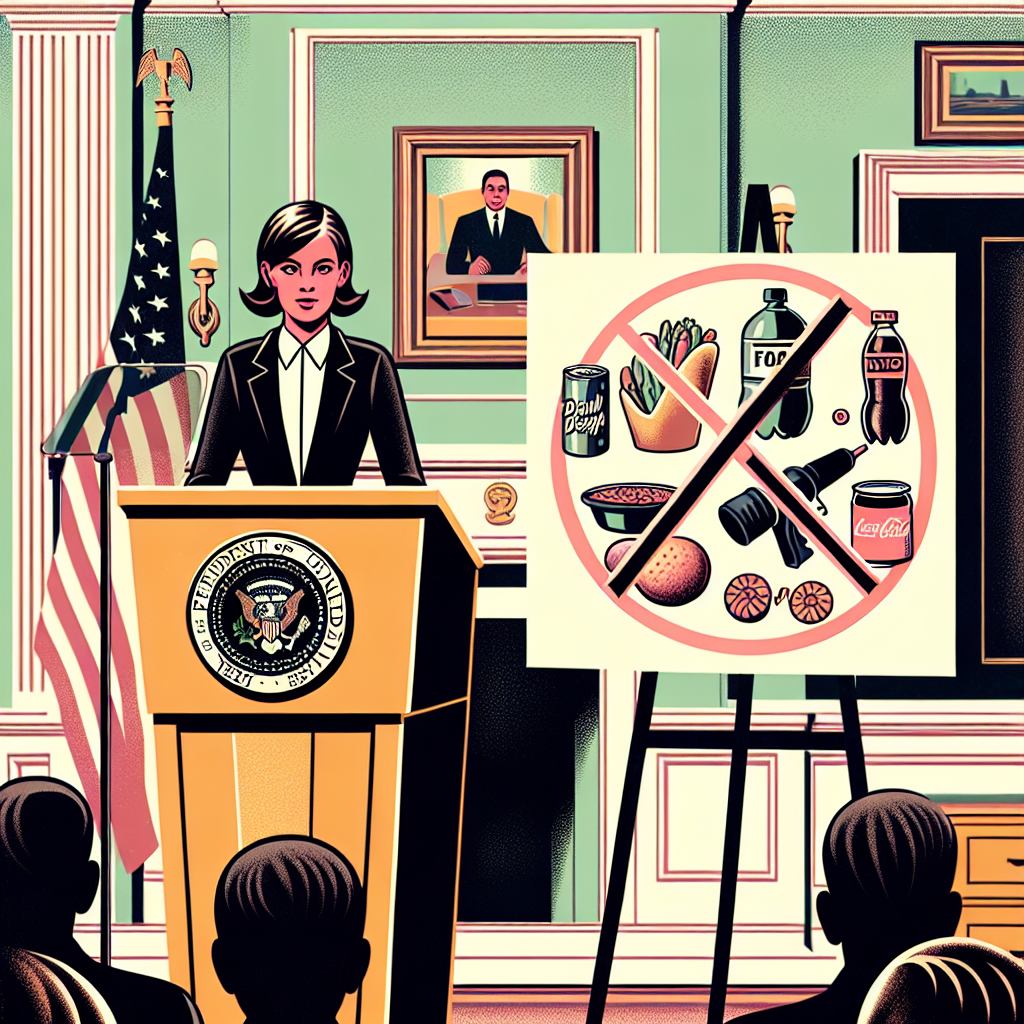
On December 11, 2025, the US Secretary of Agriculture, Brooke Rollins, announced on Wednesday (December 10) the approval of six states to ban the use of Supplemental Nutrition Assistance Program (SNAP), commonly known as “food stamps,” to purchase junk foods such as carbonated drinks, candies, and energy drinks starting from 2026. With this decision, the Trump administration has now approved similar restrictions in a total of 18 states.
The announcement was made by Rollins during an event held at the headquarters of the US Department of Agriculture. The six states include Hawaii, Missouri, North Dakota, South Carolina, Virginia, and Tennessee.
She stated that this action is an important component of the Trump administration’s “Make America Healthy Again” (MAHA) plan. She, along with Health and Human Services Secretary Robert F. Kennedy Jr., worked together to encourage states to adopt these restrictive measures.
Rollins emphasized, “Under the MAHA initiative, we are taking bold, historic steps to reverse the long-standing trend of chronic diseases plaguing America.”
According to a statement on the Agriculture Department’s website, these waivers are crucial in ensuring that taxpayers’ funds are used to provide SNAP recipients with healthier, more nutritious food options.
Robert F. Kennedy Jr. later commended this decision, stating, “I appreciate the leadership of these 18 governors in spearheading reforms to SNAP benefits, restoring the health of the American people – especially our children. Their courageous leadership is what is needed to achieve ‘Make America Healthy Again’.”
The 18 states that have been approved to implement restrictions also include Arkansas, Colorado, Florida, Idaho, Indiana, Iowa, Louisiana, Nebraska, Oklahoma, Texas, Utah, and West Virginia.
In most states, the new regulations will take effect on January 1, 2026, with a few states implementing them later in the year. While the specific list of prohibited items on the “food stamps” varies slightly by state, they generally include restrictions on carbonated drinks, energy drinks, candies, pre-packaged desserts, and some high-sugar juices.
Mehmet Oz, Director of the Centers for Medicare and Medicaid Services under the Department of Health and Human Services, revealed during the same event on Wednesday that states applying for and implementing restrictions on junk foods will receive priority scoring and additional funding support from the $50 billion rural health fund established by the Trump administration this year.
He mentioned, “The six documents signed by Secretary Rollins today prove that states are interested in this and that they can indeed receive additional funding.”
Rollins also announced that the US Department of Agriculture will allocate $700 million to support regenerative agriculture, encouraging farmers to adopt farming practices that preserve soil health.
According to data from the US Department of Agriculture, in the 2024 fiscal year, the total expenditure of the food stamp program exceeded $100 billion, providing an average of $190.59 in food assistance per month to over 42 million low-income Americans, accounting for approximately 12% of the national population.
This assistance is distributed in the form of Electronic Benefit Transfer (EBT) cards, which recipients can use to buy food at stores.
Earlier this month, the Trump administration had announced the suspension of aid to Democratic-governed states that refuse to provide federal government with identification information of food stamp beneficiaries who are immigrants.