
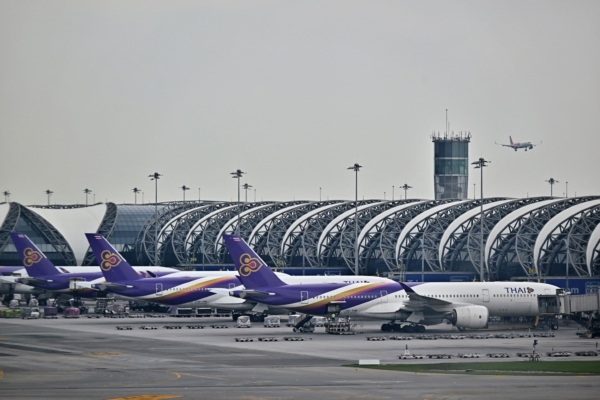
In a well-known Asian city, which has the longest place name in the world consisting of 168 English letters, many are familiar with its fame. Despite its population numbering in the tens of millions and attracting several tens of millions of foreign tourists annually, most people are unaware of its lengthy title.
According to the Guinness World Records, the place with the longest place name in the world is the capital of Thailand, Bangkok. While internationally known by its English name, Bangkok, its official name is Krung Thep Maha Nakhon, with a full name of 168 letters as follows:
Krung Thep Mahanakhon Amon Rattanakosin Mahinthara Ayuthaya Mahadilok Phop Noppharat Ratchathani Burirom Udomratchaniwet Mahasathan Amon Piman Awatan Sathit Sakkathattiya Witsanukam Prasit
As an abbreviation (excluding capitalized letters not used in Thai), it comprises 111 letters as follows:
krungthephphramahanakhon bowonratanakosin mahintharayuthaya mahadilokphiphobnovpharad radchataniburirom udomsantisug
So what does this long string of names mean? According to IFLScience website, its rough translation is “City of Angels, Great City of Immortals, Magnificent City of the Nine Gems, Seat of the King, City of Royal Palaces, Home of Gods Incarnate, Rendered by Indra.”
In essence, Bangkok can be called the “City of Angels,” which is also the meaning of its official name, Krung Thep Maha Nakhon.
As an international metropolis and tourist destination, Bangkok surely has its captivating charm. The Tourism Authority of Thailand points out that the city’s major tourist attractions mostly consist of historical sites or religious places, such as temples. These temples boast exquisite architecture, murals, and hold significant historical importance.
The renowned global travel guide publisher, Lonely Planet, on its website, recommends a series of must-visit attractions. Due to space constraints, let’s highlight some representative landmarks:
The Grand Palace
Commissioned by King Rama I in 1782, the Grand Palace served as the former royal residence of Thailand. Today, it is used only for ceremonial purposes but remains the largest tourist attraction in Bangkok and a place of pilgrimage for devout Buddhists.
Spanning 94.5 acres, the area features over 100 buildings showcasing 200 years of royal history and architectural evolution. Visitors can explore the Grand Palace and several other publicly accessible palace buildings known for their grandeur.
The most prominent accessible palace building is the three-tiered Chakri Maha Prasat, completed in 1882 and designed by British architect John Clunish, combining Italian Renaissance style with traditional Thai architectural elements.
Wat Phra Kaew
As part of the Grand Palace complex, Wat Phra Kaew was commissioned by King Rama I in 1782 solely for enshrining the Emerald Buddha. This king brought the Buddha statue to Thailand after capturing Vientiane in 1778 and placed it within Wat Phra Kaew in 1784.
Both Wat Phra Kaew and the Grand Palace are among the most sacred places in Thailand, requiring visitors to dress modestly for entry. Inappropriate attire such as shorts, sleeveless shirts, tank tops, and capri pants – essentially anything revealing arms and legs – is not permitted.
Wat Pho
Initially constructed in the 16th century, Wat Pho was later restored by King Rama I in 1788. By that time, he had erected the Grand Palace next to Wat Pho, officially establishing Bangkok as the capital.
Most of the structures visible inside Wat Pho today were completed during the reign of King Rama III in the 1830s. He expanded Wat Pho, especially the southern and western temples housing the reclining Buddha.
Completed in 1848, the 46-meter-long and 15-meter-high reclining Buddha remains the largest in Bangkok. The statue’s core is made of bricks, covered with stucco, and adorned with gold leaf, depicting the scene of Buddha’s nirvana.
King Rama III also transformed Wat Pho into Bangkok’s first public university. The temple houses numerous sculptures and artworks, over 1,000 Buddha images commissioned to help people learn about history, literature, and Buddhism.
As the national headquarters of traditional Thai medicine, Wat Pho features two Thai massage pavilions within the temple and massage rooms in the training center outside, offering visitors a unique experience combining sightseeing and relaxation.
Wat Arun
Shaped like a missile, Wat Arun stands on the bank of the Chao Phraya River, one of Bangkok’s most iconic structures.
A temple has existed on the site of Wat Arun since at least the late 16th century but gained historical significance when King Taksin discovered it in 1767 upon fleeing Burmese invaders at sunrise, making it his royal temple and naming it Temple of Dawn.
After Bangkok became the new capital, King Rama II renamed the temple Wat Arun, commencing the central prang’s expansion, which was completed during the reign of King Rama III in 1842.
The most striking feature of Wat Arun is the towering stupa constructed by King Rama II and completed in King Rama III’s era. Visitors can climb steep stairs to the top of the stupa, offering majestic views of the Chao Phraya River. Inside, the stupa is adorned with intricate floral mosaics made of shattered, vibrant Chinese porcelain, one of the hidden gems not easily noticed from afar.