
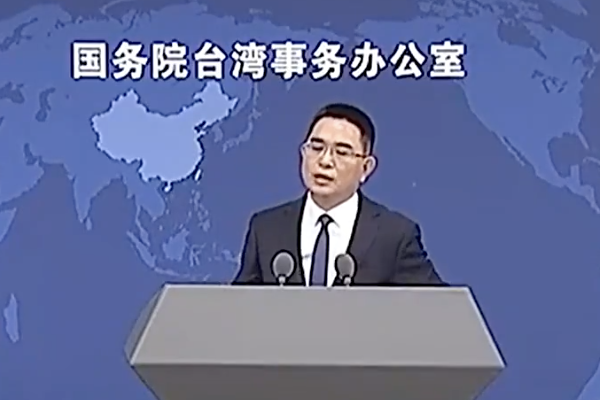
【Epoch Times December 10, 2025】Mainland China’s Xiaohongshu (RED) app was blocked in Taiwan for a year due to involvement in over a thousand fraud cases. The spokesperson of the Taiwan Affairs Office of the Chinese Communist Party (CCP), Chen Binhua, criticized the actions of the Taiwanese authorities today (10th), claiming that it is “depriving the people of Taiwan of their right to information and the freedom to use social platforms.” However, when asked about the issue of mainland Chinese people having to use VPN to access Facebook, Chen Binhua only stated to “support the lawful and regulated use” of various social platforms, and the CCP official media omitted this question in its report.
The Taiwan Affairs Office of the CCP held its regular press conference today, where spokesperson Chen Binhua claimed that Xiaohongshu’s positioning is as a “social platform for lifestyle interests,” which is highly popular among Taiwanese people, especially youth. He criticized the deliberate creation of an “information cocoon room” and the slander and vilification of the mainland by the Taiwanese authorities, claiming it to be “intolerable.”
According to the Central News Agency, some media outlets asked: “Ordinary Chinese people also need to use VPN to access Facebook and X platforms. How does the Taiwan Affairs Office view this? Many mainland institutions have started to create accounts on platforms like Facebook, has the mainland considered opening up Facebook for the public?” In response, Chen Binhua stated, “We support the use of various social platforms in accordance with laws and regulations.”
However, when reporting on Chen Binhua’s comments, the CCP official media did not mention the questions about mainland Chinese people needing VPN to access Facebook and X platforms; it only used “related issues” as a replacement.
The Xiaohongshu app was temporarily blocked in Taiwan for a year from December 4th due to inadequate security checks and the app’s failure to respond to official letters from Taiwan. According to the Criminal Investigation Bureau of the Taiwan Ministry of the Interior, based on the statistics of the 165 Anti-Fraud Platform, the total financial losses from Xiaohongshu app scams in Taiwan exceeded NT$132.9 million; with total losses from January to November this year reaching over NT$114.77 million.
The Taiwan Criminal Police Bureau revealed today (10th) that there were 950 and 756 fraud cases involving Xiaohongshu last year and this year, respectively, with the majority being related to “cancellation of installment payments, fake online shopping, and false investment.”
Regarding the comments made by the spokesperson of the Taiwan Affairs Office of the CCP, Chen Binhua, a news video (without mentioning the media’s question about VPN) was reposted on X, with netizens mocking:
“Once the CCP decides to open up Google, Twitter, and Facebook, the Taiwan Affairs Office can come back with those statements. The boomerang hasn’t been thrown, but it’s already hit itself in the head. Moreover, the Taiwan government had given Xiaohongshu many chances before, and it did not cooperate in fighting fraud, so being banned is justifiable.”
“This is hilarious, they delete even emoji comments in the video’s comments section, and they still have the nerve to say this.”
“It’s wrong for others to ban Xiaohongshu, but it’s fine for you to ban Facebook. Who’s being hypocritical here?”
“Haha, far from the ‘Xi bans comments’ situation!”
“The CCP’s thuggish behavior, banning everyone’s social apps but not allowing others to block their own social media!”
“The Propaganda Department is trembling: ‘It’s not me, it’s not me.'”
After the Taiwan Affairs Office of the CCP opened the “State Council Taiwan Affairs Office Spokesperson” account on Facebook on October 21, Taiwanese netizens flocked to the comments section, asking about “Yue Menglong’s cause of death” and if there have been developments in the case, while questioning why the CCP officials can bypass the Great Firewall themselves but prohibit people from doing the same.