
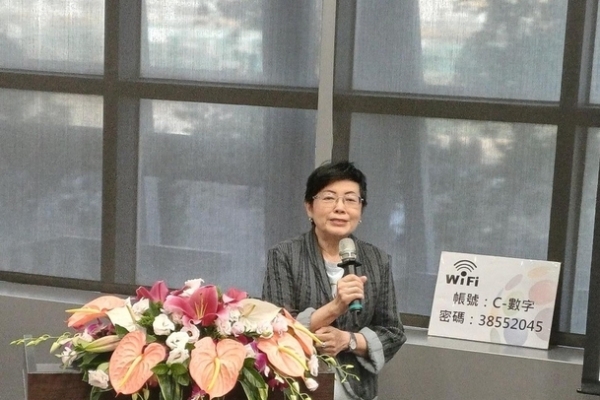
Taiwan non-profit organization “全民查假會社” (“All-People Anti-Fake News Society”) became the third team in Taiwan to receive international recognition for fact-checking after being certified by the International Fact-Checking Network (IFCN) in August this year. On November 29, they held their annual forum with dual themes, one of which was “Advancing Media Literacy in the Age of AI”, focusing on combating misinformation and the battle of influence.
“全民查假會社” is dedicated to combating fake news and promoting media literacy. Chairwoman 谷玲玲 (Gulu Lingling) stated that this year’s forum aimed to help the public enhance their information interpretation skills in the AI era so that they can be more discerning in the fast-paced information environment.
谷玲玲 pointed out that groups often share health tips, but the increasing number of AI-generated medical videos makes it harder for people to discern the truth from the false in seemingly harmless “quick fixes”, thus making verification more challenging. With the rapid development of AI and social media technologies, the spread of misinformation has become more complex, underscoring the importance of media literacy and information verification skills as essential competencies. She hopes that through the forum, the public can use information more safely and efficiently in the AI era.
Director-General of the Department of Digital Development of the Republic of China, 胡貝蒂 (Hu Beidi), emphasized that combating fraud relies on technological cooperation and cross-sector collaboration. The department continues to promote public-private partnerships through platforms that accept reports, and advocates for the real-name registration of online advertisements and a fraud alert mechanism on the Network Fraud Reporting and Query Platform to reduce the dissemination of fake news and scams.
Chairman of the Sola Big Data Team, 王儷潔 (Wang Lijie), used Threads as an example to analyze how social media influence shapes public opinion and how misinformation mutually impacts it. He pointed out that Threads mainly mobilizes emotions in its issue operations, driven by “Key Opinion Leaders” (KOL) and amateur accounts, along with different platforms developing independent narratives, which increases the difficulty and cost of fact-checking.
林若凡 (Lin Ruofan), Deputy General Manager of LINE Taiwan’s Public Affairs Department, stated that digital governance should run parallel to media literacy and depend on the collaboration of platforms, the public, and the government. LINE has long assisted the government and law enforcement agencies, providing official accounts for the public to verify information, complemented by a reporting mechanism to help fact-checking teams effectively focus resources.
Prof. 陳炳宏 (Chen Binghong), Special Research Professor at the National Taiwan Normal University’s Institute of Mass Communication, noted that false information proliferates on social media platforms, emphasizing the urgent need for fact-checking organizations to help verify them. However, the rapid evolution of generative AI has made it increasingly challenging to rely solely on visual inspection to detect fake images and videos, presenting a new challenge for the information environment.
“全民查假會社” calls on the media, educational institutions, and all sectors of society to recognize the dangers of fake news, collectively creating a healthy information environment. They also welcome like-minded partners to join them in deepening their fact-checking expertise and expanding educational influence.