
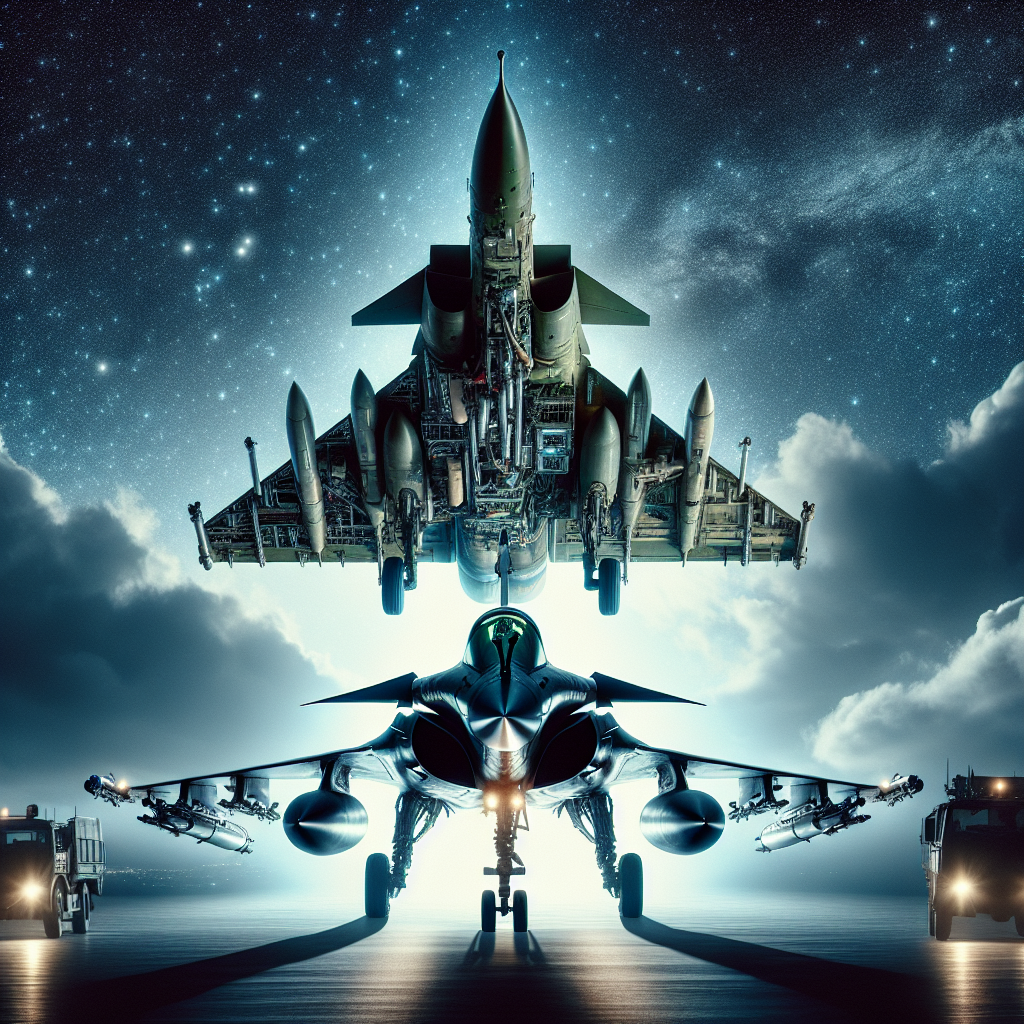
Recently, there have been reports that Taiwan hopes to procure France’s Rafale fighter jets to replace its aging Mirage 2000 fighters. This information was not just a mere speculation but was mentioned by Eric Trappier, the CEO of Dassault Aviation, during a hearing at the National Assembly on September 24th. Trappier highlighted that the service life of Mirage 2000 has reached its end and all of their export customers are transitioning from Mirage 2000 to Rafale fighters.
In response to a question from French MP Baptiste, Trappier indicated that they are aware of Taiwan’s interest in acquiring Rafale fighters but stressed that the decision is not up to him.
While Trappier’s statement holds weight as the CEO of Dassault Aviation, the practical aspect raises doubts about the possibility of France selling Rafale fighters to Taiwan. From Taiwan’s perspective, procuring Rafale fighters may not bring significant benefits either. Let’s analyze further.
Looking at France, the country has maintained a friendly relationship with China for a long time. While France may want to make money from Taiwan, they also want to avoid upsetting China. An example of this delicate balance is when Taiwan signed a 24 million Euro contract with a French company to install decoy launchers on La Fayette-class frigates, and even that faced strong opposition from Beijing.
Historically, Taiwan’s largest arms procurement projects from France have been the La Fayette-class frigates and Mirage 2000 fighters. However, all the equipment Taiwan imported were stripped-down versions. Taking Mirage 2000 as an example, Taiwan’s Mirage 2000 lacks complete operational capabilities, lacking ground and sea attack capabilities and being limited to performing air defense missions.
Looking at Taiwan’s La Fayette-class navy vessels, Taiwan procured Kang Ding-class, based on the French La Fayette-class frigates. Although they have good performance with a displacement of 3,600 tons and stealth design, when they were procured from France, they lacked any weapon system. These weapon systems were later installed in Taiwan. For instance, the anti-ship weapons use Taiwan-made Hsiung Feng anti-ship missiles. The main gun was purchased from Italy in 2017, a 76mm rapid cannon. The initial primary air defense weapon was an old-fashioned Sea Chapper missile, and Taiwan is currently installing the domestically produced Hsiung Feng II anti-aircraft missile through the Hai Yang vertical launch system.
Looking back at history, considering the relationship between the French government and China, Taiwan facing many limitations in procuring weapons from France. Whether France is willing to sell Rafale fighters remains uncertain, and even if they are willing, ensuring the completeness of weapon systems becomes challenging. Moreover, future maintenance logistics and equipment upgrades pose challenges.
For instance, Mirage 2000, in service for over 30 years, has encountered various difficulties in its upgrade program and uses French-produced missiles. Taking the Meteor air-to-air missile used by Rafale fighters as an example, Meteor utilizes a ramjet engine with a range exceeding 200 kilometers, making it exceptionally performant in the air-to-air missile category. However, the willingness of the French to sell these advanced systems, the price, and other considerations remain unknown variables.
Looking at the issue from Taiwan’s perspective, expressing interest in purchasing fighter jets, Taiwan has had both positive and negative experiences with the United States in the past. Therefore, diversifying procurement of weapons from other countries is reasonable.
However, purchasing French Rafale fighters raises several concerns:
Firstly, the price – French equipment is known to be expensive. For instance, in the 90s, when Taiwan simultaneously procured Mirage 2000 and F-16 fighters, each Mirage 2000 cost approximately 60 million USD, similar to the F-16. The operating costs of the Rafale fighter jets are also high, with a training cost of around 27,000 USD per hour, surpassing the operational expense of F-16s.
When considering the price of the Rafale fighter itself, it is renowned for being expensive. Looking at Indonesian Rafale purchases, the country spent 8 billion USD to purchase 42 Rafales, at an average cost of nearly 200 million USD per aircraft. Similarly, the UAE purchased Rafale fighters for over 2 billion USD, averaging over 200 million USD per aircraft. Comparatively, Taiwan procured F-16Vs for about 1.2 billion USD for 66 aircraft. Analyzing these figures showcases the relative costs associated with Rafale purchases compared to other options.
In terms of performance, while the Rafale fighter is impressive, its overall combat capabilities do not exceed the American F-16V. Looking at the engine comparison alone, the Rafale, weighing around 10 tons empty, requires two engines, while the F-16, weighing over 8 tons, only requires one engine. French design choices necessitate dual engines due to power inadequacies, with each M88 engine providing a basic thrust of 50 kilonewtons and reaching up to 75 kilonewtons with afterburner.
Contrastingly, the F-16V uses the F-100 engine with a thrust of 75.6 kilonewtons, reaching nearly 130 kilonewtons with afterburner. Consequently, though the Rafale employs two engines, its total thrust barely surpasses that of a single F-16 engine.
Considering these factors, it seems more beneficial to invest in F-16V fighter jets or focus on developing Taiwan’s next-generation indigenous fighter rather than purchasing French Rafale fighters. Secondly, not only are French products expensive, but there is also a risk of delays and potential quality issues.
An example cited involves Australia initially collaborating with France to produce conventionally powered submarines. However, due to delays and budgetary increases, Australia switched its alliance, aligning with the US and UK for nuclear submarine production through the AUKUS agreement. This case underscores the uncertainties and risks associated with French defense projects.
Reflecting on past experiences like Taiwan’s purchase of La Fayette vessels, which faced controversies regarding weapon prices and later the Lafayette scandal, it becomes evident that caution is warranted in future dealings with France. In contrast, Taiwan’s numerous arms acquisitions from the US have generally been transparent and without major scandals.
Considering the differences in engine performance and key radar systems between Rafale and F-16V, it becomes apparent that despite the Rafale’s capabilities, various factors like pricing, performance, and reliability favor other alternatives for Taiwan’s defense needs.
In conclusion, while the Rafale fighter’s capabilities are notable with advanced radar systems and weaponry like the Meteor missile, its cost-effectiveness as a procurement option for Taiwan raises concerns. Due to the complex relationship dynamics between France and China, Rafale sales to Taiwan remain uncertain, potentially leading to incomplete versions of the fighter. The relatively high price tag, coupled with engineering uncertainties or cost escalations, make the purchase of Rafale fighters for Taiwan seem less viable.
Therefore, Taiwan might find more practical and effective options in enhancing its defense capabilities by exploring alternatives like F-16V purchases or supporting the development of an indigenous next-generation fighter. Investing in self-reliance and diversifying procurement sources appear to be more sensible strategies for Taiwan’s defense requirements.
How do you perceive Taiwan’s potential acquisition of Rafale fighters? Share your thoughts!