
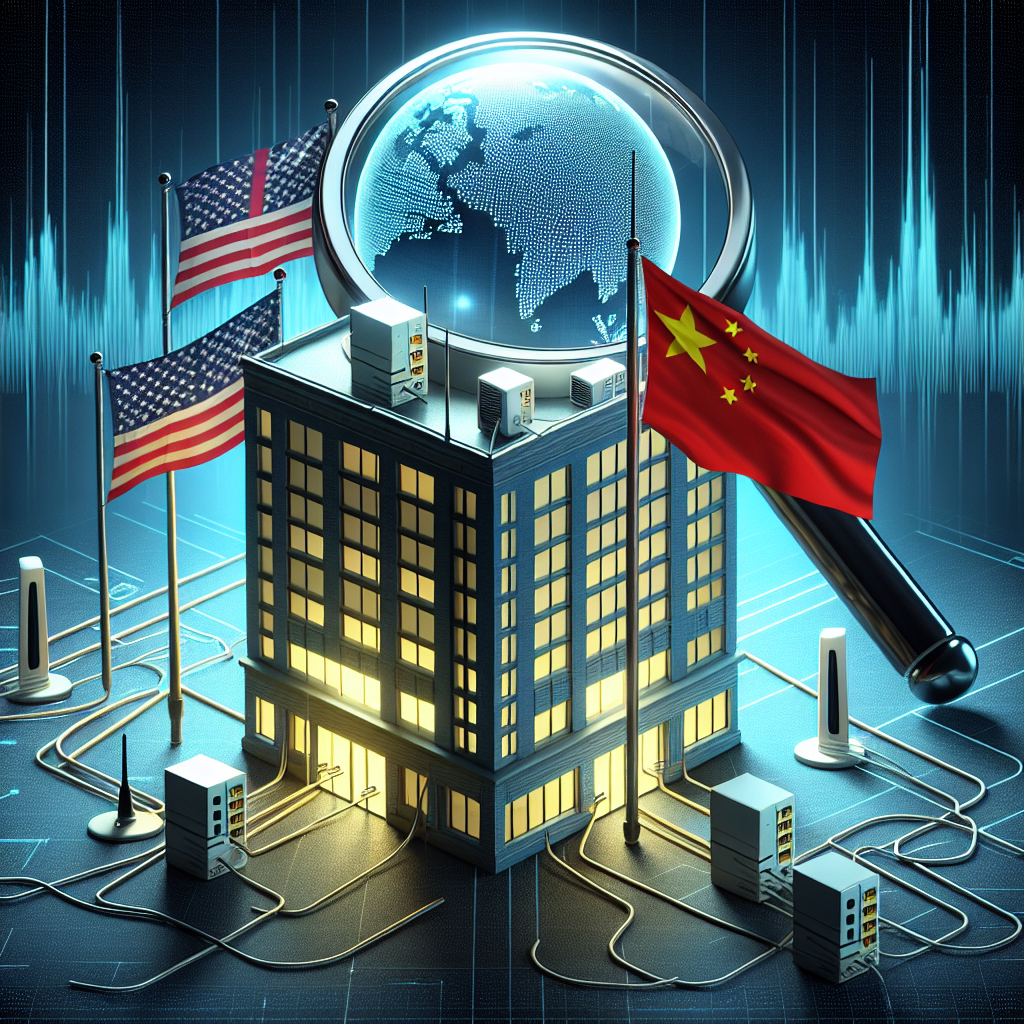
The U.S. Federal Trade Commission (FTC) is investigating TP-Link Systems Inc., a wireless router manufacturer based in California, for allegedly concealing its ties to China through a restructuring last year, deceiving consumers, according to sources familiar with the matter.
The focus of the investigation is on whether TP-Link misrepresented itself as an American company and withheld ongoing connections with China, creating a false sense of security for consumers. These sources, requesting anonymity due to the sensitive nature of the information, also mentioned that the investigation is in its early stages, and it is currently uncertain whether the FTC will file a lawsuit.
TP-Link routers hold about 65% of the market share in the U.S. for home and small business routers due to their affordable prices. Additionally, TP-Link is the preferred router brand on the e-commerce platform Amazon and provides network communication services to the U.S. Department of Defense and other federal government agencies.
Co-founder and head of U.S. operations at TP-Link, Jeffrey Chao, stated in a release that the company has always maintained transparency in its supply chain with the media and government, dismissing any claims suggesting they attempted to conceal information as absurd.
Regarding the Chinese Communist Party, Chao added, “I have no connection with the CCP, never have, and my demands for TP-Link are the same.”
The FTC is responsible for enforcing antitrust and consumer protection laws and can prosecute companies suspected of deceiving consumers with their products and services. If the FTC believes TP-Link has concealed significant ties to China, they may seek injunctions to prohibit the company from making deceptive statements in the future. Violating such court orders could lead to civil liabilities for TP-Link.
This investigation by the FTC is just one among a series of federal and state inquiries into TP-Link. The company was founded in China nearly thirty years ago but split into two independent companies with headquarters in the U.S. and China last year.
After a series of router attacks, lawmakers from both parties in the U.S. are increasingly concerned about potential security vulnerabilities in TP-Link routers, fearing they could be easily compromised by Chinese hackers to attack U.S. networks. In May of this year, over a dozen Republican lawmakers, including Senator Tom Cotton, chairman of the Senate Intelligence Committee, called for a ban on further sales of TP-Link products.
During a hearing in March, Raja Krishnamoorthi, chief Democrat of the House Subcommittee on China, held up a TP-Link router, warning against its use, stating, “I don’t have this at home either.”
During his first term in office in 2019, President Trump signed an executive order authorizing an investigation into TP-Link. In 2024, the Biden administration officially initiated the investigation, leaving further action to the second term of President Trump.
Previous reports from Bloomberg indicated that U.S. officials had identified TP-Link routers as among the brands used by hackers supported by the Chinese government. These hackers launched large-scale cyberattacks named “Volt Typhoon” and “Salt Typhoon,” targeting critical U.S. infrastructure such as water resources, transportation networks, as well as telecommunications and internet companies.
Microsoft reported in 2024 that since at least 2021, Chinese hackers had used compromised TP-Link routers to create a covert network to steal sensitive customer login credentials.
Furthermore, Florida Attorney General James Uthmeier issued a subpoena to TP-Link on Tuesday as part of a consumer protection investigation into the company’s network security measures, supply chain infrastructure, and handling of U.S. consumer data. This probe is similar to an investigation launched in October by Texas Attorney General Ken Paxton.
A spokesperson for TP-Link stated that the router manufacturer is “an independently owned American company, dedicated 100% to serving American customers and fully complying with all U.S. laws, including privacy laws.”
According to The Washington Post’s report on October 30th, after several months of review, the U.S. Department of Commerce’s ban on TP-Link has garnered support from multiple agencies, including the Department of Justice, Department of Homeland Security, and the Department of Defense.
The Department of Commerce believes that a comprehensive ban on TP-Link sales in the U.S. is a viable solution, asserting that the company’s ties to China pose a national security threat to the United States.