
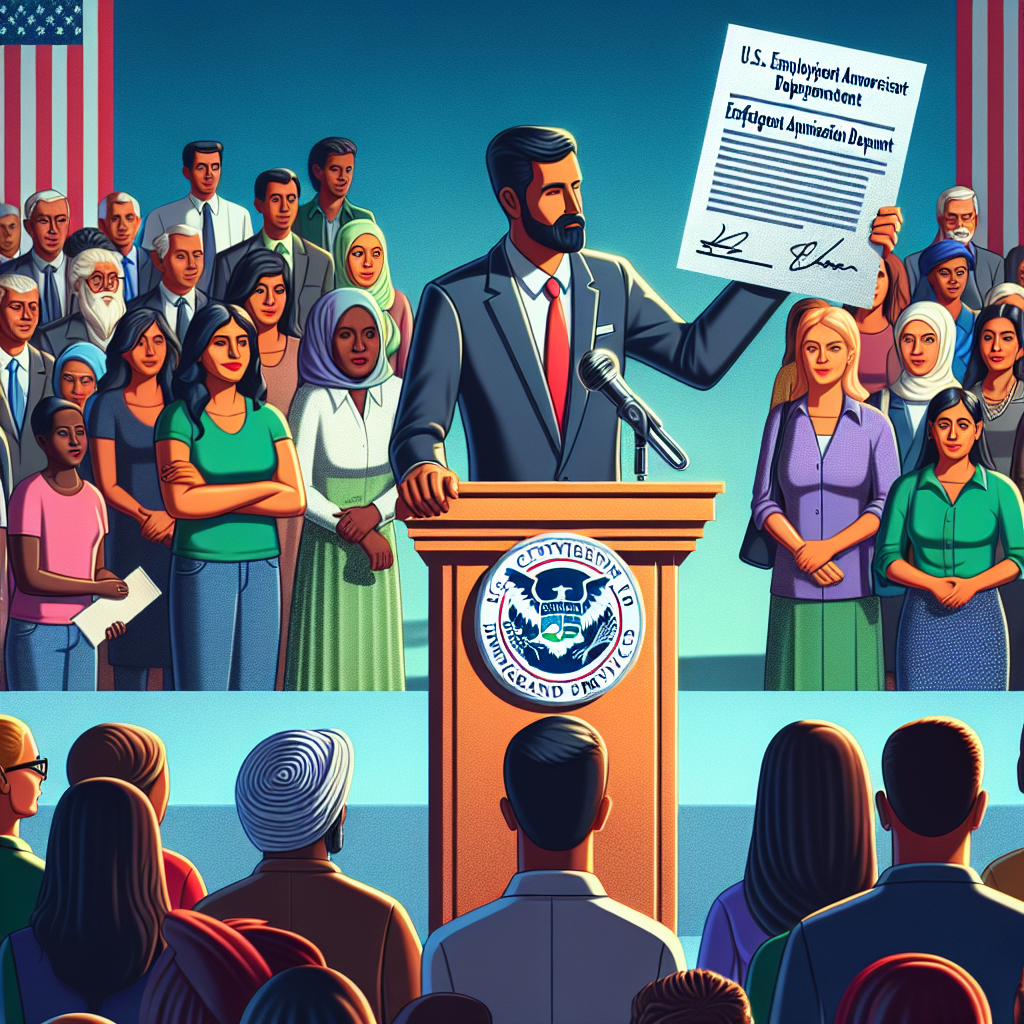
The U.S. Citizenship and Immigration Services (USCIS) announced on December 4th that the validity period of work permits for immigrants, known as Employment Authorization Document (EAD), will be shortened from five years to 18 months. This change will affect work permits for refugees, asylum seekers, and individuals awaiting adjustment of status applications, potentially impacting some green card applicants.
Starting from December 5, 2025, USCIS will limit the maximum validity period for initial applications and renewals of EAD cards to 18 months. Those who obtained EAD cards before December 5 will maintain their current validity until expiration, but subsequent renewal periods will be restricted to within 18 months.
EAD is crucial for many immigrants as it allows individuals awaiting green card approval to work legally in the United States.
According to a report by Business Insider, this policy change may lead to more frequent EAD renewals, resulting in additional application fees, paperwork, and potentially longer employment gaps if processing times remain lengthy, impacting the job stability of some green card applicants.
Green card applicants, especially those holding EADs during the pending green card application period, should prepare for more frequent renewals. Specific measures include:
– Applying for EAD renewal early (USCIS allows submission of renewal applications up to 180 days before expiration).
– Preparing all supporting documentation in advance, such as passport, I-485 receipt, and previous EAD, and verifying the accuracy and timeliness of information with USCIS.
– Budgeting for more frequent renewal fees. As of the time of this publication, renewal fees can be as high as $605 per application, but green card applicants may be eligible for fee discounts.
– Communicating these changes with employers for compliance planning and timely re-verification of I-9 forms.
– Employers may also need to update compliance procedures to address more frequent re-verification of employee work statuses on I-9 forms.
Prior to this immigration policy change, a malicious incident occurred in Washington, D.C., where an Afghan national shot two National Guard members. Subsequently, the Trump administration intensified scrutiny on related immigration policies, including those concerning specific countries and political asylum applications.
In a statement, USCIS Director Joseph Edlow stated that shortening the maximum validity period of work permits will ensure that those seeking employment in the U.S. do not pose a threat to public safety or promote harmful anti-American ideologies.
Rahul Reddy, founding partner at Reddy Neumann Brown law firm, told SHRM providing workplace news that “Shortening the validity period to 18 months may further exacerbate USCIS’s case processing pressures and result in work permit gaps for legitimate applicants awaiting permanent residency for an extended period.”
Affected individuals should seek legal advice or visit the USCIS website for the most updated guidance.
(Some information in this article was referenced from a report by Newsweek on December 8)