
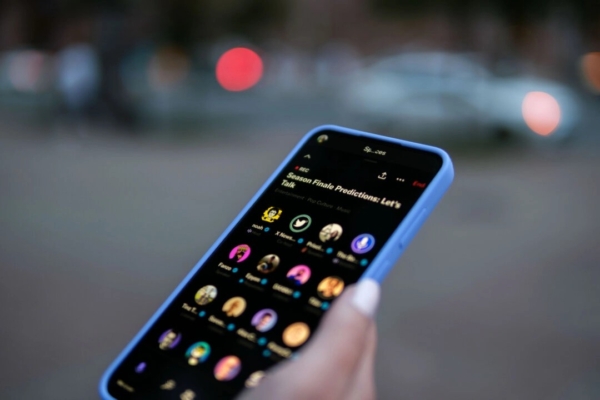
Your smartphone – the platform used for browsing the internet, scheduling, and managing daily life, often stores an astonishing amount of personal data, much of which is used for buying and selling on a daily basis.
“We rely on databases of advertising information found on our phones and installed applications, which can be purchased by advertisers and anyone else. The easiest to obtain is your real-time location information,” former Apple product manager Joe Weil told The Epoch Times.
“Not only your location information, but also details such as who is with you – including people at home, colleagues at work, gym buddies, and those with similar interests – all this information can be easily analyzed and mapped into your ‘life portrait.'”
Weil explained that the “various details” of our lives can not only be obtained through real-time location on the phone but also by the content we view on our phones – including the websites we visit and the apps we download.
Personal information is obtained and sold through cookies, digital footprints, first-party, and third-party tracking. So what countermeasures can you take?
Different information about users is collected when visiting websites and downloading applications – including location, communication partners, shopping information, search history, and personal interests.
According to the Federal Trade Commission (FTC), many companies do this to retain user preferences and relevant information in order to present specific ads and search results according to user tendencies. Websites also retain user visit data to display personalized content, such as local weather conditions or events and topics that users may be interested in.
The FTC states that websites record and analyze user data based on the pages visited, time spent, and devices used when visiting the site.
According to the German consent management platform Usercentrics, some companies even obtain user information through the dark web and data breaches.
When websites track user activities, it is called “first-party tracking”; when the website allows other companies to track, it is called “third-party tracking.”
FTC points out that companies using third-party tracking can monitor user activities on most websites, enabling advertisers to deliver targeted ads based on user preferences and browsing history. For example, a user who visits running and fitness-related websites may later see ads for running shoes.
Weil explained, “Advertisers then combine the information collected – where users go and what they normally do on their phones.”
“Even when the app is not in use, it continues to transmit information to data collectors, who then sell the information to data brokers.”
“When users use the app, it also sells their location information. Even if users have previously chosen not to provide location, it will try to obtain the user’s current location through fingerprinting technology,” Weil added.
Identity privacy and protection company IDX states that to verify if your data is being traded online, you can search your name on Google.
You may see websites displaying your age, address, phone number, property status, tax records, court records, voting records, and even religious beliefs.
These websites are called data brokers, with hundreds currently in operation. They collect user personal data online as much as possible and then sell it to advertisers and other companies.
IDX states that this process is not only completely legal, but data brokers also use automated software to dig up user information from credit agencies, tax records, court records, telecommunication companies, social media platforms, the Department of Motor Vehicles (DMV), and other public domains.
Usercentrics further notes that data brokers often “integrate, enhance, analyze, and repackage data” regularly. Additionally, data buyers are not only advertisers; customized user profiles and information are sometimes sold to law enforcement agencies.
Other buyers of personal data include employers and recruiters, cybersecurity and anti-fraud companies, medical and pharmaceutical companies, banks and financial institutions, insurance companies, real estate and retail businesses, government agencies, and politicians and political campaigns.
Weil states, “If a government or (Chinese Communist Party) or anyone wants to find out, for instance, ‘Hey, show me who goes to this sect’s church’ or ‘Show me information on people going to a firearms store,’ it can be done immediately.”
There are multiple ways to protect your online personal information. If you find that some of your data is held by data brokers, one way is to request the deletion of your information from the data broker.
However, Usercentrics notes that this process involves filling out many forms, “as well as identity verification and email sending, so it can be time-consuming.”
Moreover, there are specialized personal data deletion services, but they typically involve a fee. These services can initiate the deletion process on your behalf. Some services focus on specific types of websites and services, while others claim to be able to delete personal information from dozens of data brokers.
Many of these services require a subscription, as they will monitor data brokers regularly and send information deletion requests in a timely manner.
You can also take preventive measures to avoid your information falling into the hands of data brokers from the start. Whether using web browsers or social media platforms, you can remove or limit tracking of your online activities. This can also be done when using apps on Apple and Android phones, and you can choose to reject tracking when new apps request it.
You can also browse the internet through a Virtual Private Network (VPN) or use privacy-focused search engines without tracking.
Furthermore, FTC recommends regularly clearing cookies, browsing history, and search records on your computer to prevent targeted ads based on online activities. You can also adjust browser privacy settings to prevent websites from tracking your browsing history and location information.
FTC points out that different browsers offer different options. Some browsers provide private browsing or “incognito” modes that automatically delete browsing history and cookies when you close the browsing window.
Some mobile phones also allow users to opt-out of personalized ads from operating system manufacturers (such as Apple and Google), which can usually be found in the “Advertising” options in privacy settings.
FTC states that users can also use ad blockers to prevent certain ads from appearing on the browsing interface. Some ad blockers can even prevent tracking of user data.