
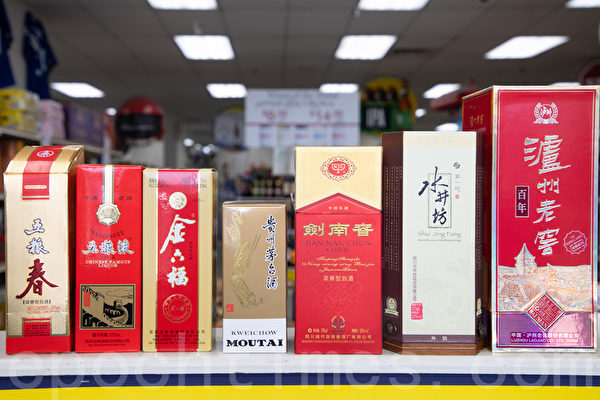
Yibin Wuliangye Co., Ltd. (Wuliangye), a well-known Chinese liquor company, is set to lower the price of its eighth-generation Wuliangye liquor to 900 yuan per bottle starting from 2026. This marks a decrease of 119 yuan per bottle. Industry insiders have disclosed that with manufacturer subsidies taken into account, the actual price of Wuliangye could drop to just over 800 yuan per bottle.
On December 5th, industry insiders revealed this information, stating that in 2026, Wuliangye will offer discounts on the core product, the 52% alcohol eighth-generation Wuliangye, reducing the distributor price by 119 yuan from the factory price of 1019 yuan per bottle. When combined with cost support and rebate policies, the actual cost for distributors for this product could even go below 800 yuan per bottle. Several media outlets including “China News Weekly” and “Daily Economic News” reported on this development on December 6th.
A spokesperson for Wuliangye commented to “China News Weekly” that they were “uncertain” about the price adjustment.
Regarding the price adjustment, Wuliangye told “Daily Economic News” that the factory price of the eighth-generation Wuliangye remains at 1019 yuan per bottle and has not been adjusted. The rumored price reduction is said to occur after applying related subsidy support policies, but specifics of these policies were not disclosed.
A senior industry expert confirmed the news, stating, “(The price) will decrease to 900 yuan per bottle, accompanied by other significant cost support.”
In the liquor industry, distributors typically operate with two prices from the liquor company: the factory price and the distributor price. The factory price is usually stable and considered a major marketing decision when adjusted, whereas the distributor price is more flexible, serving as a benchmark for channel incentives and rebate calculations, a tool for manufacturers to regulate channel management. Adjusting the distributor price instead of the factory price can minimize the impact on the market.
Furthermore, adjusting the distributor price can be seen as an “implicit price reduction” and essentially means a price decrease for distributors.
Currently, e-commerce platforms show prices for the eighth-generation Wuliangye ranging from 820 to 850 yuan per bottle on Tmall, with a downward trend on JD.com’s self-operated platform, priced around 845 yuan per bottle with platform subsidies.
Public data reveals that the last price decrease for Wuliangye was in May 2014, when the factory price of the core product, the 52% alcohol Crystal Bottle Wuliangye, was reduced from 729 yuan per bottle to 609 yuan per bottle, and the retail price guidance went from 1109 yuan per bottle to 729 yuan per bottle. Following this price drop, Wuliangye saw a 15% decrease in operating income and a 26.81% year-on-year drop in net profit, marking the most significant decline since the company went public.
Regarding this price reduction, it is widely believed in the industry that this is a form of “structural concession” by the liquor company. White liquor expert Xiao Zhuqing believes that this price reduction by Wuliangye will alleviate channel funding and inventory pressure.
This price reduction by Wuliangye reflects the ongoing downward trend in the Chinese liquor industry, with companies facing significant operational pressures.
According to the latest “2025 Third Quarter Report” released by Wuliangye on October 30th, the company reported a 52.66% year-on-year revenue decrease to 8.174 billion yuan and a 65.62% net profit decline to 2.019 billion yuan in the third quarter of this year. Overall for the first three quarters, Wuliangye’s revenue was 60.945 billion yuan, down 10.26% year-on-year, with a net profit of 21.511 billion yuan, down 13.72% year-on-year. This marks the first revenue decline for Wuliangye since 2015, with the net profit growth at its lowest level since 2016.
It’s not just Wuliangye; Chinese liquor companies experienced a challenging third quarter. This includes Gubei Gong (net profit down 74.56%), Shuijingfang (net profit down 75.01%), and other high-end product-focused liquor companies. Among the leading companies, Yanghe shares saw a loss of 369 million yuan in the third quarter, resulting in rare losses among the top liquor companies.
Data shows that since reaching peak production in 2016, China’s Baijiu market has shrunk by nearly 70% by 2024.
Publicly known as a well-established Chinese Baijiu brand, Wuliangye boasts over 700 years of history and has inherited ancient brewing techniques. As of the close of trading on December 5th, Wuliangye’s stock price has dropped by over 11% in the past three months.