
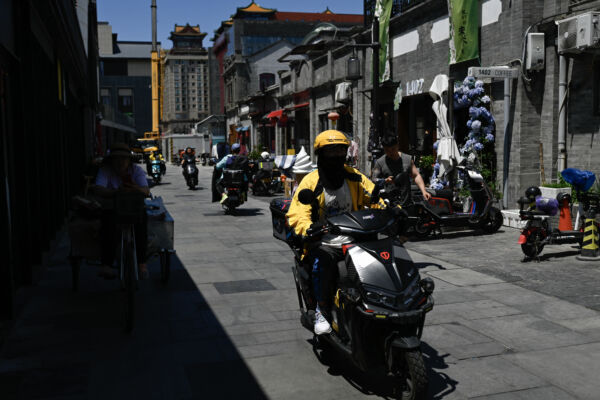
In the summer of this year, the Chinese food delivery industry ignited an unprecedented subsidy war. Jingdong entered the food delivery market, carrying out massive subsidies to seize market share, prompting Alibaba (Taobao, Ele.me) and Meituan to quickly follow suit. Recently, the third-quarter financial reports released by Alibaba, Jingdong, and Meituan all showed significant losses. It is estimated that the three giants collectively earned nearly 80 billion yuan less in the first half of the year.
On November 30, Chengdu Media Group’s Red Star News reported that while the food delivery war was at its peak during the summer, the three giants involved faced a “bone-chilling” performance figures this winter.
From November 13 to November 28, Jingdong, Alibaba, and Meituan successively released their third-quarter reports, presenting the second “report card” under the food delivery war. Meituan experienced the largest loss since its listing, Alibaba’s operating profit decreased by 85% year-on-year, and Jingdong’s net profit attributable to ordinary shareholders decreased by 55%.
The losses and sharp decline in operating profit were mainly due to a significant increase in sales expenses. In the third quarter, the sales and marketing expenses of the three giants almost doubled. Meituan’s expenses increased from 18 billion yuan to 34.3 billion yuan, a year-on-year increase of 90.9%; Alibaba’s sales and marketing expenses amounted to 66.496 billion yuan, compared to 32.471 billion yuan in the same period last year, an increase of 104.8%; Jingdong’s marketing expenses also increased to 21 billion yuan in the third quarter, a year-on-year increase of 110.5%.
The report mentioned that most of the increased expenses were “burned” into the food delivery battlefield. Meituan stated that due to business development and constantly adjusting business strategies to cope with the intense competition in the food delivery industry, expenses for promotion, advertising, and user incentives increased. Although Alibaba and Jingdong did not explicitly mention investing in food delivery competition, they indicated in their financial reports an “investment in user experience” and “increased investment in new business.”
According to Red Star News’ calculations, including data from the second quarter, comparing the estimated profits from the same period last year, the three giants collectively earned nearly 80 billion yuan less in the past six months.
Previously, Chinese-American economist David Huang told Epoch Times that the competition among food delivery platforms is mainly “pressured from capital and shareholders,” leaving no room for retreat for anyone. Despite calls for regulation to halt, no one is willing to stop because “whoever stops first will be seen as surrendering, rendering all past investments void.”
He believes that this unstoppable vicious competition demonstrates that China’s current “economic environment and market management are relatively poor.” Such cutthroat competition will lead to “bad money driving out good,” making it difficult for businesses that pursue product quality and ethical operations to survive.
While consumers may temporarily benefit from subsidies with cheaper food consumption, Huang warns that “some businesses may cut corners to survive, even providing counterfeit or toxic food to the market. This is not beneficial for food businesses and consumers.”
“In the end, apart from the ruling class of vested interest groups and tax revenues for the government, everyone else is a loser,” Huang concluded.