
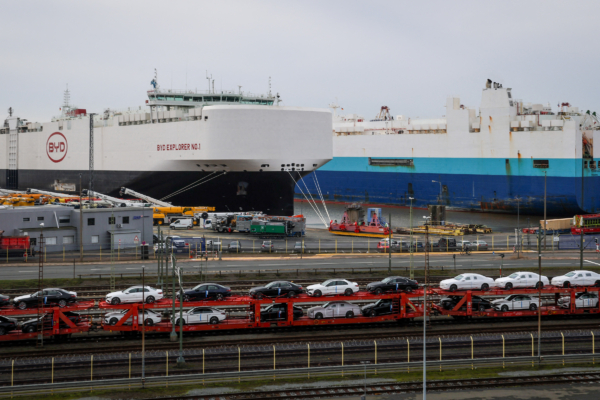
Since July 5th, the European Union has begun imposing anti-subsidy tariffs on electric vehicles from China. The latest data shows that the number of electric vehicles registered by Chinese car manufacturers in Europe started to decline in July, as the new tariffs have exacerbated the overall trend of decreased sales for electric vehicles.
According to Bloomberg, data from the research firm Dataforce reveals that brands including MG (Morris Garages) under SAIC Group and BYD accounted for 9.9% of the EU’s electric vehicle registrations, down from 10.2% in July 2023. At the end of last year, Germany, the largest car market in Europe, eliminated incentives, further weakening the overall demand for electric vehicles.
Following the implementation of the new anti-subsidy tariffs on July 5th, MG faced a total tariff of up to 46.3%, while BYD faced a 27% total tariff.
The EU’s anti-subsidy tariffs on Chinese electric vehicles will become permanent in November, depending on the outcome of trade negotiations between China and the EU. The European Commission stated that SAIC Group’s response to the EU’s investigation was seriously inadequate, leading to the imposition of the highest tariffs on them.
Based on data from Jato Dynamics, registrations of MG vehicles in the EU in July decreased by 38% compared to the same period last year, and by 60% compared to June.
Data from Dataforce shows that in July, the total number of Chinese electric vehicles registered in Europe was less than 14,000, down from over 23,000 in June, representing a 9.7% decrease from July 2023.
The EU believes that cheap Chinese export cars pose a threat to the future of the European automotive industry. Additionally, Chinese electric vehicles benefit from unfair state subsidies, causing economic harm to European electric vehicle manufacturers.
Last Wednesday, the European Commission released a draft decision on “imposing final anti-subsidy taxes on imported pure electric vehicles (BEVs) from China.” The regulatory body stated that after receiving comments on the planned tariffs, slight adjustments would be made to the proposed rates.
At the same time, Chinese electric vehicle manufacturers negotiated with the European Commission last week in an attempt to reach an agreement. Representatives from these manufacturers proposed setting minimum prices for electric vehicles exported to the EU. In return, these companies would receive some tariff exemptions.
According to sources speaking to the South China Morning Post, these companies are willing to limit the number of electric vehicles exported to the EU if the EU reduces punitive tariffs. Any quantity exceeding this limit would face additional tariffs of up to 36.3%, as proposed earlier this month by the Commission.
An online hearing was held last Wednesday, with car companies including BYD, Geely, and SAIC participating; last Friday, the China Chamber of Commerce for Import and Export of Machinery and Electronic Products (CCCME) also attended. Politico was the first to report details of the proposed agreement.
The South China Morning Post reported that the European Commission is considering these proposals, but internal sources suggest that, given the nature of these agreements being referred to as a “gentleman’s agreement,” they are unlikely to be approved at this stage.
Under EU tariff sanctions, trade disputes between China and the EU have intensified. Beijing has lodged a complaint with the World Trade Organization (WTO) and launched retaliatory investigations into EU products such as brandy, pork, and dairy. Last week, Beijing concluded the investigation into brandy and is expected to impose up to a 39% anti-dumping tax on French cognac brandy after rejecting temporary measures.
Adam Ulrich, General Manager of Spirits Europe, told the South China Morning Post: “Our industry has become an ancillary victim of a broader trade conflict. If this issue is not prioritized, Chinese consumers will not have access to products they greatly value and appreciate.”
The official negotiation period between China and the EU ended last Friday, and an analysis of the agreement will be conducted this week. Since the agreement involves individual car companies rather than commitments from the Chinese government, it is unlikely to violate WTO rules.
Chinese electric vehicle manufacturers have made such proposals due to the risk of being shut out from major Western markets. Last week, Canada followed the United States in imposing a 100% import tariff on electric vehicles manufactured in China.