
According to public records, the California Fast Food Commission has not held a meeting since February of this year and has been without a leader since May. However, it has consumed over $1 million of California’s funds.
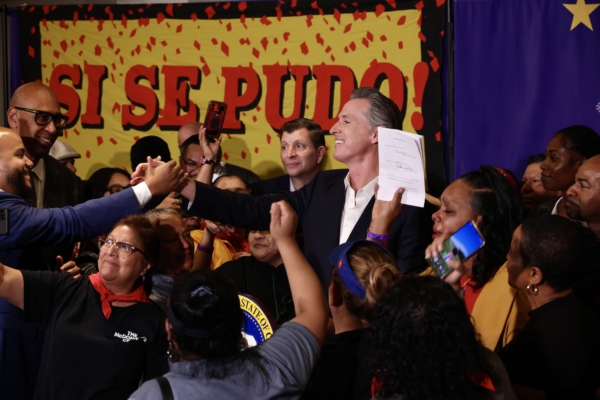
The Fast Food Commission was established based on the AB1228 Act, which was signed by Governor Newsom in September 2023. The purpose of the act is to establish minimum wages, appropriate working conditions, and standard working hours for the fast-food industry in California.
The act also requires the commission to hold at least one public meeting or hearing every six months.
In 2024, the commission held five meetings at different locations within the state; however, in 2025, no complete meeting with all nine members has been convened. Meeting records showed that the commission met in January and February with only half of the members present.
During the last meeting on February 26, the commission heard public opinions for several hours regarding the possibility of further increasing wages in the fast-food industry. At the end of the meeting, the commission stated the need to set another date and find a large enough venue to continue discussions on wages and other proposals.
Members had suggested scheduling a full meeting in April or May, which did not happen; as of this month, no future meetings have been scheduled.
Subsequently, Nick Hardeman quietly resigned as the chair of the commission in May, as he was appointed by the governor to join the board of the California Housing Finance Agency. Before serving on the Fast Food Commission, Hardeman held various positions in the state government.
As of December, the position of chair of the Fast Food Commission remains vacant, with the governor responsible for appointing new members to fill the position.
Despite its limited operation, according to information from the Department of Industrial Relations overseeing the commission, the commission’s budget for the 2025-2026 fiscal year is still nearly $1.1 million.
This fund is categorized as “Labor Enforcement and Compliance Fund,” but the budget does not provide further details on its usage. It is worth noting that there was no such fund in the fiscal year 2024-2025, even though the Fast Food Commission was actively holding meetings and operating at that time.
Epoch Times reached out to the Department of Industrial Relations for information on the budget and recent developments regarding the Fast Food Commission but did not receive a response by the time of publication.
On the 4th, State Assembly member Kate Sanchez tweeted, “Californians are struggling to make ends meet, and Sacramento is burning $1.1 million on a pointless Fast Food Commission. This is not mismanagement; this is disconnected politicians treating taxpayers as endless ATMs, causing hardship for families.”
Since its establishment, public opinion on the Fast Food Commission has been mixed.
During early 2024 meetings, various labor unions and many fast-food workers praised the new minimum wage of $20 per hour for fast-food workers and urged the commission to consider including benefit packages in industry standards.
At the same time, fast-food employers and business owners criticized the increase in operating costs, which forced them to raise prices to compensate for the expenses.
In addition to wage issues, the public also expressed concerns about bakeries receiving minimum wage exemptions in the later stages of the legislative process, questioning the existence of backroom dealings.
Former State Senator Melissa Melendez, in a March 2024 episode of “California Insider Opinion,” stated that legislators had behind-the-scenes negotiations with the SEIU union.
Melendez said, “We discovered that everyone sitting at the negotiation table with the SEIU had to sign a confidentiality agreement. This was a binding agreement stating that no matter what happened during the negotiations, it could not be disclosed.”
AB1228 passed along party lines. Chain operators such as Burger King, Pizza Hut, Carl’s Jr., Wendy’s, and Del Taco consider this legislation as reasons for price increases and layoffs.
The Fast Food Commission has regulatory authority over wages and working standards in the fast-food industry in California until January 1, 2029, unless future legislation extends its authority, at which time the commission will automatically dissolve. ◇