
On the eve of the grand military parade in Beijing on September 3, various human rights activists, dissident scholars, and lawyers across the country are once again facing severe stability maintenance measures. It has been revealed by insiders that the prominent media figure Gao Yu has been forcibly sent on a trip to another province.
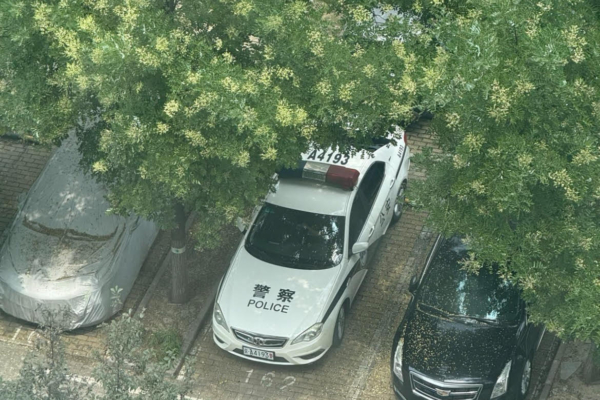
During sensitive moments, dissidents are often put under surveillance, placed under house arrest, and in more extreme cases, taken away from Beijing or their residence under the guise of “travel” by national security personnel. This practice is not unfamiliar in China, but due to the large scale of the military parade and the high level of security, the enforcement efforts this time are particularly strong.
A human rights activist in Beijing, Mr. Liu, disclosed that the independent media figure Gao Yu was taken by national security agents to a province far away from Beijing starting on August 25, over a thousand kilometers away. Gao Yu, in his eighties, carries over ten types of medications due to heart and blood pressure issues, and this forced excursion raises concerns about his health. He stated, “Gao Yu left Beijing on the morning of the 25th, accompanied by two agents to the airport, likely heading to a location in the south, with flight arrangements made and the specific destination undisclosed.”
It is widely believed that the authorities in Beijing are taking these actions to prevent her from speaking out through overseas media or the internet during the military parade. Another unnamed dissident scholar informed Epoch Times that several prominent individuals in Beijing are under restrictions: “Cha Jianguo, He Depu, Li Wei, as well as lawyers Mo Shaoping, Shang Baojun, and Pu Zhiqiang are either closely monitored at home or their whereabouts are unknown, making it difficult for outsiders to ascertain their specific situations, but they are certainly under control by the authorities.”
A vaccine victim in Beijing, Mr. Wang, also introduced to the reporter that the rights activist Qian Dalong had previously been taken on a “travel” to Hebei for over ten days, and upon returning to Beijing, was placed under house arrest in the mountains on the outskirts, with potential for further relocation. “Also, Liu Yan and Li Luguang in Beijing, Hu Dayan in Changzhou, and Liang Hui in Xingtai, Hebei, have all been ‘handled’,” he added.
Mr. Wang emphasized that the individuals being monitored are usually overseen by seven to eight officers in shifts, with some even required to have their mobile phones tracked by the police in their localities until the end of the military parade on September 3.
Another long-time petitioner, Ms. Li, stated that Beijing officially entered a sensitive period of security measures for the military parade on August 21, with the petitioner groups becoming the main targets of surveillance. According to her recollection, “As early as August 9, people were taken to places like Changping and Pinggu for a ‘travel,’ while some were directly put on guard at home. Some petitioners were even asked to leave Beijing on their own after receiving the so-called ‘relief funds,’ and could only return after the parade.”
A retired civil servant in Beijing, Mr. Guo, informed reporters that roads are being sealed off, with restrictions on vehicle traffic throughout the city, leading many families to go on trips. “Many people have traveled to Sichuan and Xinjiang; now, vehicles from out of town entering Beijing are heavily restricted, resulting in significantly reduced traffic flow in the city center and a tense atmosphere.”
Insiders revealed that the funding for security maintenance during the military parade is not centrally allocated by the central government but passed down layer by layer to the neighborhood offices to cover expenses. These expenses include hiring temporary security personnel, covering the accommodation and meals for dissenters during their “travels,” and even requiring related individuals to leave Beijing with cash incentives. This decentralized stability maintenance model further burdens local finances, but local governments generally choose to spare no expense in the face of political tasks.
In addition to Beijing, other provinces are also experiencing large-scale stability maintenance situations. Members of a human rights seminar in Guizhou have recently been subjected to “traveling” or house arrest as well. Mr. Li, a member of the organization, informed Epoch Times that “Chen Xi, Liao Shuangyuan, Huang Yanming, Zeng Ning, and more than ten others from the Guizhou Human Rights Seminar have all been put on guard. Some were taken to rural homestays or other remote places, with their movements severely restricted and confined for at least a week.”
“Compared to previous sensitive events such as the anniversary of June Fourth or the Two Sessions, the control measures triggered by this military parade are equally stringent, if not more severe,” said Mr. Li.
Ms. Fang, a retired professor from Guizhou University, stated that the Chinese government tightens control over dissidents during every major political event or sensitive period, making it a systemic form of stability maintenance. She noted, “Officially defined as ‘safeguarding social stability,’ it actually eliminates any potential dissenting voices through intense security measures and surveillance. Even though China’s current financial situation is generally tight, with heavy local debt burdens, the government continues to invest significant resources in stability maintenance, implementing cross-province control measures, showing the high level of insecurity about unexpected events.”
Ms. Fang pointed out that the authorities’ use of restricting personal freedom without any legal basis has persisted for over a decade in China. From the Two Sessions in Beijing to the Olympics, from the APEC Summit to the anniversary of June Fourth, dissidents and dissenting scholars are always the first to be targeted during significant political events and commemorations. “The military parade should have been a showcase of national confidence, but under the strict stability maintenance context, it underscores the government’s fear of public opinion and civil actions,” she concluded.