
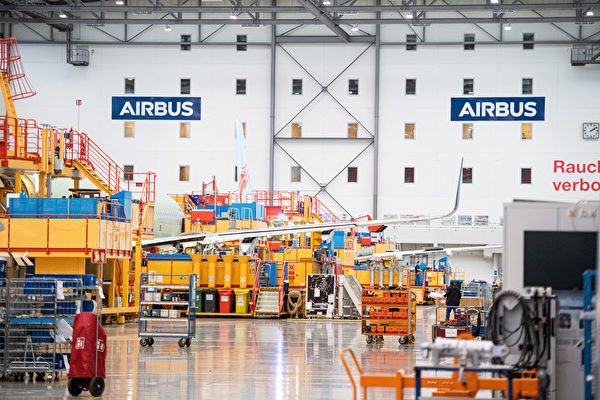
Airbus, also known as Airbus Group, announced on Wednesday (December 3) that they have lowered their annual commercial delivery target by 4% to approximately 790 aircraft, while maintaining their financial goals.
This decision, along with the recent resolution of software update issues, contributed to an increase in Airbus stock prices.
The day before, Airbus CEO Guillaume Faury confirmed that the sluggish November delivery was due to quality issues with the aircraft fuselage. He mentioned that Airbus will assess the impact of this issue on the remaining year within the next few hours and days.
After a nearly 7% decline in the past two trading days, Airbus stock rebounded by over 3%. The company had previously set a target to deliver around 820 aircraft in 2025, a 7% increase from the previous year.
Analysts believe that the decision to maintain financial goals reflects the profitability of Airbus’ main cash cow, the A320, which has surpassed Boeing 737 as the aircraft model with the highest delivery volume in the industry, supported by the defense and helicopter industries.
Previously, thousands of A320 aircraft were urgently recalled for software updates due to issues caused by solar radiation. The fuselage issue involved the thickness of certain fuselage panels processed by one of two external suppliers, not considered an imminent safety issue as these components could still withstand pressures exceeding their limits.
Given that few airlines are willing to take on expensive maintenance risks and face the possibility of further damage and depressurization during aircraft service, Airbus had to pause deliveries and conduct rapid inspections.
A total of 628 aircraft need to undergo inspections, including 168 in-service aircraft. Industry insiders earlier this week reported that this defect was also found on dozens of aircraft in production. Airbus stated that only a portion of the aircraft needs further inspection.
According to briefing documents seen by Reuters, the defect mainly exists near the front passenger cabin door of the aircraft, with some defects also discovered at the rear by engineers.
Reported by The Air Current, each maintenance work requires panel disassembly and replacement, taking three to five weeks.
Despite strong demand and continuous crises faced by its competitor Boeing, Airbus has struggled to achieve its industrial goals, starting with engine issues, then seats, and now delays or malfunctions in its core manufacturing supply chain.
Jefferies analyst Chloe Lemarie pointed out that engine delays have affected Airbus’ delivery plan for over a year, although this was not mentioned in the revised target statement.
Meanwhile, Boeing has overcome a series of crises with the 737 MAX aircraft and anticipates positive cash flow by 2026, boosting its stock by 10% on Tuesday. While the company’s sales have grown this year, it still lags behind its European competitor in terms of delivery volume.
The affected parts of Airbus not meeting the standard thickness are primarily the result of stretches and milling by Sofitec Aero in Seville. Faury confirmed on Tuesday that the fuselage panel issue had impacted November deliveries.
Industry sources indicated that Airbus delivered 72 aircraft in that month, below expectations. The company is set to release monthly data on Friday.
Airbus stated that their annual financial goals remain unchanged. The company expects adjusted operating income of approximately 7 billion euros ($8.2 billion) and free cash flow of around 4.5 billion euros.
Analysts noted that despite the decrease in delivery volume, the company has decided to maintain its financial goals, indicating that they originally expected the annual performance to exceed expectations. Citi analysts estimate that the decline in delivery volume will reduce profits by 400-450 million euros and cash by 600 million euros.
(This article references reporting by Reuters)