
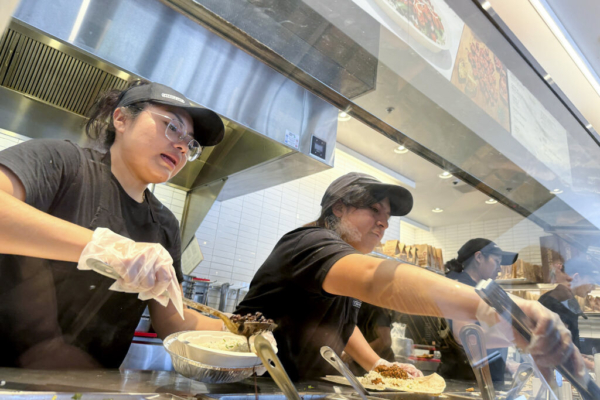
At the beginning of the new year, 19 states across the United States have started to implement new minimum wage standards, expected to benefit over 8 million workers. California has increased its minimum hourly wage by 40 cents, with workers set to receive a pay raise starting from January 1st. However, the growth in wages is a double-edged sword, as while some individuals benefit, it also raises concerns among employers about whether they can afford the increased labor costs.
Looking at the entire United States, although the inflation rate has been on the rise since 2009, the federal minimum wage has remained at $7.25. In response to public demand, many states have been gradually raising their minimum wages.
Currently, the highest minimum wage states include Washington, California, New York, Connecticut, Illinois, Rhode Island, and Washington D.C., with standards not falling below $16. Washington D.C. leads with $17.95, while Washington state exceeds $17.
The city with the largest increase in minimum wage for the new year is Seattle, with a $2 raise amounting to $21.30.
California, with the highest population, has raised its minimum wage by 40 cents to $16.90 starting from January 1st. Employers are required to pay no less than this standard, except under specific circumstances.
29 California cities increased their minimum wage on January 1st. The highest standard is in West Hollywood at $20.25, followed by several cities in the Bay Area – Emeryville at $19.90, Mountain View in Silicon Valley at $19.70, Sunnyvale at $19.50, and San Francisco at $19.18.
Los Angeles, the largest city in California, raised its minimum wage to $17.87 on July 1st last year, with minimum wage for large medical facility nursing staff set to reach $25 this July. The fast food industry has implemented a minimum of $20 since April 2024.
Last year, the local labor union UNITE HERE Local 11 successfully lobbied for an increase in minimum wage for restaurant and airport workers to $30 by 2028, ahead of the Los Angeles Olympics. However, this law is being challenged. The Los Angeles City Council has proposed a motion that may delay the wage increase until 2030. The union is introducing a proposition to raise the minimum wage to $30 for all workers in Los Angeles.
According to the California Department of Industrial Relations (DIR), some workers are not bound by minimum wage laws, such as outside salespersons, an employer’s parents, spouse, or children, and apprentices approved by the Division of Apprenticeship Standards (DAS) in California. Employers are also not allowed to use tip income to offset the minimum wage.
Based on the National Low Income Housing Coalition (NLIHC) data, at California’s minimum wage of $16.50 last year, a worker earning minimum wage would need to work 98 hours a week to afford a one-bedroom apartment with a fair market rent of $2,092 per month.
However, raising the minimum wage will inevitably increase operating costs for employers. According to the Institute for Research on Labor and Employment (IRLE), after the AB1228 law came into effect in April 2024, raising the minimum wage for fast food workers in California to $20, the related costs were mainly borne by menu price increases and owners reducing profits, with consumers shouldering about 62%.
A report from the data provider dataplor showed that in the month the AB1228 law became effective, the number of closures of fast-food restaurants in California increased by 71%. Additionally, a report from the National Bureau of Economic Research (NBER) indicated that after the law was implemented, the California fast-food industry lost 18,000 jobs. Previous reports highlighted that the pizza chain Pizza Hut alone laid off 1,200 drivers.
However, there are conflicting reports with different conclusions. University of California, Berkeley economics professor Michael Reich told the San Francisco Chronicle that after extensive research, he found that since the implementation of the minimum wage in 1938, its negative impact has been minimal. Some company owners even state that paying fair wages results in employee retention; this can significantly reduce recruitment and training costs while continuing to provide customers with the high-quality service they expect.