
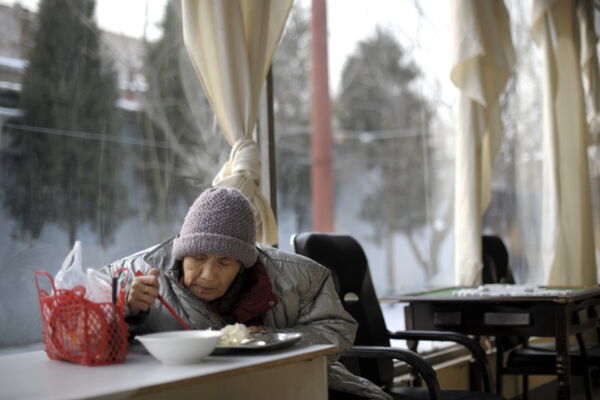
In recent years, the issue of insufficient consumption capacity among mainland residents has been frequently reported by the media and research institutions. Recently, the Communist Party of China’s magazine “Qiushi” published an article signed by the party group of the National Development and Reform Commission, acknowledging that insufficient domestic demand is one of the main challenges facing the current economic operation, with a prominent manifestation being the low consumption rate of residents. Official data shows that the per capita disposable income of residents in 23 provinces is below the national average.
According to a report by the “Daily Economic News” account “Urban Evolution Theory” on December 28, experts have analyzed that the proportion of Chinese residents’ consumption in total demand is low, mainly due to the low share of household income in national income, large income disparities among residents, and a significant number of low-income and low-earning groups.
The “Statistical Yearbook of China 2025” recently released by the National Bureau of Statistics of China shows that, according to income quintile grouping, in 2024, the per capita disposable income of low-income households nationwide was 9,542 yuan (RMB), only equivalent to 9.7% of high-income households (98,809 yuan) and 28.1% of middle-income households (33,925 yuan). This income structure indicates that the consumption capacity of a large number of residents remains at a relatively low level.
From a regional perspective, income disparities among residents are also significant. In 2024, the per capita disposable income in eastern regions was significantly higher than that in central, western, and northeastern regions, with an income gap of over 19,000 yuan between eastern and western regions.
At the provincial level, only 8 provinces nationwide have residents’ per capita disposable income reaching the national average level. In contrast, the remaining 23 provinces are below the national average line, with provinces like Yunnan, Guizhou, and Gansu having per capita disposable incomes of less than 30,000 yuan. Gansu, ranking at the bottom, has a per capita disposable income of only about 30% of Shanghai’s, highlighting the significant regional disparities that cannot be ignored in constraining consumption capacity.
Prior research by various media outlets has pointed out that residents in some central and western provinces face limited flexibility in consumption due to pressures from rigid expenses like housing, education, and healthcare, and the effect of income growth on driving consumption is not very apparent.
Further breakdown of residents’ income sources reveals that wage income remains the main support pillar of disposable income for Chinese residents. In 2024, wage income accounted for 56.5% of the national per capita disposable income, while operating net income, property net income, and transfer net income accounted for 16.7%, 8.3%, and 18.5%, respectively. In cities like Beijing, Shanghai, and Guangdong, wage income even exceeds 60%.
However, wage income, as the “major player” in income sources, also shows significant disparities among different groups. In 2024, the national average per capita wage income was 23,327 yuan, with provinces reaching this average level still concentrated in the aforementioned 8 high-income regions. Among them, Shanghai’s per capita wage income was 55,999 yuan, while Guizhou’s was only 14,632 yuan, making the former 3.8 times of the latter.
Due to the Communist Party’s habitual practice of concealing the truth, official data is widely doubted to be inflated. In 2020, the authorities in Beijing declared it as the “year of poverty alleviation and achieving moderate prosperity.” However, the late former Premier of the Communist Party of China, Li Keqiang, stated on May 28, “There are 600 million people with a monthly income of only 1,000 yuan, which may be difficult for renting a house even in a medium-sized city.”
Multiple data indicate that at the current stage, the low consumption rate of residents is not simply a matter of willingness to consume but closely related to income structure, regional development imbalances, and the degree of social differentiation. If resident income growth and distribution patterns cannot be improved synchronously, relying solely on policy measures to stimulate consumption is unlikely to fundamentally reverse the problem of insufficient domestic demand.
In recent policy discussions, some viewpoints have emphasized the need to focus more on increasing the share of resident income, expanding the size of the middle-income group, rather than solely relying on short-term stimulus measures to boost consumption.