
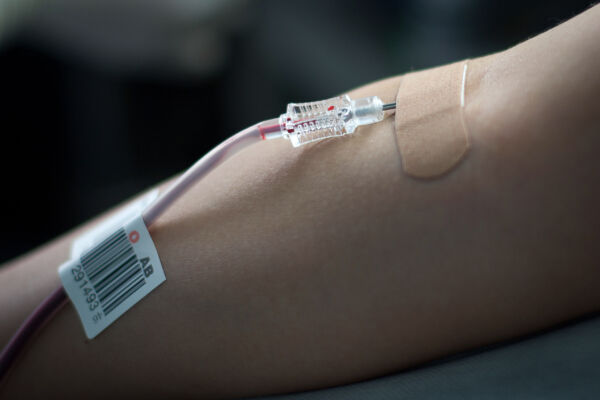
With the issue of forced organ harvesting by the Chinese Communist Party gaining more attention, parents of students in various regions of China are expressing concerns and voicing resistance towards schools conducting blood tests. Recently, human rights lawyer Xie Yanyi has demanded the Chinese Ministry of Education to disclose relevant information regarding the mandatory blood tests on students.
In recent times, news about schools in various parts of China, including elementary and middle schools as well as kindergartens, conducting blood tests on students has surfaced frequently. There have been instances where schools conducted blood tests without notifying parents, sparking worries and resistance among parents.
For example, on November 1st, mainland China’s TikTok influencer “Loving Learning Xibei” released information claiming that a survey report (or intention form) from the Shanghai Center for Disease Control and Prevention raised concerns about some “factors that make me feel unsafe.” The project seemed more than just a routine check-up as it required signing numerous consent forms and offered a gift reward of 50 yuan to children annually.
The influencer mentioned that parents were asked to sign several places with the assertion of voluntary agreement. Although it was a project of the Shanghai Center for Disease Control and Prevention, it involved red blood cell sampling, biological sample identification, and testing, especially related to blood type and tissue samples, which are crucial personal privacy information. As it involved children’s safety, the influencer chose to not consent.
A “Parent Notification Document” released by an experimental school in Shanghai on October 28th indicated that the school would conduct a “Longitudinal Survey of Common Diseases and Influencing Factors among Students in Shanghai” among first-grade students. The project, supervised by the Shanghai Municipal Center for Disease Control and Prevention, planned to conduct physical examinations, questionnaire surveys, and laboratory tests on participating students every two years from September 2025 to December 2034.
Subsequently, an incident at a primary school in Haizhu District, Guangzhou, where blood was taken from young children without parental consent continued to attract public attention.
On November 6th, parents of students from a primary school in Haizhu District, Guangzhou, lodged complaints with the newspaper “Jiangnan Metropolitan News,” stating that their first-grade children were subjected to blood tests by the school without parental consent or any prior notification.
Furthermore, the homeroom teacher even referred to the blood test as a “secret mission,” indicating that informing parents would result in the deduction of “small red flowers” earned by the children.
This incident immediately sparked parental anger. Dialogues posted online revealed parents condemning the situation, accusing the school of potentially matching organs or threatening them. Some parents expressed their anger, warning the school that whoever took their daughter’s blood would face consequences.
Faced with questions from parents, the homeroom teacher involved shut off their phone. The school’s responsible individual claimed that the health check-up was a “unified arrangement” by the local education bureau, potentially due to “some homeroom teachers’ negligence in timely notifying parents.”
Similarly, on November 25th, a netizen from Yuncheng, Shanxi, released a video accusing a kindergarten in the Yanhu District of taking blood from children without prior parental notification. Following the incident, parents raised inquiries within their community group.
On November 26th, the Yanhu District Education Bureau responded, attributing the incident to the negligence of teachers who failed to inform parents beforehand. This statement shifted blame onto the teachers.
Recently, mainland Chinese individual Zhang Wei (pseudonym) told Epoch Times, “Typing and forced organ harvesting threaten every child and family. This is the most evil organized crime on this planet that must be taken seriously, requiring all of humanity to face this cruel reality!”
In response, human rights lawyer Xie Yanyi submitted an application to the Chinese Ministry of Education, requesting the disclosure of information regarding the compulsory blood tests on students. Recently, Epoch Times obtained the “Application for Information Disclosure on Compulsory Student Blood Test” dated December 19th.
The “Application for Information Disclosure” indicates that, as a citizen acting out of responsibility to student parents and guardians, and to protect the legitimate rights of minors, Xie Yanyi requested the Ministry of Education to publicly disclose the following information:
1. What was the motive behind the collection of biological genetic information, including widespread blood sampling, as stipulated in the “Regulations on Health Examination Management for Primary and Secondary School Students in 2021” issued by the UN National Health Commission?
2. Who proposed this decision? Did it involve a legal assessment regarding personal rights, significant citizen privacy rights, and the protection of minors’ legitimate rights? Was it authorized legally?
3. Was the formulation and implementation of this policy fully debated through a legal process, such as soliciting opinions from parents, guardians, and other stakeholders, inviting experts from relevant fields to conduct public hearings, and thoroughly demonstrating the necessity and risks of implementing this policy?
4. How is parental informed consent protected in the annual collection of students’ biological information? How can we prevent local education departments from unlawfully obtaining minors’ biological information under the guise of health examinations and using children’s education as leverage to coerce parents into compliance? How can we follow the legal principles of lawfulness, legitimacy, necessity, and voluntariness in protecting personal information?
5. What is the effectiveness of implementing this policy? Has a unified database of health examination information for students nationwide been established annually? If so, who manages it? How is it utilized? What is the current status of using relevant information? What projects are involved? What scientific or applied research is being conducted? What are the specific project topics and contents? Who is responsible for them? Has the database implemented relevant confidentiality measures? How is the security of biological information ensured?
6. If this policy is truly for student health! Then, why aren’t teachers, principals, officials from the Ministry of Education, and government officials, especially higher-ranking leadership, subjected to mandatory blood tests and health examination arrangements annually?
Xie Yanyi stated that the application and reasons were based on Article 2 and Article 27 of the Constitution of the People’s Republic of China, as well as Article 1, Article 9, Article 19, and Article 20 of the Regulation on Open Government Information of the People’s Republic of China, and the rights to be informed as a citizen, the ethical conduct of government departments, political ethics of administrative agencies and national public officials, and humane responsibilities.