
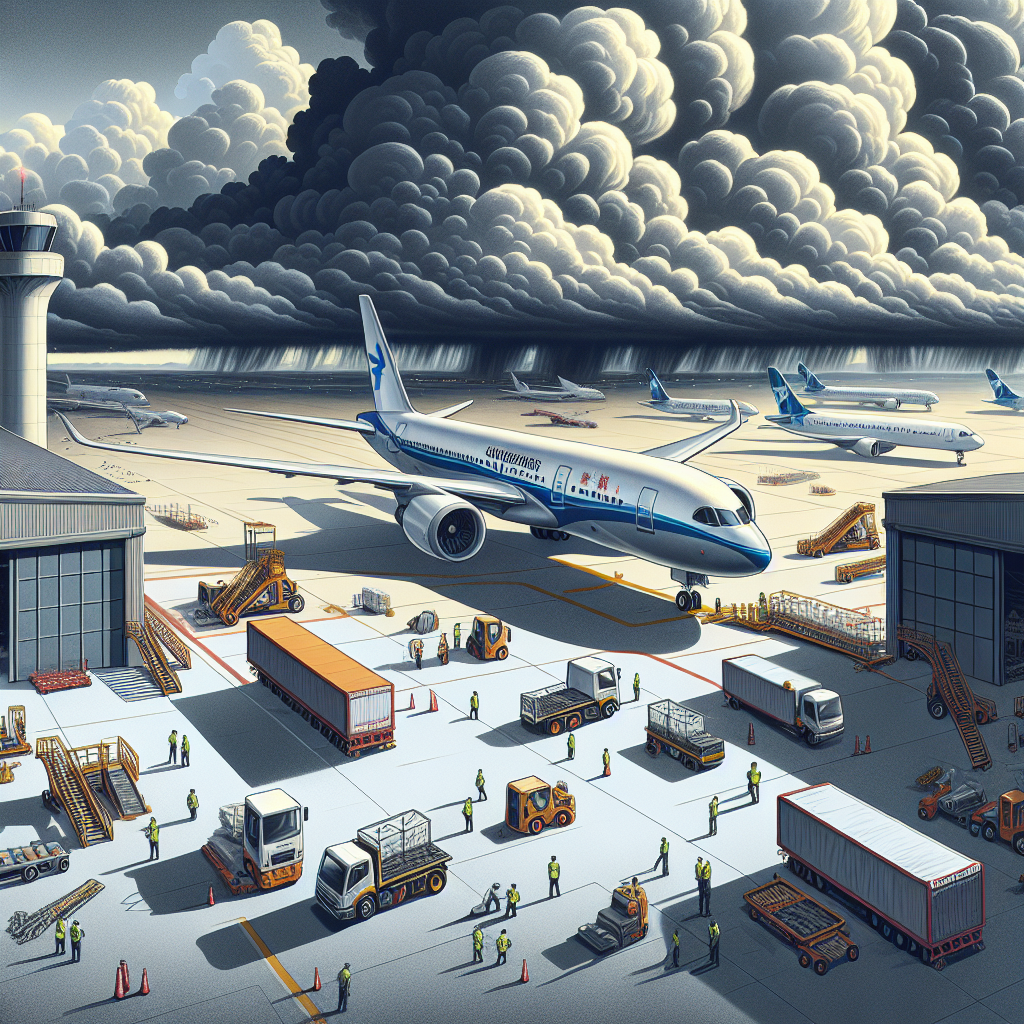
As 2025 comes to a close, China’s commercial aircraft C919 is facing a significant blow as it has yet to complete half of its annual delivery target, hampering its expansion ambitions. The adverse effects from the previous China-US trade war have hindered the production of the C919.
According to a report by Bloomberg on Wednesday, data from aviation consulting firms Cirium and Planespotters.net show that in the past year leading up to December 22, Commercial Aircraft Corporation of China (COMAC) has only delivered 13 C919 aircraft, the same as the previous year in 2024.
Earlier this year, COMAC reduced its annual delivery target from 75 aircraft to 25, but even with this revised goal, the delivery progress is significantly behind schedule.
Unless there is a significant surge in the remaining days of 2025, COMAC will only achieve slightly over 50% of its target, falling short by 80% compared to the original goal.
According to the annual reports of three major Chinese airlines – Air China, China Southern Airlines, and China Eastern Airlines in 2024, the airlines were expected to receive a total of 32 C919 aircraft. However, as of now, they have only received 12.
COMAC did not respond to Bloomberg’s request for comment on the total delivery volume.
According to data from Tianyancha, a Chinese enterprise registration platform cited by mainland Chinese media, several state-owned shareholders injected 44 billion RMB into COMAC last month.
At a supplier conference in March 2025, COMAC announced plans to produce 100 C919 aircraft in 2026, followed by 150 in both 2027 and 2028, reaching an annual production rate of 200 by 2029.
Due to the US export ban, COMAC faced difficulties in sourcing the necessary components for their new aircraft in 2025, including engines from CFM International, a joint venture between General Electric Aviation and Safran Aircraft Engines. The C919 aircraft heavily relies on these engines, as well as the smaller C909 regional jet that also uses General Electric engines.
Former US President Trump openly stated that the monopoly held by the Chinese Communist Party poses a threat to US national security, but the US holds a greater weapon – aircraft components and Boeing aircraft. He mentioned that due to the US not providing Boeing components to China, there were 200 aircraft in China that could not fly.
Scott Bessent, the US Secretary of Treasury, revealed in a media interview that aircraft engines, aircraft components, and certain chemicals used in plastic production are crucial bargaining chips for the US in trade negotiations with China.
In late October, the US and China reached an economic and trade agreement, with China committing to 9 actions and the US pledging 4 actions.