
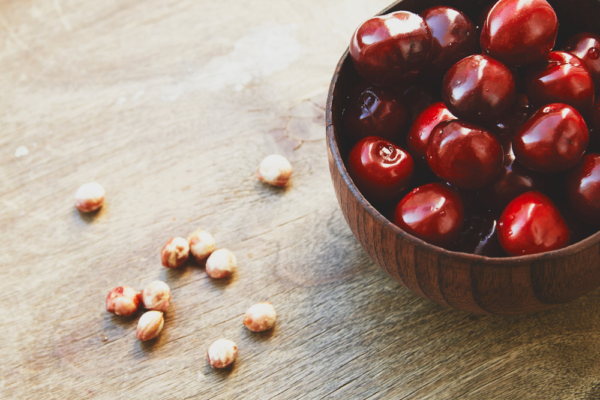
In recent times, the new season of Chilean cherries has significantly entered the Chinese market with an import volume exceeding 500,000 tons, leading to a noticeable drop in wholesale and retail prices. Market data from various regions show that cherry wholesale prices have decreased by 15% to 25% compared to last year.
During the winter of 2025, Chilean cherries saw a historical abundance. Data from the Chilean Embassy’s commercial office in China indicates that the total production of cherries for this season is approximately 655,000 tons (about 131 million boxes), with over 90% of them being exported to China, significantly expanding the supply scale in the Chinese market.
On December 15th, Shanghai Huizhan Fruit and Vegetable Market Management Co., Ltd. announced that the trade scale of cherries this year is expected to reach a historic high, with an estimated over 10,000 crates of cherries set to enter the market for trading.
While this period was supposed to be the “golden period” for imported cherries, the domestic market prices in China are experiencing a “precipitous free fall” due to the historically high supply of Chilean cherries.
A person in charge at the Chinese fresh e-commerce platform “Benlai Life” told “First Financial” that the wholesale prices of cherries in December this year are significantly lower than the same period last year, with most specifications seeing a decline of 15% to 25%. Retail prices have also dropped accordingly, with some 5-pound products being 20-40 yuan cheaper compared to last year.
Reporters from “Jiupai News” found during visits to various markets in Hubei that cherries have become a prominently promoted commodity, with prices ranging from 180 yuan for 3 pounds of 3J cherries, 320 yuan for 5 pounds of 4J, to 500 yuan for 10 pounds of 3J cherries. Many merchants noted that cherry prices have significantly dropped from the beginning of the season.
An industry insider who has been wholesaling imported fruits at Guangxia Market for over a decade told reporters from “Jiupai News” that at the beginning of the cherry season, the wholesale price of a 10-pound package of 3J cherries was as high as 1700 yuan; now it has dropped to 500 yuan per package, a decrease of over 1000 yuan.
According to a report by “Shangyou News”, in a supermarket in Chongqing, a resident told reporters, “Last week, 1 kilogram of Grade 3J Chilean cherries was nearly 300 yuan, around 250 yuan at the same time last year, and now it’s only 188 yuan, much cheaper.” Calculations show that the price of Grade 3J Chilean cherries per kilogram has dropped by over 30% in a week.
Several industry insiders engaged in importing fruit wholesale stated that this year’s rapid drop in cherry prices is closely related to changes in transportation methods.
A wholesaler in Shanghai explained that earlier, air transportation was the primary method, with limited cargo volume and higher costs; but after December, cherries were concentrated in sea shipments to the port, significantly increasing the shipping capacity, resulting in the natural downward pressure on prices as the volume increased.
A box of Chilean cherries that once sold for over a thousand yuan is now priced at less than two hundred in supermarkets; in live streams, they are being sold for “89 yuan” with free shipping.
A netizen using the pen name “Exploring Road Nocel Xiaoming” wrote on Baidu, analyzing that despite the decrease in procurement and transportation costs, rigid costs like warehousing, losses, labor, etc., have not decreased accordingly, coupled with intense market competition, squeezing the profits of small and medium wholesalers and increasing operating pressures.
At the same time, e-commerce platforms are enhancing turnover efficiency and pricing capabilities through direct procurement, chartered shipping, and pre-sales, while traditional wholesalers tend to passively follow market price fluctuations.
Cherries have transitioned from a “symbol of luxury” to “everyday fruit”, causing small and medium wholesalers to withdraw due to “increased quantity but reduced profit”, thus speeding up market concentration towards a few giants, which may weaken long-term distribution diversity, ultimately affecting consumer choice.