
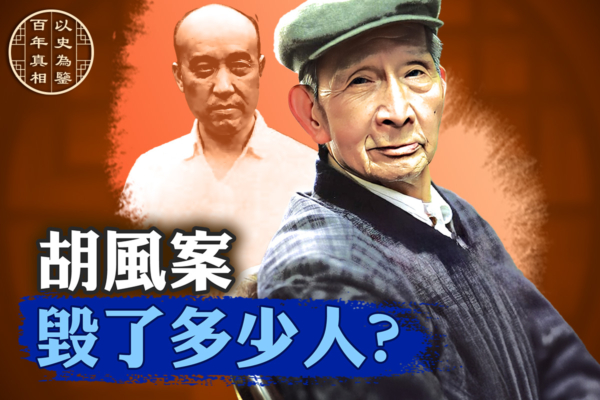
Today, let’s talk about a renowned writer, translator, and scholar in the history of modern Chinese literature.
His life was full of hardships. Although he never joined any party, he was imprisoned four times, each time as a political prisoner. Suspected of being a Communist, he was jailed under warlords, the puppet government of Japan, and the Nationalist Party, but never for more than a year. However, after 1949, he was caught up in a miscarriage of justice fabricated by Mao Zedong, locked up in a Communist Party prison for 11 years and supervised for labor reform for 13 years.
He is Jia Zhifang. Looking back on his life, he wrote the book “Inside and Outside the Prison,” documenting his ordeals in prison.
Today, let’s delve into Jia Zhifang’s life and see how he evaluates these experiences.
In 1916, amidst warlord conflicts, Jia Zhifang was born in Xiangfen, Shanxi, to a well-off family. During his youth, he began studying in places like Taiyuan and Beiping.
In 1935, at the age of 19, Jia Zhifang was studying at the American-run Chongshi Middle School in Beiping, where all classes were taught in English. Reading English books opened a window for him to understand the world beyond China and to search for his own ideals.
He participated in the “December 9th Movement” and was arrested by the police of the warlord government of the time on suspicion of being a Communist Party suspect.
During his first imprisonment, to prevent Jia Zhifang from getting into more trouble, his uncle paid to send him to study in Japan. He entered the Department of Social Sciences at a Japanese university, majoring in sociology.
When the War of Resistance against Japan broke out, Jia Zhifang abandoned his studies and boarded a ship back to China. Upon the ship’s arrival in Hong Kong, his uncle wrote to advise him, “Do not return to China; you alone cannot save the country.”
His uncle wanted him to stay in Hong Kong for university studies or go to Europe for further education, returning in three to five years. However, with the fiery spirit of youth, how could Jia Zhifang hide when the country was in turmoil?
Upon returning to China, he enrolled in a special training class for Japanese language students at the Central Political School and was dispatched to the front lines to serve as a Japanese affairs officer.
As the War of Resistance approached victory, he encountered his second imprisonment.
In 1945, Jia Zhifang worked as a Japanese document translator for the Nationalist Army. He thought his life would stabilize, but suspicions arose that he was a Communist. He and his wife were then on the run.
In May, while passing through Xuzhou, Jia Zhifang saw on a bulletin board that the provincial governor of the Huaihai province under the Wang Jingwei puppet government was Hao Pengju, who had been his commanding officer during his training in Japan.
Unexpectedly, he impulsively went to visit Hao Pengju’s office and even tried to persuade him to resist the Japanese. Hao Pengju was furious and immediately informed the Japanese military police, leading to Jia Zhifang’s arrest.
Jia Zhifang was held in the police headquarters’ special department in Xuzhou. Despite the poor food in the puppet prison, a special allowance allowed his wife to bring him meals and vegetables every day.
When asked by reporters if he was afraid of being in a Japanese prison, Jia Zhifang replied defiantly, “I’m not afraid. In a Japanese prison, you can buy wine. When someone comes to inspect, the guards say, ‘Don’t drink today; there’s an inspection.'”
Three months later, after Japan’s surrender, he was released without being interrogated.
After his release, Jia Zhifang arrived in Shanghai alone. At the time, he was 30 years old with only eight dollars to his name. He ran newspapers and magazines, earning a living through writing, and frequently published articles criticizing social injustices, attracting the attention of the authorities.
In 1947, he was arrested for the third time and detained at the police station on Penglai Road in the southern district of Shanghai. The reason was a report accusing him of making statements about the imminent downfall of the Nationalist Party.
Speaking of this, we cannot ignore the lifelong friendship of Jia Zhifang with the renowned modern literary theorist, poet Hu Feng.
During his studies abroad in 1937, Jia Zhifang met Hu Feng through submissions and correspondence. Though they never met in person, they became lifelong friends through their writings.
After Jia Zhifang’s third arrest, Hu Feng and other friends worked tirelessly outside to rescue him. Eventually, after more than a year in detention, he was rescued.
In 1949, with the Communist Party seizing power, left-wing intellectuals like Jia Zhifang were elated. He wrote with excitement, “We can still live to see this beautiful day’s arrival!” Believing they could finally “live like human beings.”
However, this marked the beginning of real suffering.
After the Communist Party took over, Jia Zhifang held positions such as head of the Chinese Department at Shenda University, professor at the Chinese Department of Fudan University, and director of the Fudan University Library. He was a leading figure in the disciplines of modern and contemporary Chinese literature and comparative literature at Fudan University, as well as a member and director of many organizations such as the Chinese Writers Association and the Shanghai Writers Association.
But the good times lasted only for a short five years.
In January 1955, the Communist Party launched the “Hu Feng Counterrevolutionary Clique Case,” initiating a massive crackdown on intellectuals. His friend Hu Feng, once a member of the Writers’ Association, was now branded a counterrevolutionary and imprisoned. Jia Zhifang was perplexed, not expecting to be implicated.
One morning in May of that year, Jia Zhifang was summoned to the Shanghai Education Bureau for a meeting. He was taken to a room where, on the table, lay two packs of Dahongmen cigarettes, a cup of tea, and two stern-faced young women with braids ready to record.
At that moment, Deputy Minister Chen Qiwu of the East China Regional Education Bureau entered, shaking hands with Jia Zhifang and engaging him in a “conversation.”
Chen Qiwu inquired about his relationship with Hu Feng. Jia Zhifang replied that Hu Feng was his friend who had helped him in his most difficult times.
Chen Qiwu asked if Jia Zhifang understood the materials published in the People’s Daily regarding the “materials on the Hu Feng Counterrevolutionary Group” and the “compiler’s comments.”
Jia Zhifang’s response was, “I recognize the words, but I don’t understand the meaning.”
Chen Qiwu demanded that Jia Zhifang confess to his and Hu Feng’s counterrevolutionary conspiracies.
Jia Zhifang explained that Hu Feng provided suggestions to the Communist Party to promote literary prosperity and did not distribute leaflets on the streets. He questioned what kind of conspiracy there could be.
Unexpectedly, Chen Qiwu immediately announced that Jia Zhifang would be subjected to isolation and review.
Within hours, Jia Zhifang was taken to a single-person cell at the first detention facility of the Shanghai Public Security Bureau, and his home was searched. Two days later, his wife Ren Min was also arrested and detained.
In prison, Jia Zhifang endured torture. By the fall and winter of 1960, suffering from hunger and illness, he developed severe edema and was transferred to a prison hospital at Tilaqiao for treatment.
The doctor prescribed a “high-protein” regimen, which consisted of soybean sprouts, tofu, and occasionally a few slices of pan-fried beltfish. In less than three days, the swelling in his legs gradually subsided.
Three days later, Jia Zhifang was ordered by the labor reform convicts serving in the prison ward to get out of bed and work, cleaning and caring for seriously ill inmates, feeding them and giving them water.
Protesting, he said, “I’m not fully recovered from my illness, and I’m almost 50 years old. Those younger inmates still in bed rest are healthier than me. Why don’t you make them work?”
In response, he was sternly reprimanded, “How can you compare yourself to them? They are regular criminals, and you are a political prisoner, a counterrevolutionary. You have no civil rights. Whatever we ask you to do, you must do it, or you’ll be handcuffed!”
It was a political lesson that made him realize the difference in treatment due to his status as a political prisoner.
After being incarcerated for 11 years, in March 1966, Jia Zhifang was sentenced to 12 years by the Shanghai Intermediate People’s Court on charges of being a key figure of the “Hu Feng Counterrevolutionary Clique.” In April, he was sent back to his original unit at Fudan University for “supervised labor reform” for 13 years.
With the outbreak of the Cultural Revolution, he, now labeled a “counterrevolutionary,” endured various criticisms, struggles, humiliations, beatings, forced labor, and cleaning of toilets.
His wife Ren Min was released after one year and four months in detention, around the fall of 1956, and was reassigned to work at a college. As she refused to sever ties with Jia Zhifang, she was exiled to a mountain village in Qinghai, working as an elementary school teacher.
In the winter of 1959, she was imprisoned for four years on the charge of being involved in the “Hu Feng Counterrevolutionary Clique” case that was later overturned. It wasn’t until 1963 that she was sentenced to ten years but released early. However, she could only go to a rural area for reform. She chose Jia Zhifang’s hometown, becoming a farmer for 14 years, enduring discrimination.
In October 1976, the “Gang of Four” was arrested, marking the end of the Cultural Revolution.
Two years later, Jia Zhifang was declared innocent of the “counterrevolutionary” charges by the Shanghai Intermediate People’s Court and reinstated in the Chinese Department at Fudan University. His wife Ren Min was also transferred back to Shanghai.
In December 1980, the Shanghai Intermediate People’s Court pronounced Jia Zhifang “not guilty.” Prior to this, Ren Min had also been acquitted of all charges.
When Jia Zhifang was wrongfully imprisoned by the Communist Party, he was not yet 40 years old, and upon his freedom, he was over 60.
Reflecting on his four periods of imprisonment, he remarked that during those 25 and a half years, he lived a non-human life.
In a 2006 interview with the Southern Metropolis Daily, he expressed, “Whether it was the Nationalist Party, the Japanese, or the warlords, when I was in prison, I could read books, have items sent to me, the guards would take money to buy things for me, I could eat big cakes and fried breadsticks. I would give them one dime extra for every ten dimes. But during that last imprisonment (under the Communists), I couldn’t buy or receive anything. At mealtime, I would choose the watery rice to have a bit more, but the lunch was rotten scraps of vegetables and rice; I couldn’t even pick them up with chopsticks.”
In his book “Inside and Outside the Prison,” he wrote about being slandered as a “counterrevolutionary” by the Communist Party, feeling confused and betrayed. He pondered how he, who had criticized the Nationalist Party and even been imprisoned for it, could now be labeled a “counterrevolutionary” when the Nationalist Party was defeated. He felt that his idealistic aspirations had been shattered by reality before they could be realized.
How did Jia Zhifang, declared “not guilty” by the Communist Party, end up being imprisoned for 11 years and subjected to labor reform for 13 years? It was because he was one of the victims of a major miscarriage of justice fabricated by Mao Zedong in 1955—the “Hu Feng Counterrevolutionary Clique Case.”
Why did Mao Zedong fabricate such a significant miscarriage of justice? He despised senior intellectuals who did not bow to him and concocted the “Hu Feng Counterrevolutionary Clique” out of thin air to bring down Hu Feng, a non-believer.