
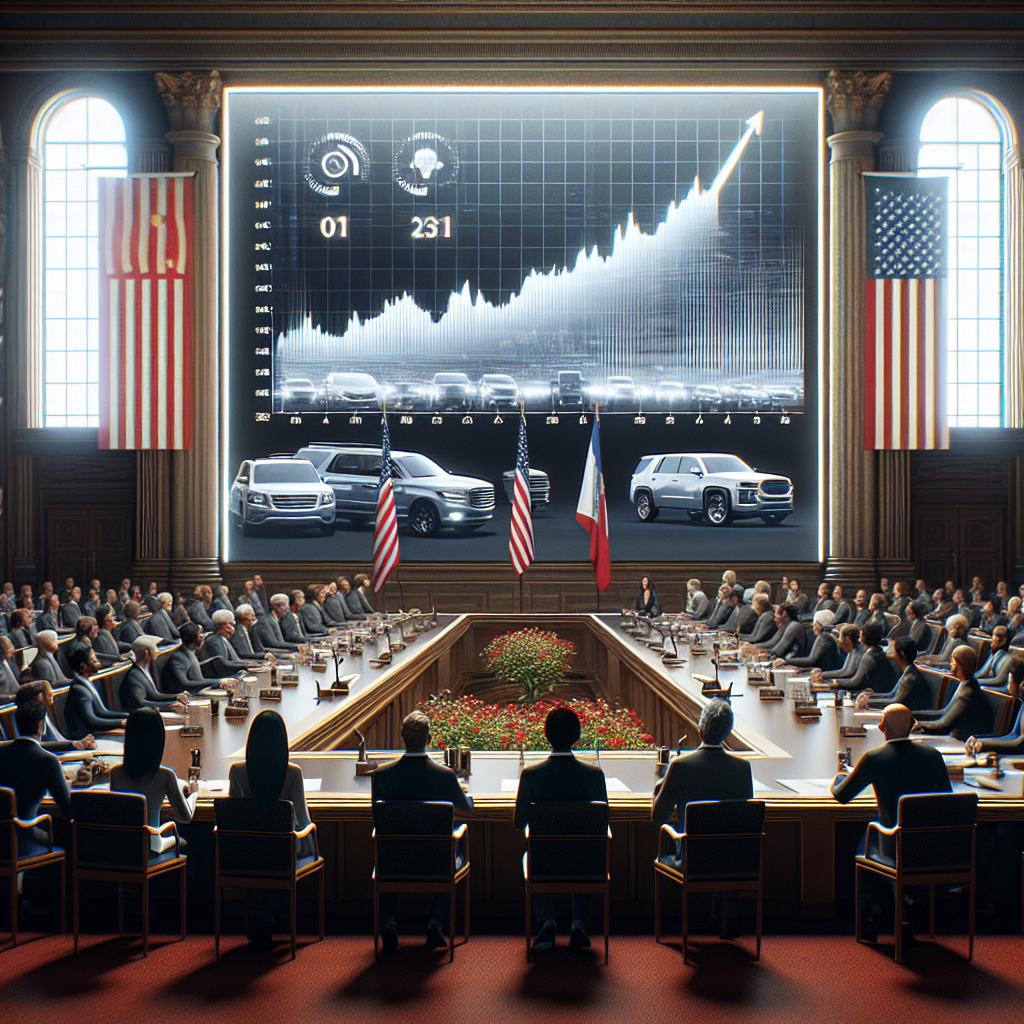
On Thursday, major American automakers issued a warning during a meeting of the U.S. House of Representatives’ “Special Committee on China,” stating that the rapid rise of China’s subsidized auto industry poses a substantial economic and national security threat to the United States and its major automakers.
Peter Ludwig, Co-founder and CTO of self-driving car software company Applied Intuition, expressed that the risks posed by Chinese-made cars in the real world are similar to those posed by TikTok in the digital world.
According to U.S. industry representatives, Chinese automakers, supported by the Chinese Communist Party (CCP), have been producing counterfeit versions of popular models such as Jeep and Land Rover, using intellectual property theft and anti-competitive trade practices to sell them globally at significantly lower prices.
Experts have pointed out that China’s low-price strategy undermines market competition, threatening not only the U.S. economic foundation but also national security. These vehicles are equipped with devices that can collect vast amounts of data and are exported globally.
Ludwig stated, “Chinese-made vehicles operating worldwide have already collected a significant amount of exploitable data. Congress and the United States are facing a moment where we can no longer afford half-measures.”
Chairman of the Special Committee on China, John Moolenaar, cautioned that systems in Chinese-made cars could be used for surveillance, with cameras, microphones, sensors, and mobile communication modules installed in the vehicles capable of continuous data collection. He warned that each car could potentially become a spy platform with a kill switch.
Moolenaar highlighted the risk of malicious software hidden in the vehicles that could disable them, turning them into weapons. Additionally, the abundance of data on the vehicles, from location records to private conversations, could potentially be directly sent to Beijing.
Moolenaar urged American automakers to take concrete actions to rebuild U.S. industrial capacity and called on lawmakers to focus on strengthening regulations to support domestic industries.
He emphasized, “In just five years, China has transformed from a small exporting country to the world’s largest car exporter, exporting 6 million vehicles last year at prices below market rates that American and allied automakers cannot match. Beijing has turned the automotive industry into a national tool through hefty subsidies, control over raw materials and supply chains, and predatory regulatory systems.”
Democratic Congressman Raja Krishnamoorthi pointed out that China excessively produces millions of cars annually and dumps surplus vehicles into the global market, selling them seemingly below manufacturing costs.
Krishnamoorthi urged congressional colleagues to work together to devise strategies to counter China’s aggressive market control actions, including leveraging new technologies and investing in talent.
The Alliance for Automotive Innovation, composed of leading automakers like General Motors, Ford, Toyota, Volkswagen, and Hyundai, expressed support for the expert panel’s viewpoints at the committee and noted that the clear threat China poses to the U.S. automotive industry is urgent.
The Alliance advocated for maintaining the prohibition on importing Chinese IT technical services, which effectively restricts the importation of Chinese-made cars into the U.S.
In a statement, the Alliance emphasized, “Even with significant investments by overseas car and battery manufacturers, they cannot offset the oversupply to the global market caused by Chinese subsidies. This practice amounts to dumping, and the U.S. Congress and the Trump administration must prevent China from dumping cars in the United States.”