
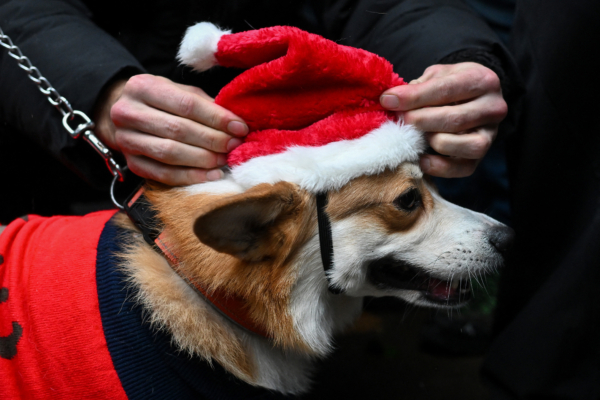
During the Christmas holiday, which is supposed to be a joyful time for humans, it can be a stressful and unsettling period for dogs due to the hustle and bustle of the festivities. Experts have shared signs of whether dogs are happy during the Christmas season for pet owners to reference.
According to a report by the UK’s Daily Express, many people seek opinions on social media on how to keep pets calm during the Christmas holiday, and the advice from experts is crucial.
Lucy Howells, a veterinary nurse from the British dog food distributor Butternut Box, mentioned that dogs are particularly sensitive to changes in their routines, emotions, and environments.
She provided positive signals indicating whether dogs are happy and comfortable during the Christmas holiday, as well as signs of stress. To ensure a pleasant holiday for your furry companion, be sure to consider the following suggestions:
– Relaxed body posture with fluid movements.
– Engaging in interactions with family members.
– Showing interest in activities without appearing tense.
– Steady breathing and wagging tail.
Trembling or pacing – Howells explained that when dogs feel anxious, they often express themselves through actions. Pacing is a way for them to release stress or seek a sense of security. Trembling indicates increased stress, especially in noisy or unpredictable environments.
Avoiding visitors – Howells mentioned that if a dog repeatedly avoids strangers, retreats to the edge of the room, or prefers to hide in a corner rather than interact, it clearly shows social overload. When dogs feel overly excited, they protect themselves by maintaining distance.
Hiding behind furniture – Howells pointed out that this is one of the clearest signals that dogs need space. Hiding can help dogs cope with excessive sensory stimulation, giving them a greater sense of control in crowded environments.
Licking lips or yawning without being tired – Howells stated that repetitive lip licking or sudden yawning indicates mild anxiety in dogs. It is a gentle way for dogs to express feeling nervous or confused.
To create a festive environment for dogs, Howells also provided four recommendations:
– Control noise and activity by introducing only one visitor at a time. Loud sudden greetings or crowded doorways can make some dogs nervous.
– Protect the food preparation area to prevent dogs from attempting to steal food smells during cooking. Using a gate or placing dogs in familiar areas can avoid accidents.
– Provide a quiet resting place for dogs to easily access a safe area for rest, such as a crate, dog bed, or a quiet room.
– Maintain the dog’s familiar routine by sticking to their usual walking and feeding times, establishing a stable foundation for their day.
Howells advised people to closely observe any signs of restlessness or anxiety in dogs. If they appear agitated, avoid certain rooms, or seek more attention than usual, these are signals that they need more comfort and predictability.
She added that dogs are very sensitive and can sense people’s stress and emotions, as well as perceive when the household is busy. They notice more frequent greetings, the appearance of treats, and changes in daily routines.
For many dogs, maintaining a regular and safe routine throughout the day is beneficial. The goal is to involve them in the festivities without causing them stress.
Howells emphasized, “Christmas brings dogs closer to their families. With extra attention, increased interaction, and a relaxing day at home, as long as it is done correctly, it can enhance the physical and mental health of dogs.”
The UK Kennel Club pointed out dangers that dogs may encounter during Christmas, including food, plants, decorations, and gifts, which owners should be mindful of.
Food – Dogs have a 75% higher chance of needing veterinary treatment in December due to ingesting toxic human foods compared to other months. It is crucial to know which foods dogs should stay away from. Toxic foods listed by the club include chocolate, Christmas cakes, meat pies and puddings, sage and onion stuffing, as well as other items such as certain nuts, blue cheese, high-fat, and high-salt foods.
Among these, chocolate is toxic to dogs because it contains compounds like theobromine and caffeine that dogs find hard to digest and absorb. If a dog ingests chocolate, these stimulants can accumulate in its body, accelerating physical functions and causing dangerous side effects, potentially leading to death.
Plants – Some plants used for Christmas decoration, like holly, mistletoe, and poinsettia, can make dogs sick. Dogs may instinctively explore these items, but some may be harmful, such as Christmas tree decorations, batteries, desiccants, wrapping paper, small toys, and more.
Decorations and gifts – During Christmas, houses are filled with exciting decorations and gifts that can both excite and confuse dogs. They may instinctively explore these items, but some may be harmful, like Christmas tree ornaments (ribbons, baubles, lights, and salt dough ornaments), batteries, desiccants, wrapping paper, small toys, and more.
The club advises people that if they suspect their dog may have ingested, touched, or inhaled something they shouldn’t have, to immediately contact a veterinarian. Attempting to induce vomiting can lead to other complications and harm the dog further.