
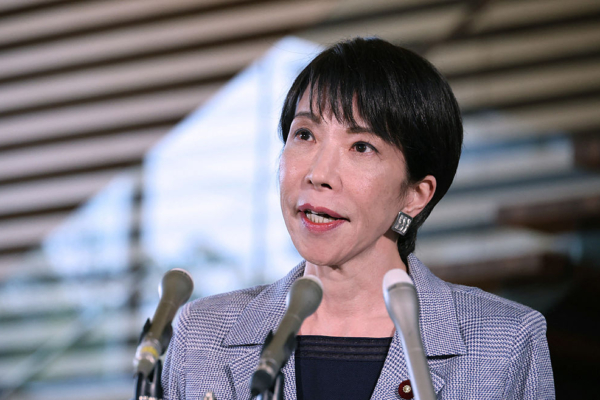
In recent days, tensions between China and Japan have escalated. The trigger was a statement made by Japanese Prime Minister Takamizono Sou in parliament, openly stating that “if China takes military action against Taiwan, which poses a ‘life-threatening crisis’ to Japan, Japan may possibly exercise its collective self-defense rights.” The Chinese authorities reacted strongly to this.
Analysts believe that China’s various provocations against Japan, including wolf warrior diplomacy, military threats, and suppression of Japanese popular culture, will provoke international disapproval and strengthen Japan’s resolve.
Beijing’s Consul General in Osaka, Xue Jian, made threatening “decapitation” remarks on social media, sparking outrage in Japanese public opinion; Chinese state media even used insulting terms like “mom diplomacy” to describe the Japanese Prime Minister.
Military intimidation continues to escalate. China first warned Japan that it “will pay a price,” then announced live-fire drills in the Yellow Sea, although the scale was only shore-based artillery, but it was amplified through official media to create a military oppressive atmosphere. Recently, China has deployed a large number of navy ships and coast guard vessels in the waters of East Asia, with the number exceeding a hundred at one point, far beyond defense needs, intensifying regional tensions.
There are also gray zone operations at sea. Since November 16, Chinese coast guard ships have frequently approached the waters around the Diaoyu Islands, approaching the 12-nautical-mile limit under the guise of “patrolling,” exerting prolonged pressure in the gray zone.
On the afternoon of December 6, Chinese J-15 fighter jets taking off from the Liaoning aircraft carrier intermittently illuminated Japanese Air Self-Defense Force F-15 fighters with radar in the open seas southeast of Okinawa. Japanese Defense Minister Koizumi Jinsaburo, in an unusual move, held a press conference early in the morning, stating, “This behavior is extremely regrettable, we have strongly protested to the Chinese side, and firmly demanded to prevent it from happening again.”
On December 7, the Japanese Ministry of Foreign Affairs summoned the Chinese Ambassador to Japan, Wu Jianghao, to express strong protest over the incident. Prime Minister Takamizono Sou also stated on the 7th that “I deeply regret the occurrence of this incident, and Japan will respond calmly and firmly.”
Beijing is also using economic coercion against Japan, including announcing a halt to the import of Japanese seafood, urging Chinese citizens to cease traveling to Japan, and Chinese national security agencies warning online gamers to be vigilant against Japanese spies.
The most controversial issue is China’s suppression of Japan’s pop culture industry. Bloomberg columnist Gearoid Reidy pointed out that Beijing’s crackdown “spared no one, from Japanese pop music divas to the world’s best-selling manga works.”
On November 28, singer Otsuki Maki performed the ending theme of “One Piece” in Shanghai. During the performance, halfway through the song, the stage lights suddenly went out, the music was turned off, and two staff members took away her microphone, leading her off the stage.
The audience was in an uproar, and the organizers subsequently announced the end of the performance, canceling all future stage shows.
Reidy noted that fans of “One Piece” worldwide, referred to as “nakama” (Japanese for “comrades”), were furious. This manga, with sales exceeding 500 million copies, is a best-seller in the United States and Europe, with a Netflix live-action series adaptation released in 2023 becoming the most-watched series globally.
“One Piece” is filled with themes of resistance against oppression, fighting against corrupt power, and protagonists Luffy and his companions continuously challenging injustices, pursuing freedom, revealing the truth of the world, embodying the pursuit of freedom and dreams. Now, this work is under attack, which appears particularly ironic.
On November 29, Ayumi Hamasaki’s Shanghai concert was also canceled due to “force majeure.” She then performed a full show in the venue without an audience, showcasing Japan’s “craftsman spirit” and winning widespread praise.
Veteran media personality Yaita Akio analyzed that these incidents highlight the Chinese government’s attempts to pressure the Japanese government through difficulties for artists.
Faced with Beijing’s various threats, on December 4, Prime Minister Takamizono seemed to respond to the canceled concerts by posting on social media platform X, stating, “The Japanese government will support talented musicians and help them hold live performances in more countries. We will create a future where Japanese music resonates in diverse markets such as Asia, Europe, and North America.”
Regarding Takamizono Sou’s remarks on Taiwan, lawyer Lu Qiuyuan believes that Takamizono’s statement cannot simply be interpreted as “if Taiwan is in trouble, then Japan is in trouble.” More accurately, if China conducts military attacks on Taiwan, and this poses a critical threat to Japan, then Japan may potentially negotiate with other countries on self-defense.
In other words, this does not directly mean that if China attacks Taiwan, Japan will intervene, but rather that Japan may intervene when its existence is at risk, and it would be a collective response.
Lu Qiuyuan bluntly stated, “This statement is like saying if you go attack the neighbor next door and set my house on fire, I will call the police. What’s wrong with that?”
Bloomberg columnist Reidy pointed out, “The ‘wolf warriors’ just don’t understand that if their top priority is maintaining a tough image domestically, their international standing will surely suffer.”
Japanese Defense Minister Koizumi Jinsaburo, during a meeting with Australian Defense Minister Richard Marles in Tokyo on Sunday, stated that Japan will respond to China’s fighter jet behavior “firmly and calmly” to uphold regional peace and stability.
Marles expressed concern over the incident, noting that Australia has also encountered worrying events in its interactions with the Chinese military. “We will continue to stand with Japan, cooperate with Japan, maintain the rules-based order in this region, and we will steadfastly do so.”
China’s suppression has had a “backfire” effect on Japan. Within Japan, Prime Minister Takamizono’s popularity continues to rise, with the latest Nikkei poll showing her approval rating as high as 75%, exceeding 80% among the working-age population.
Beijing has raised the issue of Okinawa’s sovereignty again. With the Chinese authorities launching a wave of propaganda attacks against Prime Minister Takamizono, Chinese state media have begun to hype the question of whether the Okinawa Islands “really belong to Tokyo?” Related editorials claim that these islands located south of Japan, extending close to Taiwan, have an “undetermined status.”
Reidy believes that many suspect China’s ambitions will not stop at Taiwan, and Okinawa may be the next target, “which will only strengthen Tokyo’s resolve.”
Recently, Takamizono Sou reiterated Japan’s unchanged stance on Taiwan, citing the “San Francisco Peace Treaty” to state that “Japan has not made a determination on Taiwan’s legal status.” In response, the Chinese Foreign Ministry reiterated that China has never accepted the San Francisco Peace Treaty.
In the San Francisco Peace Treaty, Japan renounced sovereignty over Taiwan, the Penghu Islands, as well as the Kuril Islands and the Kuye Island; China does not recognize the San Francisco Peace Treaty, sparking heated debates in Taiwanese society. Commentator Shi Mingjin stated, “So Taiwan is still Japanese territory”; while physician Cai Yicheng bluntly said, “China has begun to ignore international diplomatic rules and orders.”
Cai Yicheng mentioned that the Chinese side believes that because the San Francisco Peace Treaty did not allocate Taiwan and the Penghu Islands to China, it is null and void. He criticized China’s unscrupulous behavior, where contracts can become historical documents at any time, and rules can be overturned at any time, which is indeed a major danger in the current world.