
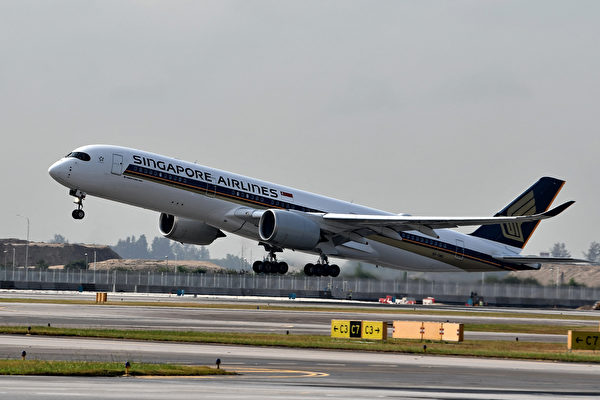
In recent days, Airbus, the European aircraft manufacturer, has experienced two incidents. First, a software malfunction caused a JetBlue A320 aircraft to tilt its nose downwards during flight, resulting in injuries to over a dozen passengers. Subsequently, Airbus recalled 6,000 A320 series aircraft for software updates and then had to cut delivery targets due to defects in some aircraft body panels.
Industry experts have not yet provided a definitive conclusion on the exact causes of the two incidents, but the basic consensus is that the two events are unrelated.
Airbus CEO Guillaume Faury, in an interview with Reuters, expressed his frustration, stating, “We’ve just solved one issue, and now we have another one to deal with.”
It was remarked by Reuters, “Even the world’s highest-selling jet, the A320, is not immune to the impacts of solar flares and defective metals, despite them being worlds apart… One originating from astrophysics, the other from basic metallurgy… for an aircraft manufacturer dominating the busiest sector in the aviation industry and set to surpass Boeing for the seventh consecutive year, success is so fragile!”
Nevertheless, some industry perspectives and speculations are noteworthy:
Airbus attributes the problems to cosmic radiation, suggesting that aircraft are susceptible to the influence of solar flares, which may have disrupted the software onboard, causing the aircraft to plunge downward akin to the melting of Icarus’s wings in Greek mythology.
Experts point out that this incident serves as a reminder that the aviation industry is exposed to radiation bombardment from deep space or the sun. A milestone study conducted by Boeing/IBM in 1995 raised this issue, citing that as modern jet planes increasingly use electronic chips, this problem becomes more critical.
George Danos, Chairman of the Cyprus Space Exploration Organisation and an expert on cosmic radiation, emphasized, “This is a warning… the international community needs to work together to ensure we further understand this phenomenon.”
Reuters noted, “These two unrelated setbacks occurred just weeks after the A320 series surpassed the troubled Boeing 737 MAX as the highest delivery aircraft in history.”
Furthermore, Reuters mentioned, “Airbus reduced delivery targets by 4% within 48 hours, confirming a slowdown in November’s delivery rate on Friday.”
Analyst Sash Tusa from Agency Partners stated that the A320 medium-range series aircraft account for the majority of Airbus’ sales and “the vast majority” of profits, highlighting a contradiction between lowering delivery targets and maintaining financial forecasts.
As the week concludes, Airbus is under pressure from official investigators to provide more data on the software grounding incident.
Engineers investigating the JetBlue incident have recently concluded that a software update aimed at making A320 aircraft more resistant to stall even in the event of a normal defense system failure (similar to the AF447 flight’s loss of control) may have removed a backup protection layer against solar interference.
However, sources suggest that Airbus’ investigation findings regarding JetBlue are merely hypothetical due to the lack of evidence of cosmic particles leaving traces, prompting a precautionary recall decision.
Faury explained, “We are accustomed to this situation in space; it is not uncommon. We found a flaw in that software on the computer, so we have to address it.”
Simultaneously, some airlines have indicated they are unwilling to accept aircraft until new assurances are provided regarding affected body components.
Reuters reported, “Disagreements exist between Airbus and certain suppliers in increasing production to meet strong air travel demands… quality defects such as panel issues from Spanish suppliers highlight the challenges faced by some suppliers.”
Airbus has asserted that the industrial defect is not a safety issue. The company also stated that the overall supply chain improvements are ongoing following disruptions caused by the COVID-19 pandemic.
The report emphasized, “The body panel failure underscores concerns about one of the weakest links in the aviation industry: aerostructures firms producing parts that are never replaced, hindering them from lucrative spare parts sales like other companies.”
Insiders noted that Airbus’ weeklong crisis began last Thursday, coinciding with Airbus and Air France’s appeals trial on charges of involuntary manslaughter relating to the 2009 A330 crash incident. Both parties vehemently deny these accusations.
The most significant and well-known A330 air disaster of 2009 was the Air France Flight 447 crash. On June 1, 2009, an Airbus A330-200 crashed into the Atlantic on its route from Rio de Janeiro to Paris, resulting in the deaths of all 228 passengers on board due to pitot tube icing causing incorrect airspeed data and improper crew response leading to a stall and subsequent crash into the sea.
(This article referenced reporting by Reuters)